
Samson in New Orleans by Leonard Cohen
Why This Leonard Cohen Song Still Burns
The meaning of Samson in New Orleans Leonard Cohen centers on grief, betrayal, and rage after Hurricane Katrina. On the surface, the song sounds like a conversation with someone who once praised New Orleans. Under that, it becomes a moral cry about what happened when the city was left exposed in 2005.
"Samson in New Orleans" - Leonard Cohen
You said you were my friend
Did you really love the city
Loading lyrics...
Unable to load lyrics
We're unable to display the lyrics at this time. Please try again later.
Leonard Cohen released the track on Popular Problems in 2014, a late-career album made with longtime collaborator Patrick Leonard. In a brief note from American Songwriter, the song is described as a response to the tragedy and injustice of Katrina. That context matters, because the lyrics do not describe the storm in a news-like way. They turn it into a biblical drama.
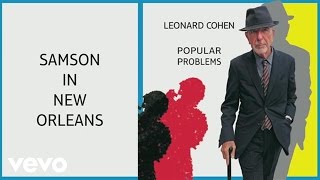
Watch the official Samson in New Orleans
music video
A City Loved, Then Abandoned
At the start, the speaker addresses a "you" who once admired New Orleans for its mystery and freedom. The repeated idea is that this person praised the city, even saying it was better than America
. That line matters because it sets up a contrast between New Orleans as a real, living place and America as a larger national ideal that failed to protect it.
The accusation in the song is not only about weather. It is about neglect. When the speaker asks how this could happen, they suggest that admiration for the city was shallow if it vanished in the moment of crisis.
The “you” in the song
Interpretation: The "you" may be one person, but it can also stand for political leaders, outsiders, or the nation itself. Cohen often wrote in ways that let one voice point at a whole culture. Here, the direct address makes the song feel personal, but the anger is public.
Katrina as a Spiritual Crisis
One of the song’s strongest moves is shifting from disaster to judgment. The people in pain are described as crying for mercy from the depths, and the speaker wonders if their prayer was rejected. That idea turns Katrina into more than a flood. It becomes a test of faith, compassion, and human worth.
Cohen does not offer an easy answer. Instead, he places sacred language next to broken systems. The result is disturbing on purpose. The song asks what it means when the weak suffer and help comes late, or not at all.
Stand me by those pillars
Let me take this temple down
This is the song’s key biblical image. It refers to Samson, who in the Book of Judges brings down a temple by pulling its supports. In Cohen’s version, that image is not triumphant. It feels desperate, even dangerous.
What Samson Means Here
Samson is the perfect figure for this song because he combines strength, blindness, revenge, and collapse. Near the end, the speaker admits they are blind with death and anger
. That line directly connects the narrator to Samson.
Interpretation: Cohen seems to use Samson as a symbol for righteous anger that risks becoming destructive anger. The speaker wants justice, but they are not calm. They want to tear down the whole structure that allowed suffering to happen.
That makes the chorus both thrilling and frightening. It voices a fantasy of reckoning, but it also knows revenge can consume the person who seeks it. Cohen leaves both truths in place.
The King, the Crown, and Moral Inversion
Another striking image is the king wearing a bloody crown
. The phrase echoes Christian imagery of the crown of thorns, but it also sounds political. A ruler appears solemn and dignified, yet stained by violence.
This is classic Cohen writing. He blends religious and civic symbols until they reflect each other. The effect is to say that public failure is not only administrative. It is ethical and spiritual too.
There is also a line about the chains being gone from heaven and storms being free. Paraphrased, the old order has broken open. Restraint is gone. What should have been protected now runs wild. The storm is natural, but the social collapse around it feels man-made.
How the Sound Carries the Message
The production helps explain the meaning of Samson in New Orleans Leonard Cohen just as much as the words do. On Popular Problems, Cohen and Patrick Leonard favored lean grooves, dark textures, and room for Cohen’s late-career voice. His delivery here is gravelly, worn, and controlled, which makes the anger feel heavier.
Rather than shouting, he sounds like someone who has seen too much to waste energy. That restraint gives the song power. The rhythm moves steadily, while the arrangement stays shadowy and spare. It creates the feeling of a slow march toward judgment.
A survey of Cohen’s albums at American Songwriter notes the song’s husky vocal and outrage. That is exactly the point: the performance does not decorate the message. It hardens it.
A Strange Tenderness in the Last Verse
Late in the song, the speaker mentions a woman in the window
and a bed in Tinsel Town. This sudden image of distance and glamour feels almost cinematic. It suggests escape, temptation, or simply another life moving on somewhere else.
Then the speaker says they will write when it is over. That small promise matters. Even in fury, there is still a human connection left. The narrator is not only an avenger. They are also someone stepping away because their anger makes them unsafe company.
Two plausible readings
- Public reading: The song is about Katrina, American neglect, and fury at injustice.
- Private reading: It is also about a broken relationship, where love for a city becomes a test of loyalty and truth.
Both readings can work at once, which is one reason the song lasts.
Final Take on the Song’s Meaning
The meaning of Samson in New Orleans Leonard Cohen is that disaster exposed a moral failure, and the response it creates is not neat sorrow but biblical anger. New Orleans stands for beauty, freedom, and cultural life. Samson stands for the urge to destroy corrupt structures when mercy has failed.
Cohen does not pretend this rage is pure. He shows its danger as well as its force. That honesty gives the song its weight.
Disclaimer: This interpretation combines lyrical analysis, documented song context, and informed reading. As with many Leonard Cohen songs, some meanings remain open to the listener.








