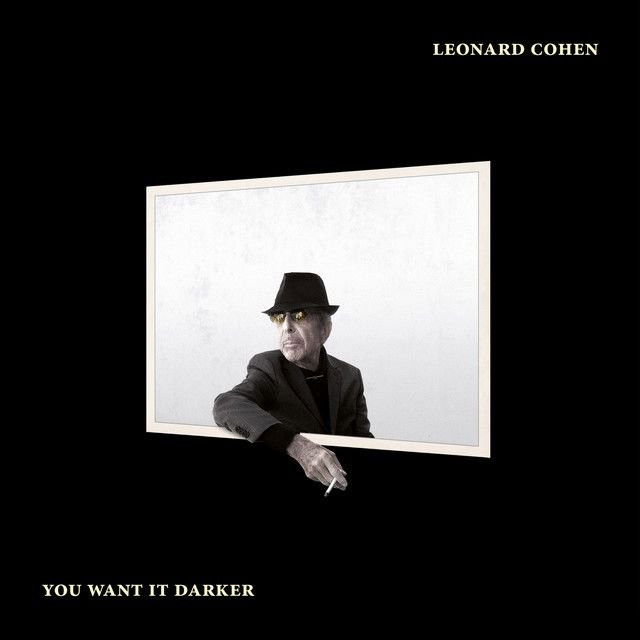
You Want It Darker by Leonard Cohen
Why This Song Feels Like a Final Conversation
The meaning of You Want It Darker Leonard Cohen begins with a hard truth: this is a song about facing suffering, God, and death without easy comfort. Released in 2016 as the title track of Cohen's final studio album, the song arrived on his 82nd birthday and later won the Grammy for Best Rock Performance. Those facts matter because the record sounds like a late-life statement, not a passing mood.
"You Want It Darker" - Leonard Cohen
If you are the healer, it means I'm broken and lame
If thine is the glory then mine must be the shame
Loading lyrics...
Unable to load lyrics
We're unable to display the lyrics at this time. Please try again later.
Cohen had long written about faith, desire, guilt, and human weakness. Here, they all meet in one place. The song does not offer a neat answer. Instead, it stages a tense exchange between a wounded human voice and a divine presence that may be real, silent, demanding, or all three at once.

Watch the official You Want It Darker
music video
The Core Meaning: Acceptance Without Peace
At its center, the song sounds like a reckoning. The speaker seems to address God, but not with simple devotion. They speak with pain, irony, and a kind of exhausted honesty. When Cohen sings You want it darker
, the line feels like an accusation and a surrender at the same time.
Interpretation: the song suggests that life is filled with cruelty and loss, and the speaker is asking why a holy order would allow that darkness. But they are also admitting that they cannot step outside that order. That double feeling gives the track its power.
The repeated phrase we kill the flame
deepens the idea. Paraphrased, it points to human beings helping destroy their own light. The darkness is not only sent from above; it is also made on earth by people, systems, and habits.
How the Verses Build the Argument
A speaker who feels trapped
Early lines compare God to a dealer and healer. In plain terms, the speaker says that if the one in charge runs the game, then they want out; and if the healer exists, then their broken condition proves how deep the damage goes. This is not unbelief in a simple sense. It is belief under pressure.
The line mine must be the shame
adds another layer. Cohen contrasts divine glory with human failure, turning old religious language into a confession of weakness. They sound aware of sin, but also skeptical of a system that leaves people crushed.
Religious language with sharp edges
Cohen uses prayer-like words such as be thy holy name
, yet they are set beside images of pain and abandonment. That mix matters. The song sounds liturgical, but it refuses to be soothing. As Wikipedia notes, critics heard it as a severe challenge to religion as much as a prayer from within it.
One brief passage captures that conflict:
Hineni, hineni
I'm ready, my lord
This is the song's clearest moment of submission. "Hineni" is Hebrew for "here I am," a word with deep biblical weight. Paraphrased, the speaker presents themself before God, ready to answer the call. Yet because the rest of the song is so full of grief and doubt, this readiness does not sound cheerful. It sounds grave.
Violence, History, and Human Failure
One of the song's most chilling moves is the shift from personal suffering to public violence. The verse about prisoners and guards widens the frame. Now the darkness is not just inner despair or spiritual confusion. It is political, historical, and collective.
Then Cohen undercuts the idea of dramatic evil with the dry phrase middle class and tame
. That line suggests that evil is often ordinary. It lives in comfort, respectability, and self-justifying routines. The song does not blame monsters alone. It hints that everyday people help keep the flame from burning.
This is why the chorus lands so hard. It is not only about divine will. It is about human participation in darkness.
Why the Sound Matters So Much
The production is a huge part of the meaning of You Want It Darker Leonard Cohen. The arrangement is spare, heavy, and ritual-like. Cohen's late-career voice is almost spoken, low and weathered, which makes every line sound weighed down by experience.
The song also features Cantor Gideon Zelermyer and the Shaar Hashomayim Choir, connecting it directly to Jewish liturgical sound. That was not decorative. It places the song inside a real spiritual tradition even as it questions suffering inside that tradition. The result is both intimate and ceremonial.
According to the song's credits, Patrick Leonard composed the music and Adam Cohen co-produced the track with him. Those details help explain its structure: the music moves slowly, with a steady pulse, dark organ tones, and choral responses that feel like judgment, witness, or prayer. The official album context at Leonard Cohen's site reinforces how central this song was to the project.
A Late-Career Statement, Not Just a Sad Song
It is tempting to hear the track only as a deathbed song, especially because Cohen died weeks after the album's release. Factually, that timing shapes reception. But the song is bigger than biography.
Interpretation: it works as Cohen's lifelong themes brought to their sharpest point. He had always written about the space where the sacred meets the broken. Here, they meet without disguise. Love is present, but it does not erase pain. Scripture is present, but it does not cancel doubt. Readiness is present, but it does not look like peace.
What the Song Finally Says
The best way to understand the song is to hear it as both protest and acceptance. Cohen does not resolve the argument with God. They keep the wound open. That honesty is the song's final gift.
For many listeners, that is why it feels so haunting. It says that a person can stand before darkness, name it, and still answer. Not because they understand everything, but because they have reached the point where truth matters more than comfort.
Disclaimer: This interpretation is based on the lyrics, recorded performance, and documented release context. As with most Leonard Cohen songs, multiple readings are possible.