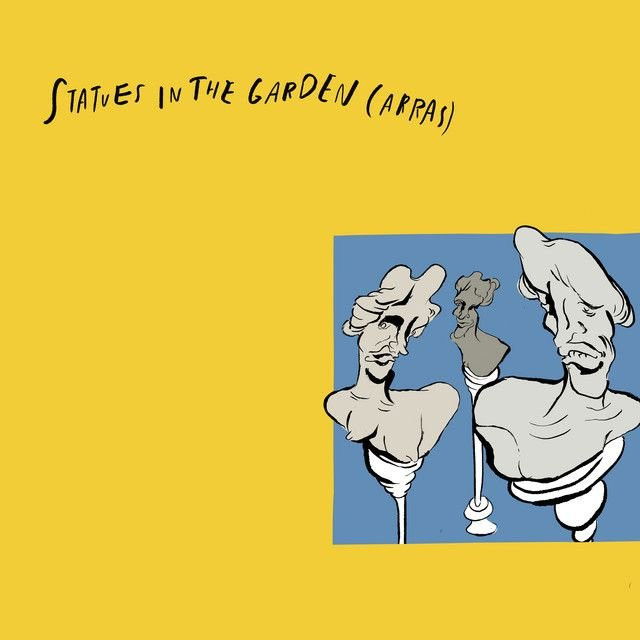
What 'Statues in the Garden (Arras)' Really Holds
The meaning of Statues in the Garden (Arras) Local Natives comes through less like a plot and more like a feeling. This is a song about pressure, memory, and the strange way the mind keeps circling moments it cannot settle. Rather than telling a complete story, Local Natives build an atmosphere of emotional overload.
"Statues in the Garden (Arras)" - Local Natives
It's not enough
He feel the walls around him and he's climbing up
Loading lyrics...
Unable to load lyrics
We're unable to display the lyrics at this time. Please try again later.
That approach fits the song's place on Sour Lemon, the band's 2020 EP. In coverage of the project, the writing was described as soft and immediate, and EARMILK singled out "Statues in the Garden" as part of the EP's world of "cloudy memories". The band also framed their songs more broadly as personal timestamps from their lives. Those facts matter, because they suggest the song is not random imagery. It is likely memory turned into mood.
A restless mind at the center
At the start, the song sketches a figure driven by desire and boxed in by consequence. The opening lines describe someone who wants more, feels trapped, and keeps pushing anyway. When the song says He wants it all
, it sets up a person who is hungry, ambitious, or emotionally unsatisfied.
A few lines later, the mood darkens. The mention of thinking about consequences suggests that action has already led to damage, or at least fear. Then the lyric turns toward loss with only just a memory
. That phrase is short, but it does a lot. It implies distance, grief, or the realization that a person or version of life is now gone.
Interpretation: The song may be about someone who chased something intensely and then had to face what was left behind. It could be a relationship, a former self, or a life choice that cannot be reversed.

Watch the official Statues in the Garden (Arras)
music video
Why the chorus feels haunted
The chorus is where the song's emotional core becomes clear. The repeated admission I can't let it go
sounds simple, but it is the key to everything around it. This is not just sadness. It is fixation.
Then comes the disorienting image My world turning outside in
. That line suggests emotional inversion. What should feel stable now feels scrambled. Inner feelings are spilling outward, and external life no longer makes sense.
The title phrase Statues in the garden
adds the song's strongest symbol. Gardens usually suggest growth, nature, and movement through seasons. Statues are the opposite: fixed, silent, preserved. Put together, the image feels like memory frozen inside a living space.
Interpretation: The statues may represent moments from the past that remain visible but lifeless. They stand there, beautiful and permanent, while the speaker keeps walking around them, unable to move on.
The second verse deepens the panic
In the next section, the song becomes more direct about mental overload. The narrator says they cannot slow down, not even briefly, and barely have room to think. That matters because it shifts the song from reflection to exhaustion.
Instead of calm remembrance, this sounds like a person trapped in momentum. They are moving too fast to process what hurts them, yet the hurt stays present anyway. That contradiction is one of the song's sharpest ideas: busyness does not erase emotion. It can actually trap a person inside it.
A compact emotional timeline
The song seems to move through four beats:
- A person reaches for more.
- They sense the cost of that drive.
- Memory turns painful and unavoidable.
- They keep moving, but cannot let go.
That arc helps explain why the song feels both active and stuck at once.
How Local Natives' style shapes the meaning
Local Natives are an indie rock band formed in Orange County and based in Los Angeles. "Statues in the Garden (Arras)" appeared on the Sour Lemon EP, released on October 23, 2020, and the EP was recorded in September 2019 with producer Chris Coady. The band also performed the song on The Ellen DeGeneres Show during its release run.
Those facts help place the track in a very specific chapter. Sour Lemon was made as a short, in-the-moment release rather than a long, heavily stretched project. That gives this song its intimate feel. It does not sound overloaded with ideas; it sounds distilled.
The production supports that reading. The repeated vocals, airy space, and circular phrasing make the song feel dreamlike instead of sharply narrative. The groove keeps moving, but the words stay emotionally suspended. That contrast mirrors the lyric idea of not being able to stop and not being able to let go.
The phrase '(Arras)' adds mystery
The subtitle "(Arras)" is one of the song's most intriguing details. In the available sources, Local Natives do not offer a widely quoted explanation for it. Because of that, any reading should stay tentative.
Interpretation: The subtitle likely works as a private map marker, a place-name, or a memory tag. Even if listeners do not know the exact reference, it gives the song a stronger sense of lived experience. It makes the imagery feel less invented and more remembered.
Final reading: memory as a beautiful trap
The best way to understand the meaning of Statues in the Garden (Arras) Local Natives is to hear it as a song about emotional afterimages. It captures the moment when striving, regret, and memory collapse into each other. Someone keeps moving forward physically, but inwardly they are still standing in the same haunted place.
That is why the song lingers. It turns a blurry mental state into a vivid image: a garden full of still figures, beautiful but unmoving, while the world keeps spinning around them.
Disclaimer: This interpretation is based on the lyrics, available release context, and published reporting. Like many Local Natives songs, it remains open to more than one meaning.









