Why "Mi Agüita Amarilla" Is So Gross and Smart
The meaning of Mi Agüita Amarilla Los Toreros Muertos starts with a crude joke, but it does not end there. On the surface, the song is about a man who drinks too much beer, goes to the bathroom, and then imagines where his urine travels. That setup is childish on purpose. The band turns something private and embarrassing into a comic tour through pipes, rivers, farms, and clouds.
"Mi Agüita Amarilla" - Los Toreros Muertos
Dame una cerveza
Y creo que he bebido más de cuarenta cervezas hoy
Loading lyrics...
Unable to load lyrics
We're unable to display the lyrics at this time. Please try again later.
That is why the song still stands out. It uses bad taste to make a bigger point about connection. What leaves one body does not simply disappear. In this song, it moves through the whole social world.
A Toilet Joke With a Bigger Target
Los Toreros Muertos came out of Madrid's 1980s pop scene and became known for satire, irreverence, and comedy rock. According to Wikipedia, the Spanish group formed in 1984 and built a style linked to La Movida Madrileña, mixing pop, punk, and humor. That context matters because this song is not an accident or novelty throwaway. Shock, silliness, and social mockery were part of their artistic identity.
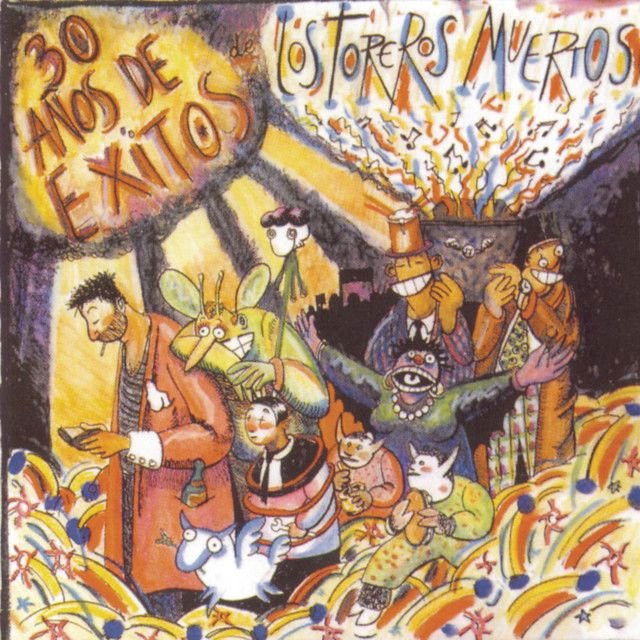
Factually, the song appeared on the 1986 album 30 años de éxitos, and the lyric is credited here to Pablo Carbonell Sanchez. The title itself, Mi agüita amarilla
, sounds almost cute in Spanish, which makes the subject even funnier. The softness of the phrase clashes with the reality behind it.
Interpretation: the song mocks the way people try to keep the body, waste, and public life in separate boxes. It says the opposite. They are all connected, whether people like it or not.

Watch the official Mi Agüita Amarilla
music video
How the Story Moves From Bar to Planet
The narrative is simple and very visual. First, the singer drinks heavily and then relieves himself. After that, the song follows the liquid outward.
The first beat: excess and release
The opening idea is blunt: after too many beers, the body must get rid of them. The lyric phrase más de cuarenta cervezas
is absurdly exaggerated, and that exaggeration sets the comic tone. They are not hearing a confession meant to be realistic; they are hearing a cartoon.
The second beat: private waste becomes public
Once the narrator urinates, the liquid goes under homes and workplaces. The key joke is that something disgusting travels beneath ordinary life. The phrase debajo de tu casa
pushes the image close to the listener. It is not happening somewhere far away. It passes under everyone.
Y llega a un río
La bebe el pastor
La beben las vaquitas
This is the song's central turn. The joke stops being only gross and starts pointing to a real cycle: water moves, gets reused, and returns in forms people do not control.
The third beat: the world keeps recycling it
Later, the liquid reaches the sea, then evaporates, then falls again as rain. The phrase empieza a diluviar
turns body waste into weather. That leap is ridiculous, but it also mirrors the water cycle taught in school. The humor works because the science underneath it is recognizable.
What the Chorus Really Means
Every return to Mi agüita amarilla
makes the idea sound both proud and stupid. That tension is the point. A childish refrain gives the song its singalong energy, but the repeated phrase also becomes a symbol.
Interpretation: the chorus turns urine into a stand-in for human impact. People send things out into the world and imagine they are gone. The song insists that they come back, mix with everything else, and touch strangers.
There is also a social leveling effect. The liquid moves under the family home, the workplace, schools, and city buildings. Rich or poor, official or ordinary, everyone lives inside the same messy system.
Symbols Hidden Inside the Silliness
The song uses a few simple motifs over and over:
- Beer suggests excess, impulse, and bodily consequence.
- Pipes and rivers suggest invisible systems.
- Animals and fields connect waste to food and nature.
- Rain shows return: what goes out comes back.
One of the smartest lines in idea, not just in humor, is the claim that the liquid helps green the jungle while also being filthy. The phrase líquido inmundo
captures the contradiction. Something can be dirty and still become part of life again.
That is why the song feels more pointed than a one-note gag. It laughs at disgust, but it also laughs at human arrogance. People think they stand above nature, yet the song reduces them to a body inside a loop.
Why the Music Sells the Joke
The production style matters almost as much as the lyric. Los Toreros Muertos were associated with comedy rock, new wave, and power-pop energy, and this song uses that bounce well. The rhythm is upbeat, repetitive, and easy to chant along with. Instead of treating the subject as dark or shameful, the arrangement makes it bright and communal.
That contrast creates meaning. If the music were gloomy, the song would feel like a lecture or a gross-out stunt. Because it sounds cheerful, the band makes embarrassment public and playful. They invite the audience to laugh first, then notice what they are laughing at.
The vocal delivery also helps. It sounds gleeful, almost proud, which exaggerates the narrator's foolishness. They are hearing someone marvel at his own waste as if it were an epic journey.
More Than a Novelty Song
In reception, songs like this often get reduced to shock value. That is understandable. It is hard to forget a hook about urine. But novelty is only part of its staying power.
Interpretation: the song works because it combines three things at once:
- a juvenile joke,
- a simple science lesson,
- a satire about shared public systems.
It also fits the band's broader reputation for irreverent social humor. Even when the image is ridiculous, the structure is sharp. They take something low and use it to comment on something wide: ecology, urban life, and the false idea that waste ever truly vanishes.
The Real Meaning Left Behind
So, what is the meaning of Mi Agüita Amarilla Los Toreros Muertos? At heart, it is a comic song about how bodies, cities, and nature are tied together in ways people would rather not think about. Its joke is crude, but its worldview is clear: nothing exists alone, and nothing really disappears.
That is why the song remains memorable. They turned the lowest possible subject into a catchy little lesson about interdependence.
Disclaimer: This interpretation separates factual context from critical reading. As with any song, listeners may hear different meanings in the humor, imagery, and satire.








