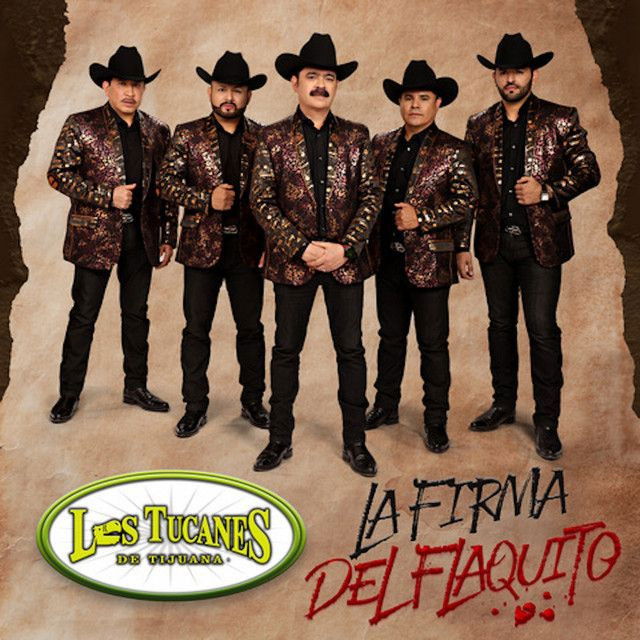
What “La Firma del Flaquito” Is Really Saying
The meaning of La Firma del Flaquito Los Tucanes de Tijuana centers on power, fear, and control. Rather than telling a love story or a personal confession, the song works like a character portrait. It presents El Flaquito as a figure whose authority reaches across crews, police forces, routes, and borders.
"La Firma del Flaquito" - Los Tucanes de Tijuana
Y le apodan el flaquito
Desde que tenia trece años
Loading lyrics...
Unable to load lyrics
We're unable to display the lyrics at this time. Please try again later.
That approach fits Los Tucanes de Tijuana’s long history with corridos. The group, led by songwriter Mario Quintero Lara, helped shape the Pacific norteño sound and has remained one of regional Mexican music’s most visible acts for decades, with major commercial success and a long awards record according to publicly available band history (Wikipedia). Quintero is also credited here as the writer, which matters because his corridos often build meaning through vivid status details rather than introspective storytelling.
A Portrait of Power, Not a Moral Debate
At its core, the song describes a man identified by two markers: a faction and a nickname. Early lines such as Su bandera es Arellano
and le apodan el flaquito
frame him through allegiance and reputation. The lyrics do not slowly reveal who he is. They announce him like a known force.
From there, the song stacks evidence of influence. It says he was dangerous from youth, then moves into claims that soldiers, officials, and armed groups work around him. The point is not subtle. The narrator wants listeners to see organized, expanding power.
Interpretation: The song’s real subject is not only one person. It is the system around him. El Flaquito becomes a symbol of criminal authority that looks official, mobile, and deeply rooted.
How the Story Expands Verse by Verse
The narrative unfolds in stages, and each one raises the scale.
First, the song establishes identity
It starts with name recognition and affiliation. Those opening details act like a warning label. Before any action happens, listeners are told that this man already carries weight.
Then, it shows muscle on the street
The next images are practical and violent: government-style clothing, armored vehicles, patrols, kidnappings, and extortion. When the lyric mentions carros blindados
, it helps create a militarized picture rather than a casual outlaw image.
Next, it turns local power into open war
The line No hay lugar pa' dos banderas
makes the conflict bigger than one feud. It suggests a struggle over territory, loyalty, and monopoly. In plain terms, the song says coexistence is impossible.
“Nada pasa por Tijuana Sin la firma del flaquito”
Those closing lines pull the whole story together. They sum up the song’s central claim: this figure’s authority is so broad that movement itself seems to require his approval.
The Main Themes Behind the Bragging
On the surface, the song is all bravado. Underneath, several themes drive it.
Control is the real currency
The repeated focus is not money alone. It is command: command of people, routes, punishment, and fear. Even references to overseas traffic show scale more than luxury.
Violence acts as communication
The song treats force as a message. If someone betrays the group, the response is immediate. If rivals challenge territory, gunfire answers them. In that sense, violence is presented as a language of enforcement.
Legitimacy gets blurred
One striking detail is the mix of state imagery and criminal power. Uniform-like clothing and references to federal and state forces muddy the line between authority and corruption. Interpretation: That blurring may be one reason the song feels unsettling. It suggests power that borrows the look of government while serving another structure entirely.
Why the Sound Matters Too
Los Tucanes de Tijuana built their name in norteño and Pacific-style corridos, where direct storytelling often rides on accordion, bajo sexto, bass, and steady percussion (Wikipedia). That musical setting matters for the meaning of this song.
The arrangement style usually keeps momentum moving forward, which suits lyrics about convoys, patrols, flights, and expansion. Instead of sounding reflective, the music supports a hard, declarative voice. That makes the song feel less like a diary entry and more like a public statement.
Interpretation: In songs like this, the rhythm does part of the storytelling. The drive of the instrumentation mirrors the idea of an operation that never stops.
A Corrido Built on Image and Reach
Another key to the meaning of La Firma del Flaquito Los Tucanes de Tijuana is how often the lyric measures size. It mentions multiple combat groups, new routes, new partners, and shipments reaching Tokyo and Europe. Whether listeners hear those claims as literal or exaggerated, their function is clear: they magnify the character.
This is common in corridos centered on status. Specific details make the legend feel concrete. A short phrase like Tokio
does not just name a place. It signals global reach.
The shout-outs near the end also matter. They create a network effect, naming allies and reinforcing the idea that El Flaquito is backed by a wider circle, not acting alone.
Final Read on the Song’s Meaning
So, what is “La Firma del Flaquito” really saying? It is a corrido about territorial power presented as total power. The song builds El Flaquito as a man whose influence extends from street enforcement to international routes, and whose “signature” stands for final authority.
That does not mean the song endorses every act it describes. It means the song’s artistic goal is to narrate dominance in the stark, report-like style that many corridos use.
Disclaimer: This interpretation is based on the lyrics provided and publicly available background on Los Tucanes de Tijuana and Mario Quintero Lara. Because no verified track-by-track artist explanation was available in the cited research, some points above are informed interpretation rather than confirmed author intent.







