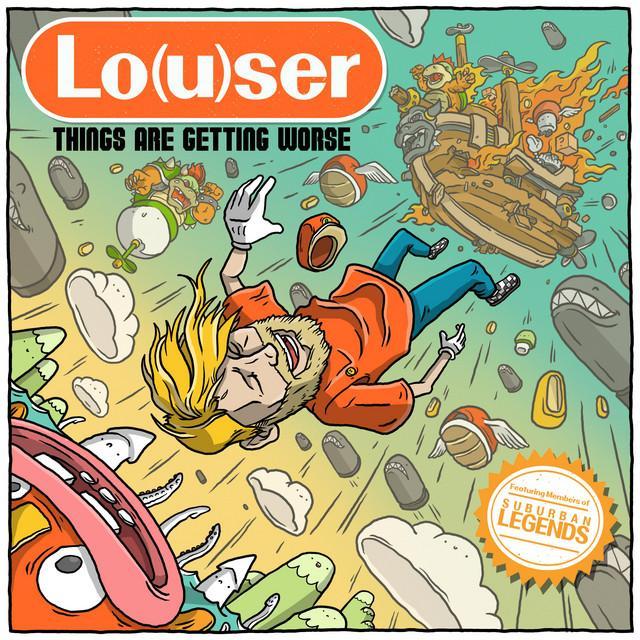
Why 'Things Are Getting Worse' Hits So Hard
The meaning of Things Are Getting Worse Louser, Suburban Legends starts with a contradiction: life looks more advanced, but it does not feel more humane. The song turns that tension into a sharp, funny, and uneasy punk statement. Its narrator sees progress everywhere, yet each example comes with a cost.
"Things Are Getting Worse" - Louser, Suburban Legends
The progress made by human beings that always leads to harm
An educated populace with six figure degrees
Loading lyrics...
Unable to load lyrics
We're unable to display the lyrics at this time. Please try again later.
Rather than praising modern life, they list the ways new tools, new systems, and new ideas can still leave ordinary people poorer, angrier, and less safe. That is why the hook lands so strongly. It reduces a huge social argument into one bitter phrase: things are getting worse
.
The Core Idea Beneath the Joke
On the surface, the song sounds witty and fast-moving. Underneath, it is deeply frustrated. The verses describe a world where intelligence, efficiency, and innovation should help everyone, but often seem to help power, wealth, and violence instead.
That makes the song less about one crisis and more about a pattern. The narrator is not rejecting science or education themselves. They are questioning a society where every breakthrough seems to create a new form of damage. The opening sets that tone with the mix of admiration and fear: they are equally alarmed
by what people build.
Interpretation: the song argues that progress is real, but moral progress has not kept up. People can make smarter machines, cleaner energy, and faster systems without building a fairer world.

Watch the official Things Are Getting Worse
music video
Verse by Verse, the Complaints Connect
The first verse links knowledge to danger. It points at educated people and online culture, then imagines that even high achievement can be turned toward disaster. The target is not learning itself. It is the misuse of intelligence in a reckless, hyper-connected world.
The next verse moves to class and labor. Clean technology appears in the image of solar panels
, but they sit on homes the narrator cannot afford. That detail matters. Even solutions to big problems can feel distant when basic stability is out of reach.
Then the song turns toward surveillance, state violence, and automation. A brutal line about watching abuse as entertainment suggests people are becoming numb. Another image, about machines replacing workers, gives the song a direct economic fear: technology raises efficiency while pushing some people out.
The Chorus Turns Irony Into a Thesis
The repeated contrast between stuff is getting better
and things are getting worse
is the song's whole philosophy in miniature. It separates material improvement from lived reality.
That distinction is clever because the word “stuff” feels casual, even trivial. It suggests gadgets, systems, and measurable upgrades. “Things,” by contrast, feels larger and more human. It points to society, dignity, safety, and daily life.
Stuff is getting better
But things are getting worse
By repeating that contrast, the chorus stops being a joke and becomes a diagnosis. The song suggests that a culture can improve its tools while failing its people.
Images of Climate, Media, and Health
The final verse widens the scope again. Warmer beach days sound pleasant at first, but the thought quickly shifts to climate damage. That move captures the song's method perfectly: what looks nice in the moment carries a larger threat.
The line about a free press making room for hateful speech adds another layer. Freedom of expression matters, but the song asks what happens when public platforms reward outrage and prejudice. In that sense, the track is not anti-freedom. It is anti-complacency.
Then comes one of its bleakest ideas: cures exist, but access depends on wealth. The phrase if you're a billionaire
turns medicine into a class issue. The song ends by blaming human choices, not fate, and lands on the numb refrain that no one even cares
.
How the Sound Helps Sell the Message
Louser and Suburban Legends deliver the song with a punchy, restless energy that fits its argument. The brisk tempo gives the lyrics a pressured, almost breathless momentum, as if the bad news keeps arriving faster than anyone can process it.
The pop-punk and ska-punk edge also matters. Bright, catchy arrangements make the social criticism easier to absorb, but they also sharpen the irony. The music feels fun while the words feel exhausted. That tension mirrors the song's central point: the surface seems upbeat, while the reality underneath is darker.
Because the writing is by Chris Graue, the lyrics feel tightly built around rhythm and escalation. Each example stacks on the last one until the ending sounds less like a conclusion than a breakdown.
Artist Context and Reception Clues
Louser have built a reputation around anxious, socially aware punk writing, while Suburban Legends bring a long-running Southern California ska-punk presence that adds bite and bounce to the track. That pairing makes sense stylistically: one side provides the frustration, the other amplifies the energy. Basic artist context can be found through Suburban Legends and Louser.
Even without a major interview explaining every line, the song is clear about its targets: inequality, automation, media rot, climate anxiety, and online dehumanization. Listeners who feel exhausted by modern life often respond to songs like this because they turn abstract systems into plain language.
A Reasonable Final Reading
The best way to understand the meaning of Things Are Getting Worse Louser, Suburban Legends is as a protest against hollow progress. The song does not say nothing improves. It says improvement means little when power stays unequal and empathy keeps shrinking.
Interpretation: this is a song about living in an age of constant upgrades and constant decline at the same time. That is why it feels current, catchy, and bitter all at once.
This article offers an informed interpretation based on the lyrics, performance, and available context. Different listeners may reasonably hear the song in different ways.








