
What “I Wanna Rock” by Luke Really Means
The meaning of I Wanna Rock Luke is less about storytelling and more about raw club energy. The song is built to move a crowd, spark call-and-response, and turn the dance floor into the main event. Rather than offering a deep personal confession, it works as a party command: loud, physical, repetitive, and designed for instant reaction.
"I Wanna Rock" - Luke
Let me see you doo doo brown
I wanna rock
Loading lyrics...
Unable to load lyrics
We're unable to display the lyrics at this time. Please try again later.
Luke, also known as Luther Campbell, was a central figure in Miami bass and in 2 Live Crew’s rise during the late 1980s and early 1990s. That scene was known for booming low end, chant-heavy hooks, and sexually direct lyrics, a style documented in coverage of Miami bass history and Campbell’s career by sources like Britannica and The New York Times. In that context, this track makes immediate sense: it is less a private song than a public event.
The Core Idea Behind the Hook
At the center of the song is the repeated phrase I wanna rock
. In plain terms, that line is not really about rock music. It signals movement, sexual excitement, and total party release. The repetition matters because it strips the song down to a simple urge: keep the body moving and keep the room engaged.
Interpretation: the hook also suggests that desire itself is the point. There is no long setup, no emotional backstory, and no narrative twist. By repeating one demand again and again, Luke turns the song into a loop of appetite and action.
That approach fits Miami bass well. The genre often values rhythm, chant, and crowd response over detailed plotting. The result is a song that feels almost like a DJ tool, built to hit hard in a club, at a party, or from a car system.
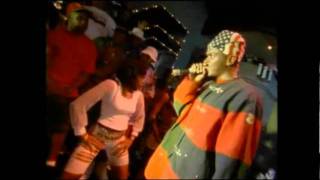
Watch the official I Wanna Rock
music video
A Performance More Than a Story
Unlike songs that unfold scene by scene, this one works through commands and reactions. Lines like move it up
and keep goin'
push listeners into participation. The voice in the song acts like a hype leader, not a reflective narrator.
That matters to the meaning of I Wanna Rock Luke because the record is really about collective behavior. The speaker calls out, the crowd answers, and the energy rises. Even when the lyrics are explicit, they are aimed outward, toward performance and spectacle.
Let me hear you say
Hey hey and more hey
This brief exchange captures the song’s design. It invites a response, then rewards it with more momentum. The crowd is not just hearing the song; they are helping make it happen.
Sex, Shock, and Miami Bass Context
The song’s sexual language is impossible to miss. It uses blunt commands and body-focused imagery to create a provocative atmosphere. In factual terms, that directness matches Luke’s larger public image. Campbell became one of the most visible defenders of controversial rap during the legal fights around 2 Live Crew’s music, a major free-speech story covered by The Washington Post and Oyez.
Interpretation: in this song, explicitness is not only about desire. It is also part of Luke’s brand of confrontation. The lyrics are meant to provoke, entertain, and test boundaries at the same time. That helps explain why the song can feel both playful and aggressive.
For some listeners, that makes it a pure party anthem. For others, it can feel deliberately excessive. Both reactions are built into the record’s effect.
How the Sound Carries the Message
Production is key here. The track relies on repeated chants, sparse melodic content, hard rhythm, and a bass-first feel associated with Southern club rap. Those traits were foundational to Miami bass, a style shaped by dance music, electro, and local club culture, as noted by AllMusic.
The sound does three important things:
- It makes the hook unforgettable.
- It leaves space for crowd response.
- It turns repetition into physical pressure.
The repeated vocal bursts feel almost percussive. Phrases like doo doo brown
and get it get it
function less like poetic images and more like rhythmic triggers. They are memorable because of sound and placement, not because they reveal hidden character detail.
What the Song Says About Control and Release
There is a push-and-pull in the track between command and freedom. On one hand, the voice tells people what to do. On the other, the purpose is release: dance harder, shout louder, lose inhibition. That tension is common in club records, where structure creates the space for chaos.
Interpretation: one reading is that the song celebrates the body as the center of experience. The lyrics keep returning to motion, display, and reaction. In that view, the song is about giving in to the moment and letting rhythm replace thought.
Another reading is more critical. The language can make bodies feel reduced to props in a party scene. That does not erase the song’s cultural power, but it does shape how modern listeners may hear it.
Why the Repetition Works
Many songs use repetition because it is catchy. Here, repetition is the meaning. By circling back to I wanna rock my man
and the main hook, Luke keeps the song locked on physical desire and public energy. Nothing interrupts that mission.
This is why the track endures as a document of its scene. It captures a time when regional rap styles were deeply tied to local clubs, car audio culture, and live crowd interaction. The song may seem simple on the page, but in performance terms, its simplicity is a strength.
Final Take on the Song’s Meaning
The meaning of I Wanna Rock Luke is straightforward but culturally specific: it is a Miami bass party record that turns repetition, shock, and rhythm into a communal experience. It is about movement more than reflection, command more than confession, and sensation more than story.
That does not make it empty. It makes it functional. The song knows exactly what it wants to do, and it does it with maximum force.
Disclaimer: This interpretation is based on the lyrics, genre context, and public history around Luke. Meaning can vary by listener and setting.
Sources
- https://www.britannica.com/biography/Luther-Campbell
- https://www.nytimes.com/1990/06/17/arts/the-2-live-crew-case-and-the-battle-over-free-speech.html
- https://www.washingtonpost.com/archive/lifestyle/1992/04/08/2-live-crew-gets-supreme-court-hearing/7c4d4b7d-4e92-4b25-9b7d-6550f6b8e882/
- https://www.oyez.org/cases/1993/92-1292
- https://www.allmusic.com/style/miami-bass-ma0000012173







