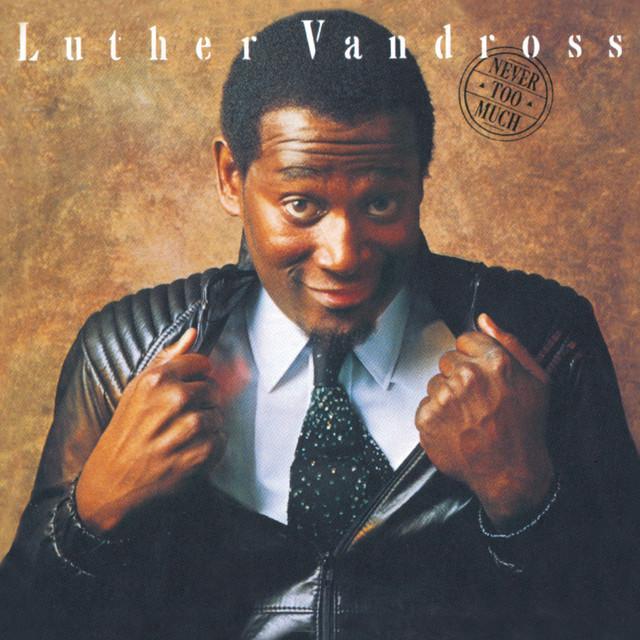
Why 'Never Too Much' Is Pure Overflowing Love
They don’t write many love songs like this anymore. Luther Vandross’s 1981 debut single bursts with warmth and polish, lifting everyday scenes into a celebration of devotion. If you’re looking for the meaning of Never Too Much Luther Vandross, it’s simple and powerful: when love overflows, life brightens.
"Never Too Much" - Luther Vandross
You are my shining star, my guiding light, my love fantasy
There's not a minute, hour, day or night that I don't love you
Loading lyrics...
Unable to load lyrics
We're unable to display the lyrics at this time. Please try again later.
What Overflowing Love Looks Like Here
At heart, the song is a pledge of unending affection that doesn’t feel clingy—it feels confident. The narrator treats their partner as a constant source of light, calling them a my shining star
. They also admit the love is ever-present—I'm always thinking of ya
—and they frame this not as obsession but as joyful routine.
Interpretation: The repeated emphasis on time (minutes, hours, days) and quantity suggests that love isn’t measured by limits. It’s measured by willingness to keep showing up.

Watch the official Never Too Much
music video
Who’s Speaking—and To Whom?
The voice is first person and intimate. They address one person directly, remembering early nerves, planning how to say “I love you,” and celebrating that the feeling was returned. The song’s directness keeps it grounded. Instead of abstract romance, they focus on daily gestures and memories to prove depth.
This intimacy shimmers in small phrases that echo through the track. When the narrator calls the partner a guide, they position love as compass and comfort. The effect feels less like drama and more like steady, adult joy.
A Morning-to-Evening Story in Miniature
The verses sketch a crisp timeline:
- They look at a photo in the morning for motivation.
- A phone call goes unanswered, and work responsibilities loom—
the boss is so demandin'
. - Opening the door, surprise: the beloved appears.
- Faced with the choice between hustling for another dollar or savoring a rare moment together, they choose love.
Interpretation: This is a love song about priorities. When the real world intrudes, the narrator doesn’t abandon responsibility thoughtlessly; they recognize that presence with a partner can matter more than one more paycheck.
What the Chorus Really Promises
The chorus declares that a thousand kisses
are still never too much
. It’s big language, but Vandross sells it with understatement and grace. The repetition feels like certainty, not hyperbole. He isn’t pleading; he’s testifying.
Interpretation: The hook turns quantity into symbolism. Numbers—thousands, millions—aren’t literal counts; they’re a vow that love renews itself daily.
Symbols and Motifs That Keep Glowing
- Light and guidance: Calling the partner a star reframes love as navigation and safety.
- Time: Minutes, hours, days, nights—love fills every unit, suggesting continuity.
- Numbers: From
a thousand kisses
to “a million days,” scale signals abundance. - Work vs. love: The tension between duty and desire is resolved in favor of presence.
- Chance:
love is a gamble
—and here, it’s a winning hand, capturing early-stage optimism.
How the Sound Carries the Feeling
Vandross wrote and produced the track himself, placing his velvet lead in a bright, post-disco R&B frame. A brisk, dance-floor-friendly tempo and an earworm bass line (played by Marcus Miller) keep the song buoyant. Nat Adderley Jr.’s keyboards add sparkle; Paul Riser’s strings and horns glide in like a warm breeze. Background vocalists, including Cissy Houston, wrap Luther’s lead in radiant harmonies.
The arrangement is lush yet clean. Syncopated drums and congas push the groove forward without crowding the vocal. Vandross’s phrasing is masterful: he holds back on the verses and opens up on the hook, mirroring the lyrics’ idea that affection spills over. The sound smiles as big as the sentiment.
Career Moment and Lasting Reception
“Never Too Much” launched Vandross as a solo star. Released in October 1981 on Epic, it topped the R&B chart and reached the pop Top 40. It later appeared on major “greatest songs” lists and earned multi-territory certifications, underscoring its cross-generational pull. The track has remained a staple at weddings, cookouts, and dance floors—any setting where joy is the dress code.
Interpretation: Its staying power comes from restraint as much as exuberance. The production is plush but not gaudy; the lyric is effusive but grounded in real life. That balance keeps it timeless.
Alternate Readings Worth Considering
- Interpretation: A portrait of healthy obsession. The narrator is swept up, but they celebrate mutuality and history, not fantasy.
- Interpretation: A work-life parable. The song can read as permission to choose people over productivity, at least for a day, when love knocks at the door.
The Takeaway
The meaning of Never Too Much Luther Vandross is that love can be bottomless without being reckless. By locating passion in everyday details—the picture on the nightstand, the missed call, the knock at the door—Vandross turns a grand declaration into lived experience.
Interpretation disclaimer: Song meanings are subjective. This analysis reflects one informed reading, grounded in the lyrics, sound, and public reception.








