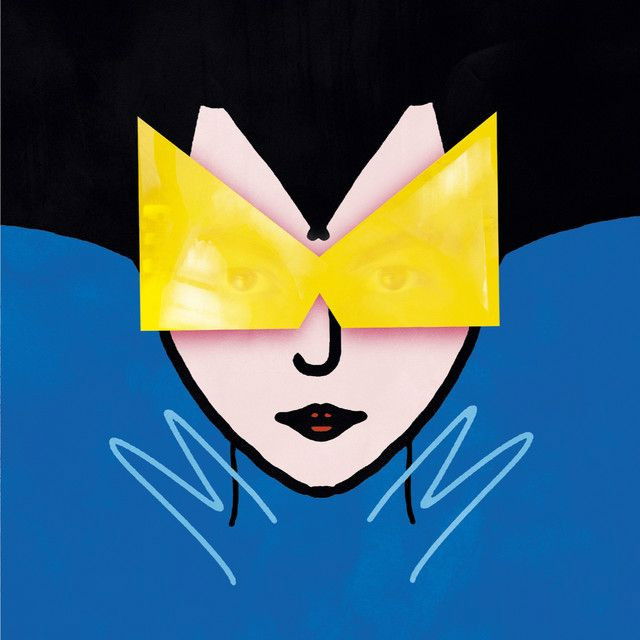
What "Mojo" by -M- Really Means
The meaning of Mojo -M- comes down to one idea: charisma as a physical force. In this song, -M- turns attraction into something almost magical, almost animal, and definitely unstable. The lyrics do not tell a detailed story. Instead, they circle a feeling—seduction, instinct, danger, and surrender—and let that feeling grow stronger with each repetition.
"Mojo" - -M-
Quand elles ressentent mes ondes animales?
Est-ce que c'est bien?
Loading lyrics...
Unable to load lyrics
We're unable to display the lyrics at this time. Please try again later.
A Song About Magnetism, Not Just Romance
At the center of the track is a speaker trying to name what makes a charged moment happen. They keep returning to the word Mojo
, not as a joke, but as a way to describe personal power. In American English, “mojo” can mean charm, luck, or sexual energy. The song leans heavily into that mix.
The verses suggest that touch and attraction are uneven, hard to measure, and hard to judge. When the speaker asks questions that amount to “is this good or bad?” they are not seeking a clean answer. They are showing how desire scrambles certainty. That is why the repeated invitation to laisse-toi aller
—let yourself go—matters so much. The song frames mojo as a force that asks people to stop overthinking and give in to the moment.

Watch the official Mojo
music video
Why the Opposites Matter So Much
One of the smartest things in the lyric is its chain of opposites. The song keeps moving through pairs that cancel each other out: hot or cold, late or early, ugly or beautiful, true or false. Those contrasts make the scene feel dizzy.
Interpretation: this is not random wordplay. It suggests that once attraction takes hold, normal categories lose their power. The speaker is less interested in facts than in sensation. A night can feel both exciting and dangerous. A person can seem irresistible and threatening at the same time.
That is also why short phrases like ondes animales
and cette nuit risque d'être fatale
stand out. Even in paraphrase, the message is clear: desire here is bodily, instinctive, and edged with risk. The song is playful, but it is not innocent.
The Chorus Turns a Mood Into a Spell
The hook is simple, but it does heavy lifting. By repeating c'est ça, c'est le Mojo
, the song acts as if naming the force is enough to summon it. Then the stuttered chant of “Mo-Mo-Mo” pushes the word beyond meaning and into rhythm.
Interpretation: that repetition makes the chorus feel like a trance. Instead of explaining mojo, the song performs it. The listener is pulled into the groove the same way the speaker wants the other person pulled into the night.
This is where the meaning of Mojo -M- becomes clearest. Mojo is not just confidence. It is confidence that spreads. It is charisma as atmosphere.
A Voice Caught Between Control and Surrender
The speaker sounds persuasive, but not fully in control. They are urging someone else to relax and give in, yet their own questions reveal uncertainty. They seem fascinated by the power they are describing, maybe even overwhelmed by it.
That tension gives the song depth. Without it, “Mojo” could be just a slick flirtation anthem. Instead, it feels like a portrait of someone feeling desire happen in real time. They are trying to direct the encounter, but they are also being swept up in it.
A Brief Lyric Snapshot
The song’s push and pull comes through in this short passage:
Est-ce qu'il fait froid?
Est-ce qu'il fait chaud?
Laisse-toi aller
C'est qu'ça, c'est le Mojo
In paraphrase, the singer moves from confusion to surrender to certainty. The details may shift, but the answer is always the same: the mood itself is in charge.
How the Sound Supports the Meaning
Even without unpacking every production detail, the song’s structure clearly supports its theme. The repeated hook, clipped questions, and chant-like vocal pattern create momentum. Rather than building a long narrative, the song works like a groove machine. Each return to the title feels more physical.
-M-, the stage name of Matthieu Chedid, is widely known for playful guitar work, elastic funk-pop textures, and theatrical performance style, as documented on his official site and major French music profiles such as Wikipedia. That context matters here. “Mojo” fits his artistic world: stylish, rhythmic, sensual, and a little surreal.
The credited writers provided here—Billie Chedid, Brad Ackley, Dorion Fiszel, and Matthieu Chedid—also point to a collaborative design behind the song’s tight hook writing. The lyric is sparse on purpose. It leaves room for groove, vocal attitude, and repetition to carry the meaning.
Two Strong Ways to Read "Mojo"
There are at least two convincing readings of the song:
- A seduction song. The most direct reading is that mojo means sex appeal. The imagery of touch, beauty, danger, and letting go all support that.
- A song about performance energy. Interpretation: mojo may also mean star power itself—the strange force an artist or lover projects. In that reading, the song is about presence, not just romance.
These readings can both be true. That overlap is part of the song’s appeal. It treats charisma as both intimate and public, both personal and theatrical.
The Lasting Takeaway
The meaning of Mojo -M- is ultimately about the thrill of being overtaken by attraction, rhythm, and presence. It shows desire not as a clear decision but as a wave people feel before they understand it.
That is why the song remains catchy beyond its hook. It captures the unstable moment when instinct seems smarter than logic, and when charm feels powerful enough to change the air in the room.
Disclaimer: This interpretation is based on the lyrics, musical context, and common usage of the song’s imagery. As with many songs, listeners may hear different meanings in it.







