Why 'River of Deceit' Still Cuts Deep
The meaning of River of Deceit Mad Season starts with a hard truth: this is a song about knowing they are trapped in something harmful and still feeling pulled toward it. Mad Season turns that conflict into a slow, haunted confession. The result is one of the clearest songs of the Seattle era about denial, shame, and the wish to become someone better.
"River of Deceit" - Mad Season
At least, so the prophet says
I could either burn
Loading lyrics...
Unable to load lyrics
We're unable to display the lyrics at this time. Please try again later.
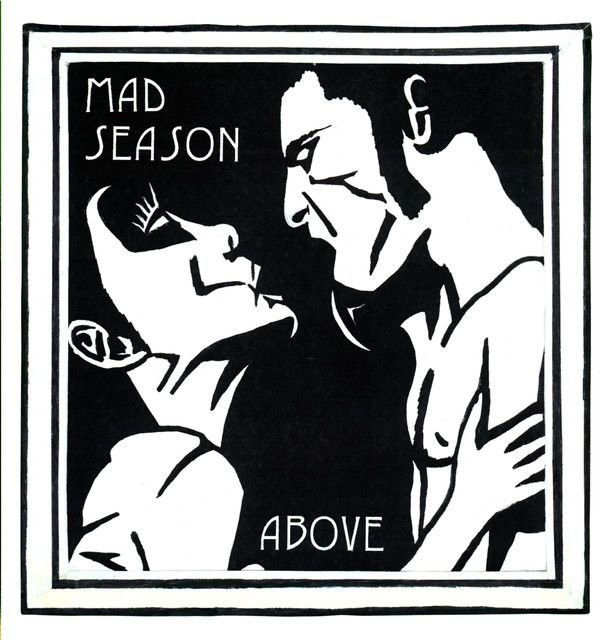
Released as the first single from Above in 1995, the track became Mad Season’s best-known song and reached No. 2 on Billboard’s Mainstream Rock chart and No. 9 on Modern Rock Tracks. It came from a short-lived supergroup featuring Layne Staley, Mike McCready, Barrett Martin, and John Baker Saunders. The song was written by all four members, and the album was produced by Brett Eliason with the band.
A Confession Framed as a Choice
At its core, the song keeps returning to one disturbing idea: pain may be chosen, or at least partly accepted. The opening phrase, my pain is self-chosen
, is not sung like a slogan. It sounds weary, almost like they are trying to convince themselves of a lesson they do not fully know how to live.
That matters because the lyric does not excuse the speaker. Instead, it asks whether suffering grows worse when pride and dishonesty keep a person from asking for help. Another key image, a head full of lies
, turns deceit into something heavy and physical. The lies are not abstract. They become a burden tied to the body.
Interpretation: many listeners hear this as a portrait of addiction, especially because of Staley’s well-known struggles. That reading is reasonable. But the song also works on a wider level, describing any cycle where denial keeps a person stuck.

Watch the official River of Deceit
music video
The Gibran Thread Behind the Words
One important clue to the song’s meaning is its direct mention of the prophet says
. That points to Khalil Gibran’s 1923 book The Prophet, which Staley was reading around the time Above was created. Sources on the song note that much of the lyric inspiration came from that book, especially its meditation on pain and spiritual growth.
This literary link gives the song more depth. It is not only about falling apart. It is also about judgment, self-knowledge, and the painful stripping away of illusion. Barrett Martin later said that Staley felt he was on a “spiritual mission” through his music, which fits the song’s searching tone.
Why the Chorus Feels So Hopeless
The chorus is simple and devastating. The image of the river of deceit
suggests movement that cannot easily be stopped. Rivers carry people along. In this song, the current goes only one way: downward.
The only direction we flow is down
Down, oh down
That short refrain matters because it turns deceit into more than a private mistake. It becomes an environment. Once they enter it, every motion seems to deepen the fall.
Interpretation: the chorus may describe addiction, depression, or a spiritual collapse. In each reading, the key idea is the same: self-deception creates momentum. It gets harder to turn back the longer they stay in it.
Images of Drowning, Shedding, and Armor
The verses use body imagery in striking ways. They speak of burning or drowning, then imagine peeling away skin and swimming toward shore. That is a brutal metaphor for change. Recovery is not shown as easy healing. It feels like tearing off part of the self.
Then comes the song’s strangest image: growing a shell for others to see. On one level, that shell sounds protective. After pain, they build an outer layer. On another level, it sounds tragic, because the new exterior may be beautiful but false.
This is where the song becomes especially sharp. It suggests that surviving pain can lead either to honesty or to a polished mask. A person may escape one lie only to hide inside another.
How the Music Carries the Meaning
The arrangement is a big reason the song lands so hard. Mad Season blends alternative rock, blues rock, and grunge into a slow, sinking groove. The band recorded Above in 1994 at Bad Animals in Seattle, and the performance feels live, spacious, and unforced.
McCready’s guitar does not rush to a climax. It circles and aches, as if trapped in the same current as the lyric. Saunders’ bass gives the song its heaviness, while Martin’s drums stay patient and almost ritual-like. Staley’s vocal is the emotional center: restrained, bruised, and direct.
That restraint is crucial. If the song were louder or more dramatic, it might feel preachy. Instead, it sounds resigned, which makes the downward pull feel real.
Artist Context Without Reducing the Song
It is fair to mention Staley’s life, because many listeners hear his addiction in the words, and reference sources say the song was written partly from that experience. Still, reducing the track to biography alone misses its power.
The song lasts because it speaks to a common human pattern: they know the truth, but pride, fear, and habit keep them from acting on it. Whether the listener hears substance abuse, dishonesty in relationships, or spiritual emptiness, the message holds.
That helps explain why “River of Deceit” became the signature Mad Season song. Even though Above was the band’s only studio album, the track built a lasting following because it feels personal and universal at once.
The Lasting Takeaway
The meaning of River of Deceit Mad Season is not just that deceit hurts. It is that self-deceit creates its own gravity. The song shows how lies, pride, and pain can pull a person lower until even survival starts to look like a mask.
Their genius was to make that message sound intimate rather than abstract. They turned philosophy, addiction, and spiritual doubt into one unforgettable current.
Disclaimer: This interpretation combines documented context with critical reading of the lyrics. Like all song analysis, some meanings remain open to listener interpretation.








