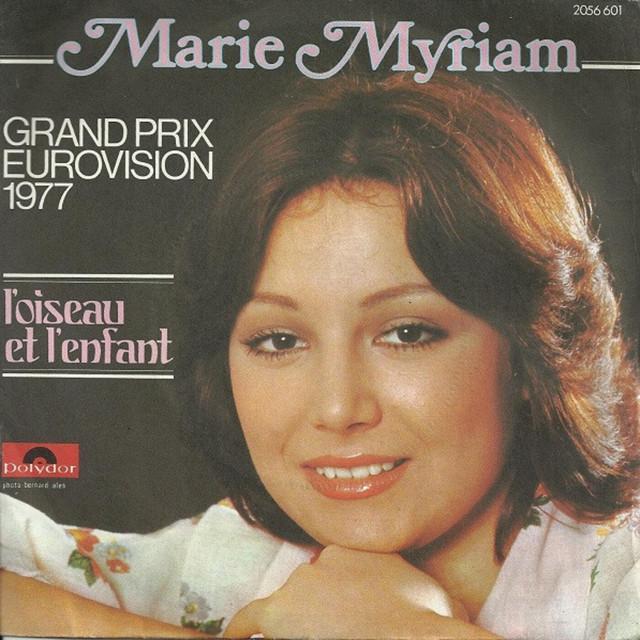
Why 'L'oiseau et l'enfant' Still Feels Hopeful
The meaning of L'oiseau et l'enfant Marie Myriam comes through with unusual clarity: it is a song about seeing the world with wonder and choosing love as a way to remake it. Performed by Marie Myriam, the song won the 1977 Eurovision Song Contest for France, which helps explain why it still carries the feeling of a public anthem as much as a personal ballad.
"L'oiseau et l'enfant" - Marie Myriam
Aux yeux de lumière
Qui voit passer
Loading lyrics...
Unable to load lyrics
We're unable to display the lyrics at this time. Please try again later.
Written by Jean-Paul Cara and Joe Gracy, it does not tell a complex story with conflict and resolution. Instead, it builds a moral and emotional vision. The lyric moves from childlike images to a larger promise: if people can keep innocence, imagination, and love alive, they may still find a better shared future.
A Simple Idea With Big Reach
At the center of the song are two linked symbols: the bird and the child. The child stands for openness, trust, and clear sight. The bird stands for freedom, distance, and a wider perspective. Early images like aux yeux de lumière
and le monde est beau
frame the world as something still worth admiring.
That matters because the song is not naive in a shallow way. It knows the world can feel heavy, tired, and damaged. But it argues that beauty is not false just because it is fragile. Interpretation: the lyric suggests that hope is an act of vision. They see beauty first, and from that vision, they imagine change.
Watch the official L'oiseau et l'enfant
music video
How the Verses Build a Better World
Each verse adds another layer to that vision. The song begins with a child watching birds far away, then shifts to the sea, music, poetry, morning, and city life. These images turn private wonder into social hope.
A few details show how carefully that works:
- Nature appears as motion and possibility, not escape.
- Art appears as something that invents love and celebration.
- Morning appears as renewal after darkness.
- The city appears tired, but still capable of waking up.
When the lyric mentions the poet and a life dressed for celebration, it is saying that art can help transform reality. The line about night becoming day pushes that same idea further. Darkness is not denied; it is answered.
L'amour, c'est moi
L'amour, c'est toi
This brief refrain is the song’s emotional key. It shrinks a huge message into a direct exchange between two people. Love is not presented as abstract philosophy. It becomes relationship, identity, and recognition.
Why the Chorus Hits So Hard
The chorus is memorable because it keeps pairing ideas together. Love belongs to both speaker and listener. So do the bird and the child. In plain terms, the song says people need both freedom and innocence, both movement and trust.
That pairing keeps the lyric from feeling one-dimensional. A bird alone might suggest flight without roots. A child alone might suggest purity without strength. Together, they create balance.
Interpretation: this is why the refrain feels universal rather than romantic in a narrow sense. The song can be heard as addressing a lover, a child, humanity, or even the future itself. Its use of direct identity statements makes all those readings possible.
Sound, Staging, and the Eurovision Effect
Marie Myriam’s performance style also shapes the meaning. According to Eurovision’s official archive, she represented France with this song in 1977 and won the contest, giving France its most recent Eurovision victory to date at the time of writing (Eurovision). That context matters because the song was designed to reach a huge audience quickly.
The arrangement supports that goal. It uses orchestral pop textures, a steady rise in intensity, and a polished melodic line. Rather than sounding earthy or intimate, it sounds expansive. Strings and broad harmonic movement make the song feel like it is lifting upward, matching the bird imagery and the lyric’s leap toward a better world.
Marie Myriam’s vocal delivery is also key. They do not oversing the message. The performance stays warm and clear, which helps the idealism feel sincere instead of theatrical. That balance is hard to achieve, and it is one reason the song still works.
A French Chanson, But Broadly Human
For American listeners, the song may first sound like a classic French Eurovision entry: elegant melody, poetic imagery, and emotional uplift. But its meaning is broader than national style. The lyric’s vision of un monde à nous
is about belonging, not ownership. It imagines a world people can share rather than control.
There is also a quiet social dimension here. The city has yeux lourds
, or heavy eyes, as if worn down by routine or sorrow. Morning arrives to wake it. That is not just pretty writing. It suggests collective renewal. The song’s hope is not limited to one couple or one child; it extends to public life.
The Best Way to Read the Ending
By the end, the song circles back to its opening images, but with a stronger sense of purpose. What started as observation becomes promise. They do not just admire the world from afar; they say they will find that world together.
That is the heart of the meaning of L'oiseau et l'enfant Marie Myriam. It is a song about preserving wonder in order to build hope. Its innocence is deliberate, not empty. It treats beauty, love, and imagination as forces that can push back against fatigue and darkness.
For that reason, the song still resonates. It offers a vision many pop songs avoid: that tenderness can be powerful, and that seeing the world with clear eyes may be the first step toward changing it.
Disclaimer: This interpretation is based on the song’s lyrics, performance, and public context. As with any poem or song, listeners may hear meanings that differ from this reading.







