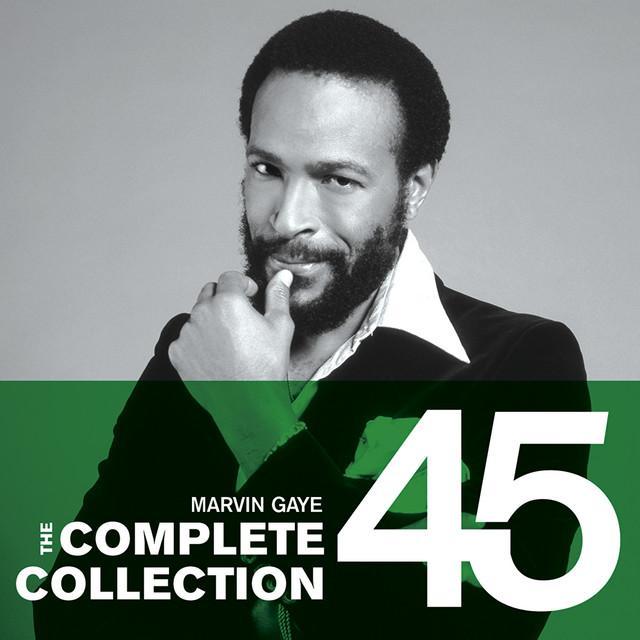
Why Marvin Gaye Had to Let Go
When people search for the meaning of Got To Give It Up Marvin Gaye, they usually hear a party song first. That is fair: the record feels warm, loose, and instantly social. But under that easy groove is a simple story about someone moving from shyness to release.
"Got To Give It Up" - Marvin Gaye
And stand around
'Cause I was too nervous
Loading lyrics...
Unable to load lyrics
We're unable to display the lyrics at this time. Please try again later.
Marvin Gaye turns that small moment into something bigger. The song is about giving in to rhythm, confidence, and desire without losing his personality. It is dance music, but it is also a character sketch.
A Wallflower Steps Into the Room
At its core, the song follows a narrator who used to freeze at parties. Early lines describe someone standing off to the side, too nervous to join in. Then the music and the crowd slowly change that mood.
A few short phrases make the arc clear: too nervous
, my body yearned to be free
, and found someone to choose me
. Even without long quotations, the message is plain. They are no longer trapped by self-consciousness; they let the body lead before the mind can stop it.
That is the heart of the song’s meaning. It is not just “go dance.” It is “stop watching life from the wall.”
Watch the official Got To Give It Up
music video
The Chorus Means More Than Party Hype
The repeated hook, got to give it up
, sounds like a command to keep dancing. On the surface, that is exactly what it is. The chorus pushes the room forward and keeps the energy high.
Interpretation: the phrase also means giving up fear, stiffness, and control. The narrator surrenders to the groove, but also to the possibility of connection. In other words, they stop performing cool distance and allow themselves to be seen.
That reading fits the verses well. The song begins with hesitation and ends in motion, flirtation, and social ease. The hook is the bridge between those two selves.
Flirtation, Freedom, and a Hint of Risk
Once the narrator loosens up, the song grows more playful. It is full of social signals, invitations, and romantic tension. Phrases like havin' a ball
and make romance
show that dancing here is not only exercise or fun. It is also courtship.
There is even a stronger sensual note in erotic zone
. That line matters because it keeps the song from being too innocent or too generic. This is an adult party, and Marvin Gaye never hides that.
Still, the track does not feel heavy or predatory. The mood stays light, teasing, and communal. American Songwriter nicely summed up that balance by describing the record as more about dancing than seduction, even while it includes innuendo. That captures why the song remains inviting instead of tense.
Why the Sound Tells the Story
A big part of the meaning of Got To Give It Up Marvin Gaye comes from the production. According to available session history, the song was written by Gaye and produced by Art Stewart, recorded in December 1976, and released on March 15, 1977. It later reached No. 1 on the Billboard Hot 100 and No. 1 on the U.S. R&B chart.
The arrangement is crucial. Party chatter starts the song before the groove fully lands. Cowbell, hand percussion, soft drums, bass movement, falsetto singing, and a relaxed pocket make the listener feel dropped into a real room instead of a polished studio fantasy.
That choice supports the lyric perfectly. The narrator is not alone in their head; they are surrounded by bodies, noise, and encouragement. The background voices almost act like social proof: everybody else is already moving, so maybe they can move too.
A Disco Song That Sounds Like Marvin
There is important context here. Reports about the song’s creation say Motown wanted Gaye to make disco. He reportedly resisted at first, then answered with a track that fit the era while still sounding unmistakably like him.
That helps explain why the record feels both playful and sly. It works as a dance hit, but it also seems to observe disco culture from inside the party. Interpretation: Gaye is not simply obeying a trend. They are transforming a label request into a song about authenticity—how to enter the room without losing the self.
Why It Lasted Beyond 1977
The song became a hit, but its afterlife says even more. It has appeared in films and TV for decades, and its groove became central to the famous legal fight over Robin Thicke and Pharrell Williams’ Blurred Lines. That case kept public attention on how distinctive this record really is.
Its legacy also lives in influence. Critics and listeners have long heard traces of its falsetto, percussion, and party atmosphere in later dance-pop and R&B. The song feels casual, but its construction is remarkably precise.
The Best Way to Hear It Today
The best reading is also the simplest one: this is a song about release. A shy person enters a party, trusts the music, and becomes part of the room. By the end, dancing stands for confidence, desire, and belonging.
That is why the record still feels fresh. It understands that sometimes joy is not automatic. Sometimes people have to cross a line inside themselves first.
Interpretation disclaimer: This article offers a close reading based on the lyrics, performance, and documented context. Like all song analysis, some meanings are interpretive rather than officially confirmed by the artist.







