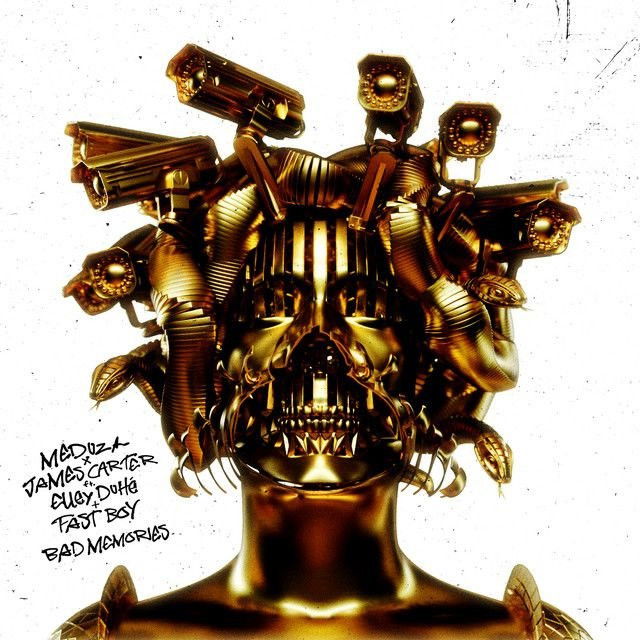
Bad Memories by MEDUZA, James Carter, Elley Duhé, FAST BOY
They know exactly what they’re doing—and they’re doing it anyway. The meaning of Bad Memories MEDUZA, James Carter, Elley Duhé, FAST BOY lives in that tension: chasing a high while predicting the hangover. It’s a club confession that turns self-sabotage into a shared dare.
"Bad Memories" - MEDUZA, James Carter ft. Elley Duhé, FAST BOY
I think I'm losing my head now
Tonight we'll make bad memories
Loading lyrics...
Unable to load lyrics
We're unable to display the lyrics at this time. Please try again later.
Regret as a Thrill Ride, Not a Warning
On the surface, it’s a late-night scene. Someone reaches for one more drink
while admitting they’re losing my head
. In a twist, they plan to make bad memories
—not good ones.
Interpretation: the song frames regret as part of the thrill. By naming the outcome up front, the characters turn shame into a choice. That choice is seductive. Saying it out loud makes it feel honest, even empowering, though the cycle hurts.
"One more drink," she said
"I think I'm losing my head now"
"Tonight we'll make bad memories"
"Again and again"

Watch the official Bad Memories
music video
Two Voices, One Pact
The lines flip from “she said” to “he said,” then to “we.” That progression matters. It moves from temptation to agreement. When they say no turning back
, it’s a vow—two people co-signing the same reckless plan.
Interpretation: the duet structure mirrors a co-dependent dynamic. Each person mirrors the other’s urge, which makes it feel safer to cross lines. Shared responsibility blurs into shared denial.
The Night in Three Beats
The narrative is minimal, but clear:
- The invite: someone suggests
one more drink
even though they’re already off-balance. - The consent: the other person agrees; “we” forms, and the risk becomes a bond.
- The loop: it happens
again and again
, signaling that this isn’t a one-time mistake.
This is not a slow unraveling; it’s a fast loop. The repetition in the writing mirrors the routine of nightlife binges and the rush-to-regret pipeline.
Symbols That Do the Heavy Lifting
- The drink: more than alcohol, it’s shorthand for permission. Saying “one more” delays stopping, shifting the boundary just enough to fall past it.
Losing my head
: a collapse of judgment, but also a release from overthinking. It hints at both anxiety and the relief of turning it off.Bad memories
: a clever inversion. They’re making souvenirs of poor choices—stories they’ll tell later with a wince and a smile.Again and again
: the core motif. Compulsion is the point, not the slip-up. The characters don’t learn; they return.
Interpretation: the language sounds like accountability, but it may be self-justification. Naming the damage doesn’t prevent it; it only reframes it as adventure.
The Sound of a Controlled Spiral
MEDUZA’s signature deep house pulse anchors the track, while James Carter’s pop sensibility tightens the arrangement. The kick is steady and physical, pushing dancers forward. A rubbery bassline, glassy synth stabs, and reverb-washed vocals create that “3 a.m.” blur.
Elley Duhé’s lead floats with a cool, slightly haunted tone, while a male reply adds grit—an aural version of “she said/he said.” The hook drops clean and wide, just when the lyrics promise there’s no turning back
. Production choices—filter sweeps, a tension-building pre-chorus, then a chest-thumping drop—translate the emotional loop into sound.
Factually, the collaboration brings together Italian trio MEDUZA and UK producer James Carter, with vocals by Elley Duhé and German duo FAST BOY. The writers’ room (including Chris Mears, Darren Flynn, Elley Duhé, Felix Hain, Luca De Gregorio, James Carter, Lucas Hain, Mattia Vitale, and Simone Giani) keeps the topline lean and mantra-like to suit the dancefloor.
Why the Repetition Works
Dance music thrives on loops, but here the loop carries meaning. Each repetition tightens the trap. The fewer the words, the more they feel like a chant. That’s why the refrain hits so hard: it’s a decision repeated until it becomes identity.
Interpretation: the song suggests that some “bad” choices are social rituals. The crowd sings along, and suddenly the characters aren’t alone—they’re part of a culture that turns regret into entertainment.
Other Ways to Hear It
- Relationship lens: a toxic situationship where chaos is the glue. “We love to make bad memories” becomes an inside joke that hides real hurt.
- Post-pandemic lens: a burst of reckless freedom after long restraint. The hunger to feel anything overrides the cost.
Both readings fit because the lyrics keep details open. The universality lets listeners project their own “one more” onto the track—drinks, texts, risks, whatever keeps the cycle spinning.
Takeaway
Bad Memories is catchy because it’s honest about dishonesty. They admit the fallout and still hit go. That frankness, wrapped in a high-gloss drop, turns a cautionary tale into a communal release.
Disclaimer: Song meanings are interpretive and may differ from the artists’ intent.








