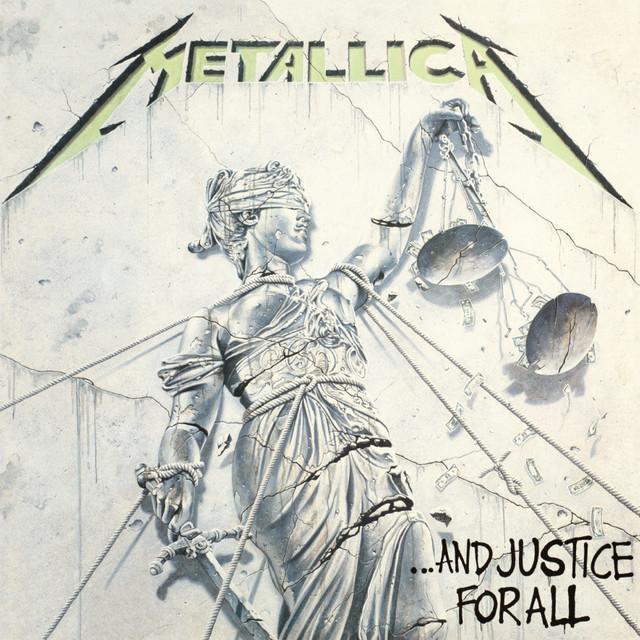
How Metallica Turned Justice Into a Nightmare
The meaning of ...And Justice For All Metallica starts with a bitter idea: the system meant to protect people can be bought, twisted, and used against them. Released in 1988 as the title track from the band's fourth studio album, the song takes the promise of fairness and turns it inside out. According to widely cited reference material, the title echoes the last words of the Pledge of Allegiance, while the lyrics focus on corruption and miscarried justice (Wikipedia).
"...And Justice For All" - Metallica
Money talking
Power wolves beset your door
Loading lyrics...
Unable to load lyrics
We're unable to display the lyrics at this time. Please try again later.
Rather than tell one neat story, they build a courtroom nightmare. Power stalks, money speaks, and the innocent are crushed by a machine that should have defended them.
The Core Message Hiding in Plain Sight
At its heart, the song says justice is not blind when wealth and influence control the room. Early lines present the legal world as contaminated, using the phrase painted green
to connect justice with money. That image matters because green is not just a color here; it becomes a symbol for cash, greed, and moral rot.
The chorus drives the point home with blunt force. Phrases like justice is lost
and winning is all
describe a system where truth no longer decides outcomes. What matters instead is power, performance, and manipulation.
Interpretation: They are not only criticizing courts. They may also be attacking any institution that claims moral authority while serving the rich and connected.
Watch the official ...And Justice For All
music video
A Song Without a Hero
One reason the track feels so cold is that it offers no rescuer. The narrator sounds outraged, but they do not step in to fix anything. They mostly observe the damage and expose the lie.
That is why lines about people being controlled, including pulling your strings
, feel so important. The image suggests puppets, not citizens. In this world, ordinary people do not shape justice; they are moved by forces behind the scenes.
From “You” to “Us”
A subtle shift deepens the song's meaning. Earlier sections talk about the price you
pay, but later the lyric becomes the price we
pay. That move widens the target. Corruption does not only hurt one accused person. It poisons public trust and harms everyone.
The Images That Make the Song Hit Hard
Metallica packs the song with symbols from law and punishment, but each one is twisted.
- Halls of justice become corrupted spaces, not noble ones.
- Lady Justice no longer stands for balance; she is violated and compromised.
- Red tape suggests bureaucracy used to silence instead of protect.
- Scales are tipped by money, meaning fairness has been bought.
- Hammer of justice sounds powerful, but it falls on the vulnerable.
These are familiar legal images, which makes their distortion even more disturbing. The band does not invent a fantasy villain. They take symbols people are taught to trust and show them collapsing.
justice is lost
justice is gone
seeking no truth
This short refrain sums up the song's worldview: once truth stops mattering, justice becomes theater.
Why the Music Sounds Like a System Breaking Down
The music is a huge part of the meaning of ...And Justice For All Metallica. The album version runs about 9:46 and is often described as progressive metal, with multiple connected sections rather than a simple verse-chorus structure (Wikipedia). Songfacts also quotes producer Flemming Rasmussen describing the title track as four songs in one
, built section by section on analog tape (Songfacts).
That structure fits the lyric perfectly. The song does not flow like a comforting anthem. It lurches through blocks of riffs, tension, and release, like moving deeper into a legal maze with no exit.
Mid-Paced, Yet Unforgiving
The tempo is not a blur, but that helps the message. The riffs march forward with pressure, as if the system is slowly closing in. Hetfield's voice is sharp and clipped, less emotional confession than public indictment.
The arrangement also reflects the era around the album. This was the first Metallica studio album with Jason Newsted after Cliff Burton's death, and the record became famous for its thin bass presence in the mix (Wikipedia). Whether listeners love or hate that production choice, it adds a dry, severe character that matches the song's lack of warmth.
Context Around the Band Matters Too
The song arrived at a time when Metallica was pushing into longer, more intricate writing. Live, it proved hard to recreate. Reports note that the intro often had to be played from tape because it required three guitars, and the band stopped performing the song for years after the original touring cycle before bringing it back in 2007 (Wikipedia; Songfacts).
That difficulty says something important. This is not just a protest song with heavy guitars. It is built like a machine, and that machine is part of the message: complicated, imposing, and hard to escape.
One Song, Two Strong Readings
There are at least two solid ways to hear it.
First, the direct reading: it is a furious attack on legal corruption, bribery, and class power. The lyrics support that clearly through courtroom imagery and repeated references to money tipping outcomes.
Second, Interpretation: the song can also be heard as a wider statement about America in the late 1980s. By borrowing language tied to national ideals, they suggest that the promise of fairness has been hollowed out by institutions chasing victory over truth.
The Last Word on Its Meaning
In the end, the meaning of ...And Justice For All Metallica is not hard to find, but it is hard to shake. They portray justice as something noble in theory and corrupted in practice. Through courtroom symbolism, relentless repetition, and a tense, sectional arrangement, the song argues that power often decides who wins long before truth gets a chance to speak.
That is why it still feels relevant: not because it offers hope, but because it forces listeners to ask whether justice is real or just well-staged.
Disclaimer: This interpretation mixes documented facts with critical reading. Like many Metallica songs, its meaning can support more than one valid view.









