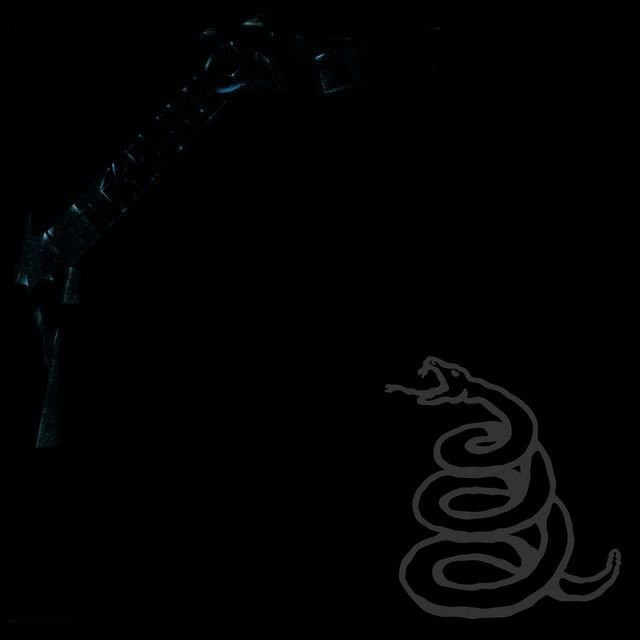
Why Metallica’s ‘Sad But True’ Hits So Hard
The meaning of Sad But True Metallica comes down to one brutal idea: the enemy in the song may sound external, but it is really living inside them. Metallica turns that idea into a crushing hard rock statement, using a voice that sounds controlling, intimate, and impossible to escape.
"Sad But True" - Metallica
Does it sound good out there?
I know, haha
Loading lyrics...
Unable to load lyrics
We're unable to display the lyrics at this time. Please try again later.
Released on Metallica in 1991, the self-titled record widely known as The Black Album, the song became a live favorite and one of the band’s signature heavy grooves. According to Songfacts, James Hetfield and Lars Ulrich wrote it during the sessions that also produced major tracks like “Enter Sandman” and “Nothing Else Matters.”
The Dark Voice at the Center
At first, the song sounds like a villain speaking directly to them. The narrator says I'm your life
and tries to claim total control. That is what makes the opening so unsettling: the voice acts like a guide, a friend, and a jailer at the same time.
The verses keep building that pressure. The speaker offers comfort, then turns that comfort into dependence. It says, in effect, that other people will fail them, while this darker force stays constant. That idea gives the song a manipulative tone, as if it is trying to isolate them and make them submit.
Watch the official Sad But True
music video
What the Chorus Really Reveals
The chorus is the key to the song’s meaning. Phrases like I'm your dream
and I'm your pain
show that the speaker is woven into desire, fear, and shame. It is not just attacking from the outside. It is mixed into how they think and act.
That is why the repeated title lands so hard. Sad but true
is not just a dramatic hook. It is the song’s verdict. The truth is painful because it suggests that people may be helping create the very harm they want to blame on something else.
The Final Twist Makes the Meaning Clear
The most important line comes near the end, when the song arrives at I'm you
. That moment changes the whole track. What sounded like a demon, bully, or puppet master now looks more like their own shadow self.
Interpretation: Many listeners hear the song as an inner monologue from the darkest part of the mind. That reading fits the lyric pattern of temptation, excuses, blame, and self-recognition. Songfacts summarizes the song as a dark side or “devil on the shoulder” story, but with the sting that the force is actually part of the self.
There are other possible readings too. Some fans hear addiction, self-destruction, or toxic dependence. Those interpretations also work because the lyric keeps returning to control, masking, and doing someone else’s “dirty work.”
Masks, Blame, and Moral Evasion
One of the smartest parts of the lyric is how often it returns to hiding. The song talks about masks, cover, and being the one who gets blamed. In plain terms, it describes a cycle where people avoid responsibility by pretending the worst part of them belongs to someone else.
You're my maskYou're my cover, my shelter
That short passage captures the song’s psychology. The dark impulse uses them as protection, while they use that same darkness as an excuse. In other words, both sides feed each other.
This is where the meaning of Sad But True Metallica becomes bigger than a horror image. It is about denial. People want a neat villain. Metallica suggests that the real villain can be the private self that lies, steals, lashes out, or pushes blame elsewhere.
Why the Music Feels So Massive
The song’s sound is a huge part of its meaning. Producer Bob Rock recalled that the band originally had the song in E, but he suggested tuning down to D, which made the riff feel enormous. He said, as quoted by Songfacts, that once they tuned lower, the riff became a force that could not be stopped.
That production choice matters. The slower tempo and down-tuned guitars make the song feel heavy in both senses: physically heavy and emotionally heavy. The riff does not race. It stomps. That stomp mirrors the lyric’s message of something dark pressing down on them.
Lars Ulrich has also praised the song’s feel and “stomp,” noting how alive it feels in performance, again cited by Songfacts. That looser groove keeps the track from feeling robotic. Instead, it sounds like something breathing right behind them.
Context from The Black Album Era
“Sad But True” fits perfectly on The Black Album, the record that sharpened Metallica’s songwriting into shorter, harder-hitting forms. The album was released in 1991, and “Sad But True” later came out as a single in 1993, according to Songfacts. Even without being their biggest chart hit, it endured because its core idea is simple and universal.
Hetfield later reflected on the song’s duality, saying the split between good and evil, and public self versus secret self, was more obvious than he first realized, in a quote reported by Songfacts. That comment supports the reading that the song is about inner division more than an outside monster.
The Lasting Meaning of “Sad But True”
In the end, the song lasts because it refuses easy comfort. It says people may be haunted less by evil forces than by their own hidden urges, excuses, and acts of self-betrayal. That is a bleak message, but Metallica delivers it with such conviction that it feels honest rather than preachy.
For listeners asking about the meaning of Sad But True Metallica, the clearest answer is this: it is a song about the darker self taking the microphone. It taunts them, controls them, and finally admits it was them all along.
Disclaimer: This interpretation combines documented context with critical reading. Like many Metallica songs, “Sad But True” supports more than one valid meaning.









