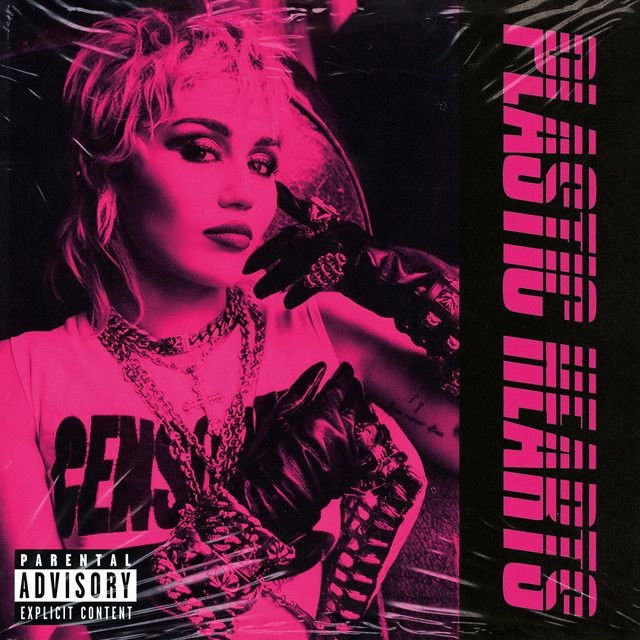
Why ‘Midnight Sky’ Is Miley Cyrus’s Freedom Anthem
Cyrus turned a turbulent period into a neon proclamation of self. “Midnight Sky,” the lead single from Plastic Hearts, arrived in August 2020 with a self‑directed video and a sound steeped in glossy retro synths and arena‑ready vocals. At its heart, the track asks a simple question: What does autonomy feel like when the world thinks it knows your story?
"Midnight Sky" - Miley Cyrus
Yeah, it's been a long night and the mirror's tellin' me to go home (home)
But it's been a long time since I felt this good on my own
Loading lyrics...
Unable to load lyrics
We're unable to display the lyrics at this time. Please try again later.
The meaning of Midnight Sky Miley Cyrus explained
Fact: Cyrus framed the song as taking control of her life after public breakups and career upheaval. Interpretation: the narrator claims independence without bitterness, asserting boundaries while keeping desire fully alive. When she sings I don’t belong to anyone
and I don’t need to be loved by you
, it isn’t a rejection of love; it’s a refusal to be defined by it.
The title image suggests a route that only she can chart—an open road under darkness that still glows. The result reads like a manifesto for self‑trust and reinvention, themes that powered the Plastic Hearts era.
Watch the official Midnight Sky
music video
Who’s speaking, and what changed?
The song speaks in first person, with the narrator looking in the mirror after a long night. Interpretation: that mirror is a checkpoint—am I going back to old patterns or forward into my own lane? Phrases like born to run
and head high up in the clouds
signal momentum and optimism. She is not escaping so much as accelerating.
Cyrus had recently navigated a divorce and high‑profile relationships; she has said the song helped her take back her narrative and find clarity. That context grounds the hook’s confidence in lived experience rather than posture.
A night drive as a map: symbols that matter
- The sky/road: The line “midnight sky” frames freedom as a path—vast, quiet, and self‑chosen.
- The ropes: References to being tied suggest past control or obligations now released.
- The mirror: Self‑recognition after chaos; she sees herself clearly enough to leave.
- The kisses: Mentions of lips on “her” and hands on “my waist” trace desire across genders while centering agency.
- The heat:
Fire in my lungs
paints voice as fuel—speaking her truth is the engine.
Together, these images turn a breakup story into a road movie where the destination is self‑possession.
What the hook really declares
Here the chorus crystallizes the thesis—autonomy over approval:
The midnight sky is the road I’m takin’ I don’t need to be loved by you
Interpretation: the refrain rejects outside validation, not intimacy. Love is welcome when it doesn’t cost identity. The line functions like a boundary line drawn in neon.
Sound and style: how the 80s glow powers the message
“Midnight Sky” blends disco, synth‑pop, electropop, and pop‑rock textures, built around a mid‑tempo pulse (about 110 BPM) in E minor. Critics noted its “raw arena rock vocals” against “pristinely glossy” production. That tension—rasp over chrome—mirrors the lyric’s blend of grit and glam.
Producers Andrew Watt and Louis Bell stack crisp drums, rubbery bass, and gleaming synth arpeggios, leaving space for Cyrus’s muscular alto to cut through. The self‑directed video doubles down on 1970s/’80s iconography—mirrors, disco ball sparkle, punk‑glam styling—echoing inspirations like Stevie Nicks, Joan Jett, and Debbie Harry. The later “Edge of Midnight” remix with Nicks made the lineage explicit, fusing Cyrus’s hook to “Edge of Seventeen.”
Cultural moment and reception: why it resonated
Released in 2020, the song caught listeners in a year of isolation and reevaluation. Its message of self‑direction landed as both personal and collective. Commercially, it reached the Billboard Hot 100 top 20 in the U.S. and became the longest‑running No. 1 on UK radio that year. It also appeared on multiple year‑end best lists, signaling a rare blend of mainstream pull and critical respect.
Cyrus’s performance choices—swinging on a disco ball at the VMAs, belting the song live with rock‑band bite—framed “Midnight Sky” as an era‑defining pivot from country‑tinged Younger Now to hard‑edged, synth‑sleek Plastic Hearts.
Alternate reads, same center
- Interpretation: A sexuality anthem. Lines that place her with women and men normalize pansexual desire while centering autonomy.
- Interpretation: A self‑care boundary. The chorus can be heard as a refusal to chase approval from partners, press, or the internet.
Both readings keep the core intact: freedom first, love second—and only when it aligns.
Takeaway you can feel
If you’re searching for the meaning of Midnight Sky Miley Cyrus, start with the feeling: the rush of stepping onto a road that’s finally yours. The song isn’t anti‑romance; it’s pro‑self. That’s why the hook hits like open freeway at midnight—quiet, wide, and undeniably free.
Disclaimer: Song meanings are interpretive. Details about credits, release, and reception are factual; thematic readings are informed analysis.