What 'Corona' by Minutemen Really Means
The meaning of Corona Minutemen starts with something very small: an empty bottle worth a nickel. From there, the song opens into a much bigger argument about poverty, borders, greed, and human dignity. Though it lasts only about two and a half minutes, "Corona" is one of Minutemen’s sharpest political statements.
"Corona" - Minutemen
In their environment
The dirt, scarcity, and the emptiness of our south
Loading lyrics...
Unable to load lyrics
We're unable to display the lyrics at this time. Please try again later.
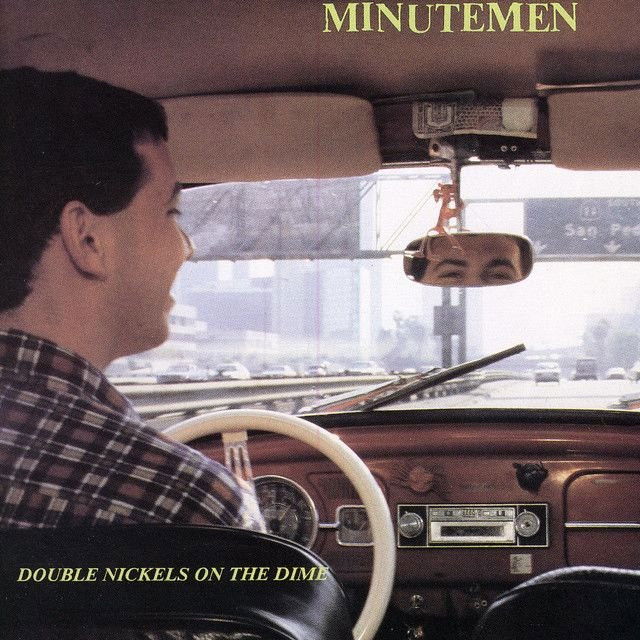
Released on Double Nickels on the Dime in 1984, the song was written by D. Boon and produced by Ethan James. It was inspired by a trip to Mexico in 1982, when Boon saw a woman collecting empty beer bottles to redeem the deposit, a scene that deeply affected him. That background has been widely documented in reference sources and music histories.
A Tiny Song With a Huge Point
Factually, "Corona" is a 1984 Minutemen track from Double Nickels on the Dime, credited to D. Boon and produced by Ethan James. It was released July 3, 1984, and its title comes from the beer brand. The song later became even more widely known when its instrumental intro was used as the Jackass theme.
Interpretation: What makes the song powerful is how it connects public systems to private suffering. It begins with a survival statement, using the phrase The people will survive
, but that line does not sound carefree or triumphant. Instead, it feels stubborn. Survival here is not comfort. It is endurance.
The next ideas deepen that tension. The song points to dirt, scarcity
and an empty southern landscape, then shifts blame toward the injustice of our greed
. In plain terms, the lyrics suggest that hardship is not only natural or geographic. It is also shaped by human choices.

Watch the official Corona
music video
The Social Critique Hiding in Plain Sight
Minutemen were never a band that separated politics from everyday life. Their songs often tied big systems to real people, and "Corona" is a perfect example. It does not lecture for long. It simply names conditions, then shows one person living inside them.
A key line mentions the practice we inherit
. Interpretation: this suggests that greed and inequality are not random accidents. They are habits passed down through culture, economics, and power. The song does not treat injustice like a single bad act. It treats it like a pattern people learn to accept.
That is why the track still hits hard. It is not only about one place or one trip. It is about how people in wealthier positions can benefit from systems they barely notice, while others live with the consequences every day.
The Woman on the Beach Changes Everything
The song’s final image is the one that gives it emotional weight. After speaking broadly about conditions in the "south," it narrows to a beach scene and a look exchanged with a woman gathering bottles. The narrator says I only had a Corona
, followed by Five cent deposit
.
That detail matters because it turns a brand name into a moral symbol. The bottle is cheap to the person drinking it, but meaningful to the person collecting it. In other words, what is disposable to one person may be survival money to someone else.
There on the beach
I could see it in her eyes
I only had a Corona
Five cent deposit
Interpretation: this is the moment where guilt, empathy, and class awareness meet. The narrator cannot solve the problem. They can only recognize it. That helplessness is part of the song’s honesty.
Why the Sound Matters as Much as the Words
Part of the meaning of Corona Minutemen comes from the music itself. The track is not straight hardcore punk. Critics and reference sources have described it as mixing punk energy with norteño, polka, and rootsier rhythmic ideas. That blend matters because it places the song closer to the culture it is observing, rather than using a generic attack-only punk sound.
The arrangement is lean and fast. Boon’s guitar has a bright, twangy feel, Mike Watt’s bass is active and almost conversational, and George Hurley’s drumming keeps everything moving with urgency. The song has no big chorus and very few words, which gives each line more force.
Interpretation: the musical style mirrors the lyrics’ tension. It sounds lively, but not relaxed; direct, but not simple. That lets the track carry compassion without becoming sentimental.
Context, Legacy, and a Strange Afterlife
"Corona" has had an unusual cultural life. For many listeners in the United States, the riff is instantly familiar because of Jackass. That exposure kept the song in circulation, even if it also pulled the track away from its original subject.
There is an irony there. A song inspired by a poor woman collecting bottles became attached, in popular memory, to prank television. Yet that contrast also shows how durable the music is. Under the famous riff, the original song still contains a serious protest message.
During the early COVID-19 era, the song also saw renewed attention because of its title, which led to noticeable streaming and sales bumps. But novelty is not the reason it lasts. It lasts because it compresses a whole political argument into one unforgettable image.
Final Take on the Song's Message
The meaning of Corona Minutemen is about seeing inequality clearly and refusing to treat it as normal. The song argues that poverty is lived by real people, while greed often hides behind routine, distance, and inheritance.
Minutemen made that point with unusual economy: a few lines, a fast groove, and one bottle on a beach. Interpretation: they turn a passing moment into a lasting moral challenge.
Disclaimer: Song meaning is always open to interpretation. This reading separates documented background from informed analysis of the lyrics and sound.








