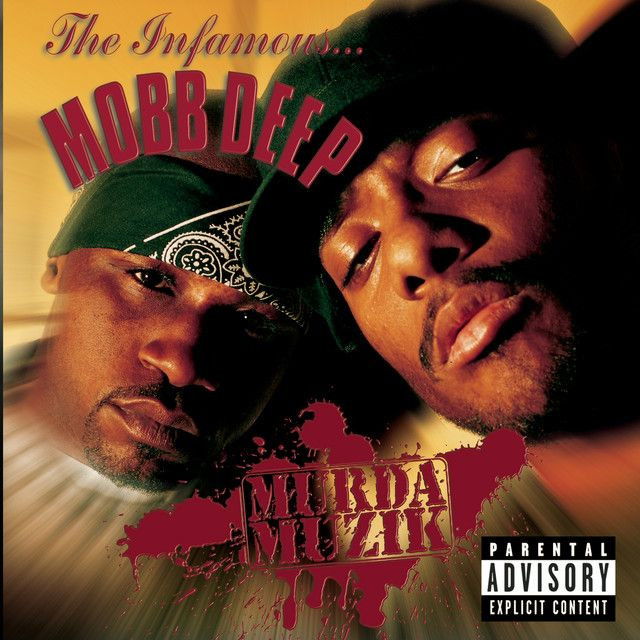
Quiet Storm by Mobb Deep
Mobb Deep turn toughness into testimony here: the song sounds cold, hard, and direct, but underneath the threats is a story about survival, status, and trying to hold on after trauma.
"Quiet Storm" - Mobb Deep
Provided by LyricFindDone been through it all, man
Blood, sweat and tears, niggas is dead and shit
What the fuck else can happen, yo?Loading...Loading lyrics...
Unable to load lyrics
We're unable to display the lyrics at this time. Please try again later.
Why “Quiet Storm” Hits So Hard
The meaning of Quiet Storm Mobb Deep starts with a contradiction. The title suggests calm, but the record is anything but peaceful. Instead, it describes a dangerous kind of control: pressure that stays low, focused, and deadly.
Released as the first single from Murda Muzik and also tied to the In Too Deep soundtrack, the track arrived in 1999 during Mobb Deep’s peak run. According to Wikipedia, it was produced by Havoc and built around a bass line from Melle Mel’s “White Lines.” That borrowed groove matters because it gives the song a hypnotic pull while the verses stay grim and confrontational.
At its core, the song is about authority earned through pain. Prodigy and Havoc present themselves as men shaped by violence, loyalty, and long memory. They are not asking for approval. They are warning listeners that what they rap is lived experience.

Watch the official Quiet Storm
music video
A Street Report, Not Just a Flex
On the surface, the verses sound like battle rap and street talk. There are boasts, threats, and images of weapons, movement, and status. But the song works because it does more than brag.
When Prodigy says he put his life into rap, using the phrase lifetime in between the paper's lines
, he frames writing as testimony. The line suggests that rap is not just entertainment for them. It is a record of what they survived.
That idea carries into the famous self-description quiet storm
. Interpretation: this image suggests power that does not need to shout. Their menace comes from calm certainty, not chaos. They sound experienced enough to know what violence costs.
The first verse keeps returning to interruption and defense. Anyone who tries to stop their rise becomes a threat. So the aggression is tied to survival, ambition, and reputation. In this world, weakness invites danger.
The Hook Turns Real Life Into Sound
The chorus explains why the track became so memorable. It repeats the idea that this is the real shit
and music that makes people feel something physical. That hook is simple, but it does a lot of work.
First, it separates Mobb Deep from artists they see as fake. Second, it compares the music to something addictive and overwhelming. When they describe the record as raw uncut
, they are claiming purity, intensity, and no softening for radio or outsiders.
the real shit
raw uncut
never enough
In a few short phrases, the chorus says the music should hit like a drug: immediate, dangerous, and impossible to ignore. Interpretation: that is not only about sound. It is also about identity. Mobb Deep want authenticity to feel undeniable.
Trauma, Family, and the Cost of Becoming Hard
The second verse adds something deeper to the meaning of “Quiet Storm.” Beneath the threatening tone, there is biography.
Prodigy describes learning violence early, including a memory of his father teaching him to shoot when he was young. He also admits fear in that moment, which is important. The song does not portray hardness as natural. It presents it as learned behavior, passed down through environment and survival.
Later, the verse shifts again. After references to drug use and wasted time, he starts talking about making things right and doing things for children. That is one of the strongest turns in the song. It reveals that the dream is not endless destruction. The dream is stability, protection, and a future.
This is why the record lasts. It is not simply violent. It shows how violence becomes normal, then shows a wish to rise above some of its damage without pretending the damage disappeared.
Havoc’s Verse Builds the Myth
Havoc’s closing verse widens the frame. His writing is packed with skill talk, movement, and command. He presents himself as a master technician whose verses are stronger than average rap. When he says he writes like medicine, he suggests other rappers are weak copies while his work has force.
That matters to the meaning of Quiet Storm Mobb Deep because the song is also about artistic dominance. The street authority and the rap authority are linked. In their world, to rap well is to prove mental toughness, discipline, and legitimacy.
His verse also pushes the group identity forward. Mobb Deep are not lone speakers here. They represent a code, a neighborhood outlook, and a style built on keeping things hard and direct.
How the Production Carries the Message
Havoc’s beat is one reason the song feels so intimidating. The sample-driven bass line loops with almost no warmth. The drums hit firmly without sounding busy. That space lets the words breathe, but it also creates tension.
The title becomes clearer through the production. This is the sound of a storm that does not rush. It creeps. It circles. It keeps pressure on the listener.
Factually, the song peaked at No. 17 on the US Hot Rap Songs chart and No. 35 on the US Hot R&B/Hip-Hop Songs chart, as summarized by Wikipedia. Its staying power, though, comes less from chart numbers than from mood. The record feels lean, cold, and fully confident.
Why the Song Still Matters
Part of the song’s legacy comes from its remix with Lil’ Kim, which became a major cultural moment in its own right. But the original remains powerful because it captures Mobb Deep’s signature strengths: realism, tension, and emotional distance that still hints at pain.
In the end, “Quiet Storm” is about more than threats. It is about men who believe they survived by becoming emotionally controlled, hyper-alert, and unforgiving. Interpretation: the song argues that in their world, calm can be more frightening than rage.
That is the lasting meaning of “Quiet Storm” by Mobb Deep: it turns street experience into art without smoothing out the fear, damage, or pride inside it.
Disclaimer: This interpretation is based on the lyrics, performance, and available release context. Like all art, the song can support more than one reading.








