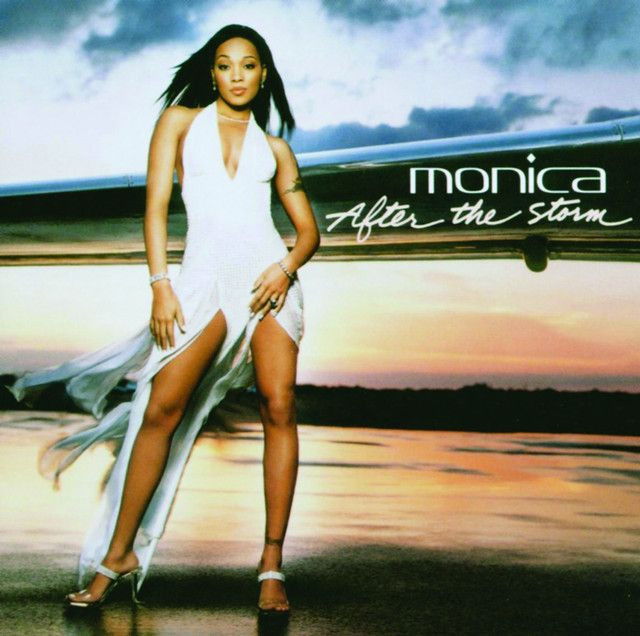
Why Monica's 'So Gone' Still Hits Hard
The meaning of So Gone Monica comes down to one sharp idea: heartbreak can make a person act unlike themselves. In this song, they hear a narrator who is hurt by betrayal, stuck in comparison, and pulled between love, rage, and self-respect.
"So Gone" - Monica
Yeah, lil Monica
Silly of me, devoted so much time
Loading lyrics...
Unable to load lyrics
We're unable to display the lyrics at this time. Please try again later.
Released in 2003 as the lead single from After the Storm, So Gone
helped reestablish Monica on the charts. It reached No. 10 on the Billboard Hot 100 and spent five weeks at No. 1 on Billboard's Hot R&B/Hip-Hop chart, giving the song both emotional weight and cultural staying power [Source 1][Source 2].
A Heartbreak Song About Losing Emotional Balance
At its core, the track is about suspicion and obsession after infidelity. The verses show someone replaying the same questions over and over: where their partner has been, why they stayed out, and what another person supposedly has that they do not.
The key phrase is so gone
. Monica later explained the idea plainly: the song means they are so deep in the feeling that they are not thinking straight
[Source 2]. That matters because the song is not just about cheating. It is about what cheating does to the mind.
Interpretation: The real pain is not only betrayal. It is the loss of emotional control. The narrator knows the relationship is damaging, but they still circle back to it.

Watch the official So Gone
music video
The Story Moves From Sadness to Anger
One reason the song feels vivid is that it tells a clear emotional timeline.
- First, there is devotion and disappointment.
- Then there is insomnia, late-night worry, and self-blame.
- After that, the emotion turns outward into anger and confrontation.
- Finally, the hook returns to show that love is still tangled up with all the damage.
A short early image, unmarked car
, shows how far the narrator's thoughts have drifted into unhealthy territory. Later, the song gets more aggressive, with lines about wanting to confront both the man and the other woman. Those moments are not presented as wise. They reveal how betrayal can turn hurt into impulsive fantasy.
What she do I do better
Is it real or forever?
That brief section captures the song's core conflict. The narrator swings between rivalry and pleading. They want to win, but they also want clarity.
The Chorus Turns Pain Into a Physical Feeling
The chorus is simple, but that simplicity is the point. When Monica repeats you make me feel
and follows it with so unreal
, they hear a person trying to name an emotional shock that words cannot fully hold.
Instead of giving a long explanation, the hook reduces everything to sensation. Love no longer feels safe or romantic. It feels destabilizing.
Interpretation: The chorus suggests that betrayal creates a split inside the self. One part still loves; another part cannot believe what is happening. That is why the song feels suspended between desire and disbelief.
Why the Production Makes the Meaning Stronger
Missy Elliott produced and co-wrote the track with Kenneth Cunningham and Jamahl Rye, with the song built around a sample from The Whispers' You Are Number One [Source 1][Source 2]. That sample gives the record a soft, retro-soul warmth.
But the beat around it is sparse and tense rather than lush. Critics noted its vintage soul groove and hip-hop-influenced minimalism [Source 2]. That contrast is important: the music sounds smooth, while the emotions sound unsettled.
Monica's vocal also helps carry the meaning. Parts are sung in a rich R&B style, but other lines are delivered in a clipped, rhythmic way. Monica said Missy encouraged that near-rap approach [Source 2]. It gives the song more edge, as if thought and speech are spilling out too fast to polish.
Artist Context Matters Here
The song did not come from nowhere. Monica has said Missy Elliott shaped the record after overhearing one of her phone conversations, turning real emotional texture into a song [Source 1][Source 3]. Monica also described After the Storm as work that came after a hard season in her life [Source 3].
That background helps explain why the performance feels unfiltered. Monica also said the record had a no holds barred
feeling, like she was not trying to cater to any one audience [Source 2]. In other words, the rawness is part of the design.
More Than Jealousy: Pride, Shame, and Self-Worth
A shallow reading says the song is only about jealousy. That is true on the surface, but it misses the deeper wound.
The repeated comparisons to the other woman suggest damaged self-worth. The narrator is not only asking who the partner chose. They are also asking what that choice says about them. That is why the song keeps returning to questions rather than answers.
Interpretation: The most painful part of So Gone
may be humiliation. Betrayal makes the narrator feel replaceable, and the song captures the panic of trying to talk oneself back into value.
Why the Song Lasted Beyond 2003
Part of the song's legacy comes from how specific yet recognizable it is. In 2016, the viral #SoGoneChallenge introduced the track to a new generation, with Monica saying it meant a lot to see people across backgrounds put their own spin on it [Source 1][Source 3].
That revival makes sense. The song's emotional engine is timeless: when love goes wrong, people can become dramatic, irrational, proud, needy, and honest all at once.
The Last Word on the Meaning of So Gone Monica
The meaning of So Gone Monica is not just that someone was cheated on. It is that betrayal can leave a person split between devotion and dignity. The song turns that inner conflict into something listeners can hear in every question, every sharp edge, and every return to the hook.
Its lasting power comes from that messy truth: heartbreak rarely sounds graceful while it is happening.
Disclaimer: This interpretation blends documented context with close reading of the lyrics and sound. As with any song, some meanings remain open to listener perspective.








