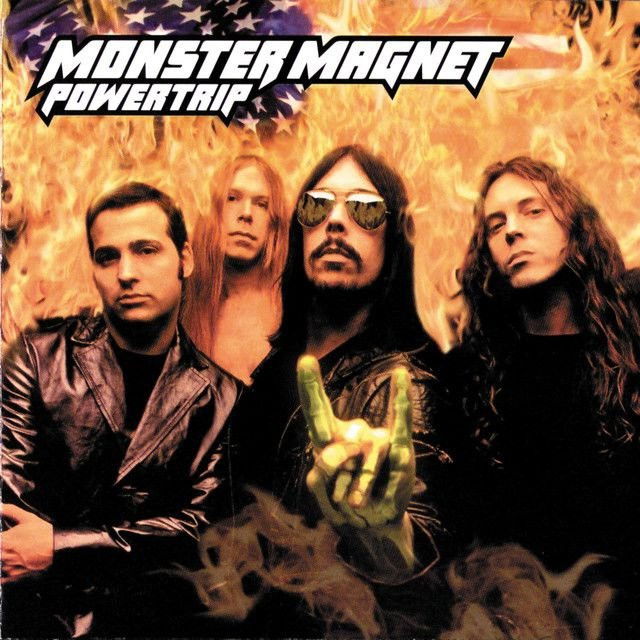
Powertrip by Monster Magnet Meaning Explained
The meaning of Powertrip Monster Magnet starts with a contradiction: the song sounds like a victory lap, but its words keep poking at control, hype, and fake salvation. Monster Magnet turn a hard-rock anthem into something sharper than simple bravado. Under the riffs, the track asks who shapes modern desire and why people keep buying what they are told will set them free.
"Powertrip" - Monster Magnet
Who's gonna show you how to fly?
Who's gonna call you on the lame-dope-smoking
Loading lyrics...
Unable to load lyrics
We're unable to display the lyrics at this time. Please try again later.
A swagger song with teeth
On the surface, “Powertrip” is built like a strut. The title alone suggests domination, ego, and excess. That fits Monster Magnet’s larger style in the late 1990s, when the band blended stoner rock, hard rock, and heavy metal into songs that felt both cosmic and streetwise.
Factually, “Powertrip” appeared on the band’s 1998 album Powertrip, their fourth studio release and a commercial breakthrough. The album was released June 16, 1998, reached No. 1 on the Top Heatseekers chart, and was later certified gold by the RIAA. It was produced by Dave Wyndorf and Matt Hyde. Those details help explain why the song feels so polished and forceful: it comes from the moment Monster Magnet moved into a bigger mainstream spotlight.
Watch the official Powertrip
music video
Who is the song talking to?
The verses use direct questions, almost like a taunt. The speaker keeps asking who will teach, guide, or trick the listener. Phrases like teach you how to dance
and show you how to fly
sound helpful at first, but the tone quickly turns mocking.
Interpretation: They are not really offering guidance. They are exposing how people hand their freedom over to loud voices, trend-makers, and self-appointed leaders. The repeated questioning creates pressure. It sounds like a challenge: why let somebody else define pleasure, rebellion, or identity?
That idea becomes clearer when the lyrics mock a television set revolution
. In plain terms, the song suggests that even rebellion can be packaged and sold back to people as entertainment. What looks radical may just be another product.
The core meaning of Powertrip Monster Magnet
At its center, the song is about power in two forms:
- Power over others — the fake authority of cultural salesmen, media voices, and ego-driven leaders.
- Power over the self — the fantasy of escaping those systems and inventing a new identity.
The key lyric idea is not just domination. It is manipulation. The speaker points at a world where even “freedom” is marketed. Then the song flips and embraces its own overblown persona.
When the singer declares never gonna work another day
, it sounds liberating. But it is so extreme that it also feels theatrical. Interpretation: Monster Magnet may be satirizing the dream of total escape just as much as they celebrate it. The speaker wants out of ordinary life, but they may also be drifting into a grand, unstable fantasy.
The chorus: freedom, delusion, or both?
The chorus is the song’s engine. It takes the frustration of the verses and turns it into a wild promise. The line way too busy power tripping
is funny, arrogant, and revealing all at once.
That matters because the song does not present its hero as purely wise. They are fed up with lies, but they also love their own myth. In other words, they reject one kind of control while stepping into another: self-created fantasy.
The gods told me to relax
They said I'm gonna be fixed up right
This is the article’s clearest glimpse of the song’s mind-set. The speaker replaces normal authority with cosmic authority. Interpretation: They are trading society’s rules for a druggy, mystical, rock-and-roll version of destiny. That can sound empowering, but it can also sound unstable and ironic.
How the verses build rebellion
The song’s middle section sharpens the message. It pushes toward a breaking point, especially around the idea that the crap doesn't wash
. In simple terms, the speaker says the old lies no longer work.
Then comes the most important turn: finding a way to make one’s own dreams. That line shifts the song from mockery to self-invention. Even if the speaker is exaggerated, the emotional drive feels real. They want to stop consuming prefabricated dreams and start creating their own.
That makes the song more than a rant. It becomes a loud statement about refusing cultural passivity.
Why the sound matters so much
Monster Magnet sell this meaning through sound as much as words. The guitars hit with a blunt, muscular riff that feels almost militaristic, while the rhythm section keeps everything moving forward with no softness. Dave Wyndorf’s vocal is part sneer, part preacher, part carnival barker.
That mix is important. If the song were quieter, it might sound like a thoughtful critique. Instead, it sounds like a dangerous sales pitch. That tension is the point. The band make rebellion feel thrilling while warning that thrill itself can become another trap.
The track’s mainstream reach also fits its theme. “Powertrip” became one of the notable songs from the album and later appeared in film, games, and WWE use, which shows how easily a song about power and spectacle can itself become part of mass spectacle.
Artist context: Dave Wyndorf’s world of excess
Dave Wyndorf wrote the song, and context matters here. Reporting around the album notes that he wrote much of Powertrip in a burst while staying near Las Vegas. That setting helps explain the album’s attraction to excess, temptation, performance, and illusion.
Las Vegas is the perfect backdrop for “Powertrip.” It is a city built on fantasy, salesmanship, and controlled escape. Interpretation: The song channels that atmosphere into a character who both hates the con and wants to run one.
Final takeaway
So what is the meaning of Powertrip Monster Magnet? It is a loud, funny, aggressive song about resisting manipulation while flirting with a new form of self-made illusion. It attacks fake revolutions, mocks social programming, and celebrates the dangerous rush of creating a bigger identity.
That is why the song still hits. It understands that people do not only want truth. They also want myth, noise, and the feeling of breaking free.
Disclaimer: This interpretation combines lyrical reading, musical analysis, and artist context. As with most rock songs, meaning can stay open to more than one valid reading.








