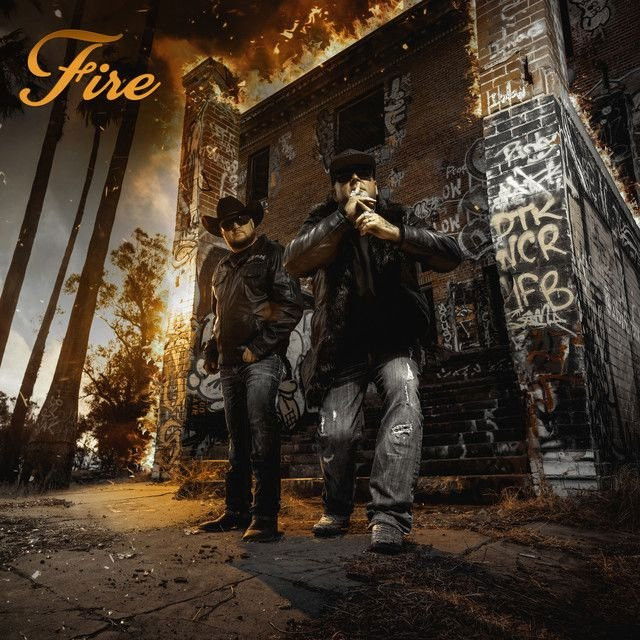
Why 'Red, White & Boozed' Is Pure Lake-Day Escapism
The meaning of Red, White & Boozed Moonshine Bandits, Colt Ford is less about deep confession and more about building a loud, rowdy picture of summer freedom.
"Red, White & Boozed" - Moonshine Bandits, Colt Ford
Provided by LyricFindRED, WHITE, & BOOZED
CHORUS:
STRAW HATS FLIP FLOPSLoading...Loading lyrics...
Unable to load lyrics
We're unable to display the lyrics at this time. Please try again later.
The Big Idea Behind the Buzz
The meaning of Red, White & Boozed Moonshine Bandits, Colt Ford centers on a party-ready version of American summertime. The song is not trying to tell a complicated story. Instead, they stack familiar images—boats, beer, sun, swimsuits, and country pride—into one easy-to-sing hook.
At its core, the track celebrates release. They present the lake as a place where rules loosen, music gets louder, and everyday stress disappears for a while. The title itself signals that shift. By twisting patriotic language into a drinking joke, the song frames freedom as leisure, noise, and indulgence.
Interpretation: The song treats patriotism less as politics and more as a costume for a good time. The “red, white” part sets the scene; the “boozed” part tells listeners what kind of night this will be.
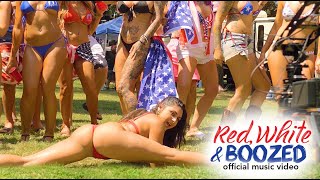
Watch the official Red, White & Boozed
music video
How the Chorus Paints the Whole Scene
The chorus does most of the song’s meaning work. Instead of moving the plot forward, it lists visual details like straw hats flip flops
and coolers and brews
. Those phrases are simple, but they matter because they build a complete setting in just a few words.
Then the hook adds tanlines and tattoos
and tied up pontoons
. That turns the song into a snapshot of a very specific American summer scene: a lake crowd, relaxed clothes, sunburned skin, and boats parked side by side.
Interpretation: The chorus suggests identity through objects. They are not describing inner feelings directly. They are saying, in effect, that this lifestyle speaks for itself.
A Party Song With a Country-Rap Identity
Moonshine Bandits and Colt Ford both built careers on mixing country themes with hip-hop rhythm and attitude. Ford is widely known for country rap and hick-hop crossover work, while Moonshine Bandits built their name on outlaw-country imagery mixed with rap delivery. That background matters because this song depends on that blend.
Rather than choosing between Nashville polish and rap swagger, they use both. The verses have a chant-like flow, slang-heavy phrasing, and exaggerated party details. The hook, by contrast, is broad and singable, built for crowds.
That mix shapes the song’s meaning. It tells listeners this is not a reflective ballad about small-town life. It is a performance of modern country identity—one that includes lifted trucks, lake culture, drinking, and hip-hop bravado.
What Happens in the Verses
The verses widen the party beyond the chorus. In the first verse, they move from the boat to the body language of the crowd. Phrases like boat bouncin'
and beach-fire imagery make the scene feel loud, hot, and in motion.
They also focus on a woman presented as the center of attention. The writing keeps returning to visual details, especially summer style and body art. That repeats the song’s larger method: meaning comes through surfaces, not confession.
In the second verse, the party gets bigger and wilder. There is a truck, a lake trip, a group gathering, and a sense that the day will blur into night. The song leans into chaos, but in a cartoonish way. It wants the energy of “anything can happen,” not emotional realism.
The only real storyline
If the song has a narrative, it is very simple:
- They set up the lake-day mood.
- They introduce the crowd and the woman at the center.
- They raise the intensity with drinking, smoking, and group antics.
- They return to the chorus to freeze that lifestyle into a slogan.
That is why red white and boozed
works as the closing idea again and again. It is not a conclusion. It is a brand name for the whole experience.
Symbols Hiding in Plain Sight
Several recurring images carry the song’s themes:
- Coolers and brews: easy pleasure and social bonding
- Pontoons and lake water: temporary escape from work and routine
- Tan lines and tattoos: visible proof of freedom, risk, and self-display
- American color language: a playful, commercial form of national identity
Interpretation: The song turns ordinary summer objects into status markers. To be “red, white & boozed” is to belong to a crowd that values looseness, visibility, and shared fun.
How the Production Sells the Meaning
The production is built to feel immediate. Even without a complex melody, the beat and vocal delivery do a lot of work. The rhythm hits hard, the chorus repeats key images, and the performance style sounds more shouted than sung in places.
That matters because the track is designed for external spaces: boats, parking lots, tailgates, backyard speakers. A softer arrangement would weaken the message. Here, the music mirrors the song’s world—bold, physical, and a little messy.
Interpretation: The production does not just support the lyrics; it acts out the lifestyle they describe. It sounds like a party already in progress.
A Fun Anthem, but Not a Deep Confession
There is not much emotional depth here, and that seems intentional. The song aims for immediacy, not introspection. Its job is to create a mood fast and keep it going.
A critical listener could say the track reduces patriotism to party branding and women to visual symbols. That reading is fair. But the song also makes its purpose obvious: they are chasing a high-energy fantasy of summer where image and vibe matter more than inner truth.
Why the Hook Sticks
What makes the song memorable is its efficiency. In a few repeated details, it captures a whole subculture of country-rap summer partying. That is the meaning of Red, White & Boozed Moonshine Bandits, Colt Ford in the clearest sense: an anthem of lake-day excess, where American imagery becomes a backdrop for escape.
That interpretation is based on the song’s lyrics, performance, and style, and other listeners may hear it differently.








