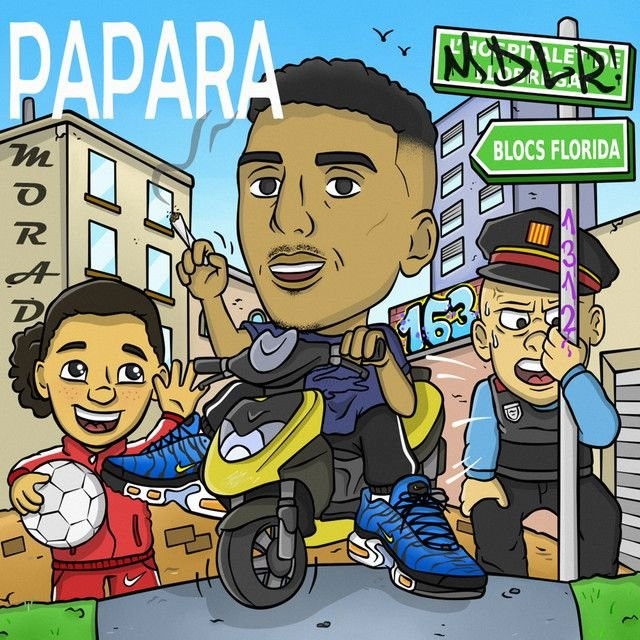
Papara by Morad
Morad’s “Papara” is a warning song, a street report, and a statement of identity at the same time. For listeners looking for the meaning of Papara Morad, the clearest entry point is this: they describe a world where trouble is normal, image can get a person hurt, and loyalty matters more than performance.
"Papara" - Morad
M-M-M (M.D.l.R.)
M.D.L.R.
Loading lyrics...
Unable to load lyrics
We're unable to display the lyrics at this time. Please try again later.
Rather than tell one detailed story, Morad builds a mood. They move through scenes of neighborhood pressure, money talk, false bravado, and past legal trouble. The result is a song that feels less like a confession and more like a code of survival.
The Core Message Hiding in Plain Sight
At its center, “Papara” argues that street life punishes pretending. Early on, Morad mocks empty talk and gossip, framing some people as all mouth and no action. When they contrast chatter with action, the message is blunt: in this setting, words are cheap.
That is why lines about money and danger sit side by side. Morad says people think about cash first and talk later, which suggests a harsh environment where survival comes before image. The song is not just about greed. It is about scarcity, pressure, and the habits that grow from them.
Interpretation: The meaning of Papara Morad may be read as a rejection of fake personas. The track keeps returning to the gap between how people pose and how they actually behave when consequences arrive.
Watch the official Papara
music video
A Neighborhood Where Trouble Is “Daily”
The most revealing section is the repeated idea that in their neighborhood, problems are constant. The short phrase En mi barrio
and the repeated es diario
make the song’s worldview clear. Morad is not describing a rare event. They are describing routine.
This repetition matters because it removes any sense of surprise. Violence, conflict, and tension are treated as part of the daily schedule. That makes the song feel heavy even when the flow is controlled and catchy.
En mi barrio
es diario
El problema
In paraphrase, the hook says that where they come from, conflict is regular and expected. That chorus is the song’s emotional center. It turns individual threats into a social condition.
Who Morad Is Talking To
Much of “Papara” is aimed at unnamed rivals or people acting tough. Morad challenges those who wear what the song presents as a false cara de malo
—the face of a hardened person. They also dismiss people who talk about weapons without truly understanding violence.
That direct address gives the song tension. This is not a distant reflection. It sounds like a face-to-face warning. Morad’s voice carries the authority of someone who has seen these patterns before and does not respect theatrical masculinity.
Interpretation: The target is bigger than one enemy. They may be addressing a whole type of person: the talker, the imitator, or the outsider who copies street codes without living their cost.
Street Experience as Proof
Morad strengthens that authority by bringing up personal history. They mention having faced charges and being detained, using those moments as proof that their perspective was earned. The details are not expanded into autobiography, but they matter because they separate lived experience from posturing.
This is one of the reasons the song feels credible to fans. Morad’s broader public image has long been tied to raw depictions of life on the margins, including work that helped build their reputation in Spanish drill and rap. Their breakout period and later releases, including 5AM, helped establish that voice in the mainstream.
In “Papara,” that voice stays consistent: cool, guarded, and skeptical. Even when Morad says they can seem shy, the line works like contrast. Quietness should not be mistaken for weakness.
Why the Hook Sounds Like an Alarm
The title phrase and the repeated sound pattern pa-pa-ra-ba-pa-ra-pa-ra
do a lot of work. It is catchy, but it also sounds percussive and urgent, almost like a siren, chant, or coded signal. Instead of delivering a melodic chorus with emotional release, Morad uses rhythm to build pressure.
That choice fits the theme. The song is about cycles: people get caught, people get isolated, people discover too late that their group is gone. The hook feels repetitive because the social reality it describes is repetitive.
How the Production Carries the Meaning
The production is spare and hard-edged. There is a strong pulse, room for Morad’s clipped delivery, and very little softness in the arrangement. That sonic space matters because it keeps attention on tone, threat, and rhythm.
Morad is widely associated with drill-influenced rap, and “Papara” uses that style well: minimal melodic distraction, heavy bounce, and repetition that feels hypnotic rather than lush. Their delivery lands like warnings spoken in real time.
For readers new to Morad, that broader style context is visible across coverage of their career in outlets like Rolling Stone. In “Papara,” the beat supports the lyrics by making the neighborhood feel closed in and tense.
Final Reading: Pride and Pressure Together
A useful way to understand the meaning of Papara Morad is to hold two truths at once:
- The song contains pride in survival and neighborhood code.
- The song also shows how exhausting that environment can be.
Morad sounds strong, but the world around them sounds unstable. That balance is what gives “Papara” its force. It is not simply a threat track. It is a song about living where threats never fully leave.
Last Word on “Papara”
“Papara” works because Morad turns repetition into meaning. Daily problems, fake toughness, missing allies, and hard-earned credibility all circle back into one idea: in this world, performance can collapse fast, but consequences stay real.
That is the best way to read the song’s impact. It is sharp, rhythmic, and memorable, yet underneath the swagger is a portrait of constant pressure.
Disclaimer: This interpretation is based on the lyrics provided, publicly available artist context, and musical analysis. As with any song, listeners may hear meanings that differ from this reading.








