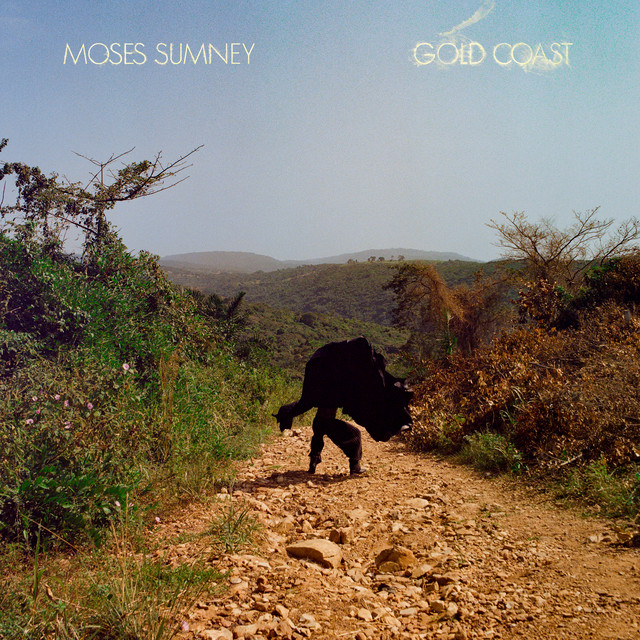
Gold Coast by Moses Sumney
The meaning of Gold Coast Moses Sumney starts with movement: a meeting, a dance, a rush of attraction, and a warning not to move too fast. The song feels light on its feet, but its ideas are more layered than a simple flirtation story.
"Gold Coast" - Moses Sumney
Crew in the cut and they're waitin' on me
Locks like leaves bouncin' in the breeze
Loading lyrics...
Unable to load lyrics
We're unable to display the lyrics at this time. Please try again later.
On the surface, “Gold Coast” is about chemistry between two people. They meet in nightlife spaces, circle each other physically, and let the night stretch into morning. But the song also uses place, color, and rhythm to turn desire into something bigger. It becomes a portrait of sensual freedom shaped by Ghanaian imagery and stop-and-go emotional timing.
A Love Song Built on Motion and Hesitation
The song’s story is easy to follow. The speaker meets someone in a club, then again in Accra and near Labadi Beach. Bodies move first, words matter less, and mutual attraction is obvious. Phrases like green means go
make that desire sound direct and urgent.
Still, the song is not only about giving in. It also slows itself down. The repeated focus on yellow suggests caution, patience, and staying in the in-between. When the singer says not to rush in the yellow, the song frames desire as something that should be felt fully, not consumed quickly.
Interpretation: that tension is the core of the track. “Gold Coast” celebrates erotic pull, but it also argues for pacing, consent, and presence. It is interested in what happens before commitment and before retreat: the glowing middle.
Why Accra Matters So Much
The references to Accra and Labadi Beach are not random travel details. They place the romance in a specific cultural and sensory world. Moses Sumney is the son of Ghanaian parents, and critics have noted how his work often explores identity, intimacy, and fluid selfhood. In a 2024 Pitchfork review, “Gold Coast” is described as one of the EP’s most sensual songs.
That setting changes the song’s meaning. “Gold Coast” was the colonial name used for present-day Ghana, so the title carries history even while the lyrics stay intimate. The song does not turn into a history lesson, but the title quietly links pleasure, place, and memory.
Interpretation: by locating the encounter in Accra, Sumney lets desire exist inside heritage rather than outside it. This is not a generic beach romance. It is grounded in geography, ancestry, and atmosphere.
Color as Emotion, Not Decoration
One of the smartest things in the song is its use of color. Blue appears in nighttime images, while yellow takes over the hook. The line blueberry hue
makes the first meeting feel dreamy and dim, as if attraction is happening in a half-lit world.
Then yellow arrives and shifts the mood. Yellow is not just brightness. Here it suggests caution lights, lingering heat, and suspended decision. The repeated yellow, yellow
almost works like a trance phrase. It keeps the song hovering between urgency and restraint.
There is also the striking image sunrise skin, color of clay
. That phrase connects the body to earth and dawn at once. It makes the lover feel warm, real, and rooted.
Interpretation: the colors map the emotional arc of the night. Blue is seduction, yellow is delay, and sunrise tones suggest the encounter becoming embodied and lasting past the club.
The Chorus Turns Traffic Into Desire
The traffic language is playful, but it does real thematic work. You're holding up traffic
sounds teasing at first, like one person telling the other to stop overthinking and move. Then green means go
turns that flirtation into a full metaphor.
Desire in this song works like a signal system:
- green means act
- yellow means slow down
- stopping completely never feels like the goal
That is why the chorus is memorable. It translates emotional hesitation into something ordinary and public. Everyone understands traffic lights. Sumney uses that familiar code to describe attraction, timing, and the risk of misreading another person.
How the Sound Deepens the Meaning
Production matters a lot to the meaning of Gold Coast Moses Sumney. According to Pitchfork, the track pairs Sumney’s falsetto with plucked guitars, distorted vocal layers, and synth textures, giving it a delicate but unsettled feel. The review also notes producer Graham Jonson’s contribution to some of the EP’s liveliest moments.
That description fits what the song communicates emotionally. The groove is sensuous, but it also feels slightly off-center, never too smooth. The beat invites closeness, while the airy vocals make the experience feel dreamlike instead of purely physical.
Interpretation: this contrast is crucial. The body says yes, but the sound keeps everything suspended in a haze. That is why the song feels seductive without becoming blunt. It stays impressionistic.
A Portrait of Mutual Desire
Another key idea is reciprocity. The lyrics repeatedly mirror one body against another. The dance is shared, the pull is shared, and even the hesitation seems shared. The phrase talk in tongues
suggests communication beyond plain speech, as if rhythm and touch say more than conversation can.
This matters because the song never sounds predatory or one-sided. Instead, it presents attraction as an exchange. Both people are reading signs, testing pace, and choosing how far to go.
Final Take on the Song’s Message
So what is “Gold Coast” really saying? At its heart, it is a song about desire that wants both freedom and care. It enjoys nightlife, flirtation, movement, and bodily chemistry, but it also respects timing. The song’s places and colors give that simple setup unusual depth.
The best reading is that Sumney turns a sensual encounter into a meditation on pace: when to move, when to wait, and how to stay inside the charged middle for as long as possible.
Disclaimer: This interpretation is based on the released lyrics, performance, and available critical context. As with many Moses Sumney songs, some meaning remains open to the listener.







