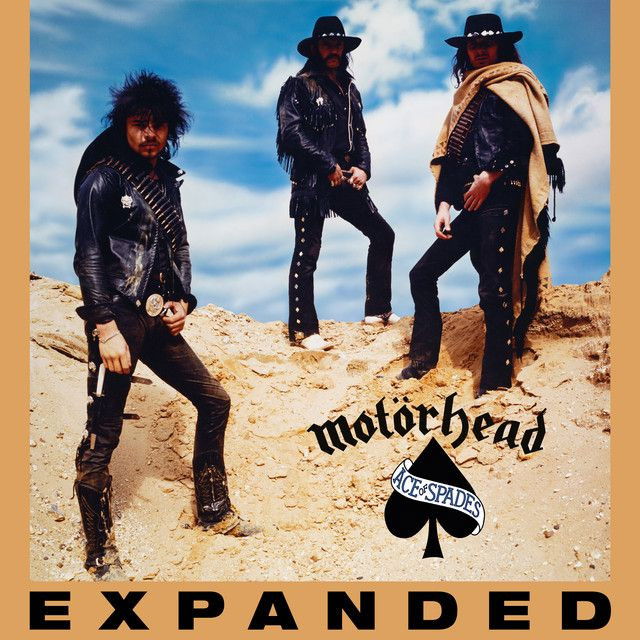
What 'Ace of Spades' Really Means
Motörhead’s biggest anthem sounds simple at first: cards, danger, speed, and a grin in the face of disaster. But the meaning of Ace of Spades Motörhead goes deeper than a song about gambling. It turns the card table into a picture of a whole way of life.
"Ace of Spades" - Motörhead
I tell you, I'm your man
You win some, lose some
Loading lyrics...
Unable to load lyrics
We're unable to display the lyrics at this time. Please try again later.
Released in 1980 as the title track from Ace of Spades, the song was written by Ian "Lemmy" Kilmister, Eddie Clarke, and Phil Taylor, and it became the band’s signature hit. Factually, it sits at the center of Motörhead’s rise from cult heavy act to one of hard rock’s defining names. Critically, it is often treated as a bridge between heavy metal, punk energy, and speed-driven hard rock.
More Than Cards, Less Than a Moral Lesson
At the lyric level, the singer presents themself as someone drawn to risk. Early lines frame winning and losing as equal parts of the same game. That matters because the song is not obsessed with money. It is obsessed with sensation.
When the narrator says it's all the same to me
, they are not being calm or wise. They are rejecting caution. Soon after, the song makes that idea even clearer with the pleasure is to play
. In plain terms, the thrill matters more than the result.
That is the core of the meaning of Ace of Spades Motörhead: the song celebrates action, danger, and intensity over security, stability, or long-term thinking.
Watch the official Ace of Spades
music video
The Narrator Lives for the Rush
The voice in the song is first person, but the effect is larger than one character. They sound like a type: the all-in gambler, the road warrior, the rocker who treats every night like a final round.
The repeated image of Ace of Spades
acts like a personal emblem. It is not just a lucky card. It becomes a badge of identity, almost a destiny. The singer does not say they hope for safety. They choose the card that suggests danger, power, and finality.
There is also a dark edge. Phrases like dancing with the devil
and born to lose
push the song away from fun casino imagery and toward a more fatalistic worldview. The narrator knows the odds are bad. They keep playing anyway.
How the Verses Build That World
The song moves fast, but its ideas build in a clear order:
- It introduces a person who treats chance as normal life.
- It shows that winning is less important than the act of risking everything.
- It raises the danger level with devil imagery and hard betting language.
- It ends by turning the game into near-death theater.
One of the sharpest moments comes in the late verse, where the card game starts to feel like a duel. The language becomes more threatening, and the table feels almost like a battlefield.
Read 'em and weep
The dead man's hand again
Those short lines connect gambling to death imagery. They suggest that every hand carries consequences, and this player is too deep in the game to step back.
The Chorus Turns a Card Into a Creed
The hook is so strong because it does not explain itself. It just repeats the card name like a vow. That repetition matters. It strips away detail until only the symbol remains.
Interpretation: the chorus works like a creed of self-definition. The narrator is not merely holding a card; they are choosing an identity built on danger, swagger, and refusal to compromise.
That is why the song has lasted. Listeners do not need to care about poker rules to understand the emotion. They hear commitment without hesitation.
Why the Sound Hits So Hard
The production is a huge part of the song’s meaning. Motörhead were never a polished band in the studio sense. Their power came from force, speed, and pressure. On “Ace of Spades,” the tempo drives forward like a machine with bad brakes.
Clarke’s guitar riff is sharp and immediate, Phil Taylor’s drums push everything ahead, and Lemmy’s distorted bass fills the middle with a harsh, dirty charge. His vocal is part shout, part rasp, which makes the lyrics sound lived-in rather than theatrical.
This matters because the band do not merely describe risk. They make the listener feel it. The performance sounds like a bet placed too fast, too loud, and without regret.
Artist Context Makes the Message Stronger
Motörhead built their reputation on excess, volume, and total commitment. Lemmy often spoke about rock and roll in blunt, unsentimental terms, and his public image fit the song’s worldview: no fake refinement, no apology, no fear of going too far. That context helps explain why “Ace of Spades” feels convincing instead of gimmicky.
It also explains the song’s cross-genre appeal in the United States. Metal fans hear heaviness. Punk fans hear speed and attitude. Rock fans hear one of the cleanest statements of rebellious self-mythology ever put on tape.
Two Strong Readings of the Song
Interpretation 1: It is a celebration of fearless freedom. In this view, the song admires the person who accepts life’s risks and refuses to live timidly.
Interpretation 2: It is also a portrait of self-destruction. The narrator knows this path is foolish, even deadly, but confuses honesty about doom with strength.
Both readings can be true at once. That tension is what gives the song weight.
Final Take on Motörhead’s Classic
The meaning of Ace of Spades Motörhead is not simply gambling, and it is not exactly advice. It is the sound of a person choosing intensity over safety and turning that choice into an identity. The cards, devils, and death hints all support the same idea: life is a high-stakes game, and this narrator would rather burn bright than play it safe.
That is why the song still feels alive. It is reckless, thrilling, and just self-aware enough to know the cost.
Disclaimer: This interpretation is based on the lyrics, the recording, and public artist context. Like most songs, “Ace of Spades” can support more than one reasonable reading.








