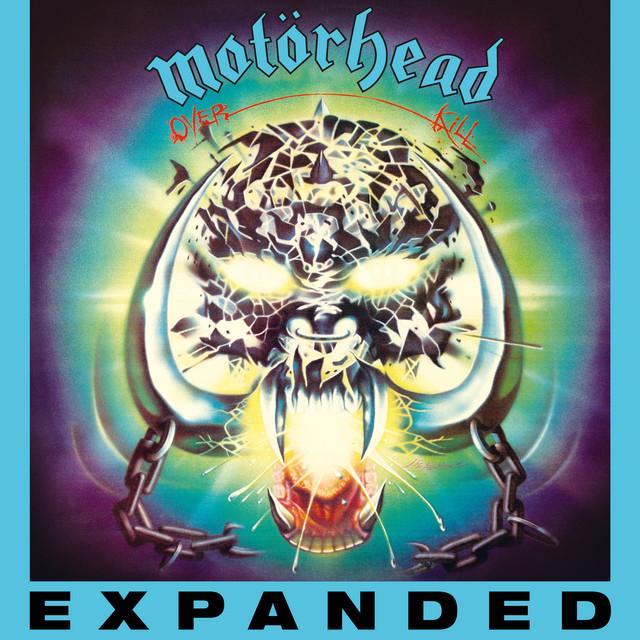
Why “Overkill” Feels Like Pure Motörhead
The meaning of Overkill Motörhead comes across fast: this is a song about the body-shaking force of rock music when it is played at full blast. Rather than telling a complicated story, Motörhead build a simple idea into an anthem. Loud sound, speed, sweat, and crowd energy become almost spiritual.
"Overkill" - Motörhead
So good I can't believe it, screaming with the crowd
Don't sweat it, we'll get it back to you
Loading lyrics...
Unable to load lyrics
We're unable to display the lyrics at this time. Please try again later.
Released in 1979 as the title track from the band’s second album, “Overkill” became one of Motörhead’s signature songs and reached No. 39 on the UK Singles Chart. It was recorded in late 1978 and early 1979, produced by Jimmy Miller, and is often cited as a key influence on speed and thrash metal.
The Core Idea: Rock as Physical Overload
At its heart, the song says great rock should be felt in the body. The opening idea makes that plain with good and loud
. The point is not careful listening or subtle emotion. The point is impact.
Each verse describes music as a physical force. They frame volume and rhythm as something that hits the nerves, the spine, and the gut. When the lyric mentions screaming with the crowd
, it turns a private reaction into a shared one. This is not a lonely song. It is about collective release.
Interpretation: The title “Overkill” suggests going past the limit on purpose. In everyday speech, overkill means too much. Here, Motörhead flip that meaning. Too much volume, too much speed, too much energy: that is the ideal.
Watch the official Overkill
music video
How the Verses Build the Message
The song’s verses keep returning to one claim: real rock should make people move. A key phrase is feel the beat
, which turns rhythm into something almost biological. Another is made to move
, which suggests the human body is naturally wired for this experience.
That is why the lyrics are so direct. They do not use ornate images or deep metaphor. Instead, they talk in blunt, physical terms. If the music does not lift them up, shake them awake, or make them strut, then it has failed.
On your feet you feel the beat
it goes straight to your spine
This is the clearest summary of the song’s worldview. Music matters because it creates an instant bodily reaction. Motörhead are not describing background entertainment. They are describing total sensory commitment.
The Chorus Turns Excess Into an Anthem
The repeated hook Overkill
is simple, but that simplicity is the point. It works like a chant at a gig. By hammering the same word again and again, the band make excess sound triumphant rather than dangerous.
There is also a playful edge to the recurring line Don’t sweat it
. In context, it sounds like a promise from the band to the listener: if the feeling fades, they will bring it back. That line makes the song feel like a contract between performers and crowd.
Interpretation: The chorus is not just naming intensity. It is celebrating the idea that rock should be bigger than reasonable. Motörhead present musical overload as joy.
Why the Sound Matters as Much as the Words
A big part of the meaning of Overkill Motörhead comes from the recording itself. According to Songfacts, the band wanted to capture their live sound in the studio, and the song reportedly grew from a moment when Phil Taylor was working on his drum pattern and Lemmy and Eddie Clarke told him to keep going.
That origin story fits the track perfectly. The drumming is central. Phil “Philthy Animal” Taylor’s double-bass setup gives the song its relentless drive, and that feature became one of the recording’s signatures. The performance sounds like momentum that cannot be stopped.
Lemmy’s bass and voice add even more force. He does not sing these lines softly or romantically. He attacks them. Meanwhile, Eddie Clarke’s guitar locks the riff into a forward push that feels both raw and precise.
The structure helps too. Critics have long noted the song’s dramatic false endings, which make it feel like the band refuses to die quietly. That trick turns the whole track into an act of endurance.
Where “Overkill” Sits in Motörhead History
Factually, “Overkill” was a breakthrough moment for Motörhead. It was released as a 1979 single and title track, and it helped define the band’s image as louder, faster, and rougher than many of their peers. Later critics at Louder Sound and Loudwire ranked it among the band’s very best songs.
Its legacy also stretches beyond Motörhead. Commentators often point to the song as an important step toward thrash metal. That reading makes sense: it combines the aggression of punk, the heaviness of metal, and a speed that many later bands would expand on.
Even its afterlife says something. It became the last song Motörhead ever played live, which gives it an almost perfect symbolic role. If one song had to sum them up, “Overkill” makes sense.
Final Take: More Than Noise
So, what is “Overkill” really about? Most directly, it is about the thrill of loud rock played with total conviction. More broadly, it is about art that should overwhelm, energize, and pull people out of passivity.
Interpretation: The song argues that music is not valuable when it stays neat and controlled. It matters when it is excessive enough to feel life-giving. In Motörhead’s hands, “overkill” is not a warning. It is a mission statement.
Disclaimer: This interpretation combines verified historical context with critical reading of the lyrics and sound. As with any song, listeners may hear meanings that differ from this one.







