What "Wave of Death" Is Really Charging Toward
Municipal Waste rarely aim for subtlety, and that is part of their appeal. In the meaning of Wave of Death Municipal Waste, the band seem less interested in telling a detailed story than in unleashing a rush of fear, violence, and momentum. The song turns destruction into a moving force, something like a living disaster, and then matches that image with a sprinting crossover-thrash attack.
"Wave of Death" - Municipal Waste
Loading lyrics...
Unable to load lyrics
We're unable to display the lyrics at this time. Please try again later.
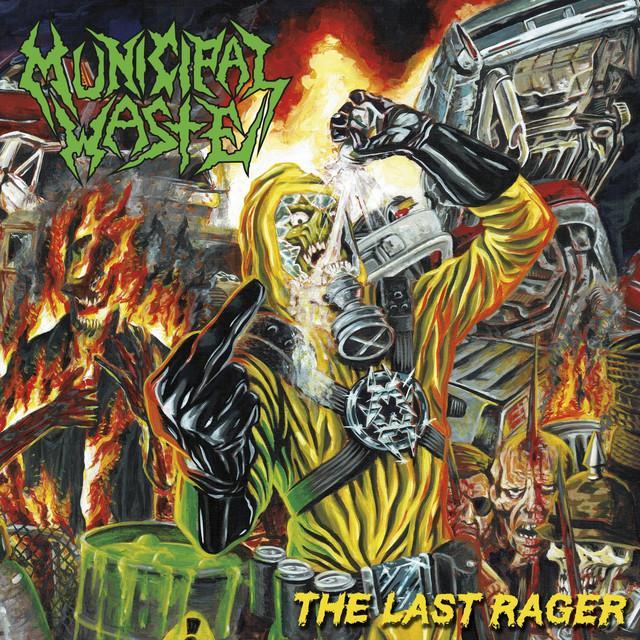
The Richmond, Virginia band have built their name on short, high-impact songs that mix old-school thrash, hardcore speed, and horror-movie fun. They formed in 2000 and are widely associated with the second wave of American crossover thrash, with vocalist Tony Foresta and guitarist Ryan Waste as the longest-running core members. That background matters because their songs often use exaggerated danger as entertainment, not confession or realism.
The Song’s Core Idea Hits Fast
At its center, “Wave of Death” sounds like a song about being overtaken. The title alone frames death not as a single event but as a surge. A wave keeps moving, keeps spreading, and does not care who stands in front of it. That image gives the song its main emotional engine: panic in the face of something too large to stop.
Interpretation: They appear to use that “wave” as a symbol for any destructive force that escalates beyond control. It could be read as literal horror imagery, but it also works as a metaphor for social collapse, riot energy, war, infection, or even a crowd mentality that becomes dangerous once it starts rolling.
When the lyric centers on a phrase like wave of death
, it condenses the whole message into one brutal picture. The point is not nuance. The point is impact.
Horror Theater, Not Diary Writing
Municipal Waste have long embraced gore, mutants, and wild B-movie violence in their lyrics. Coverage of the band often describes them as “party thrash,” but that label can hide how much horror language they use too. Songs like this one sit right at that crossover point: fun, threatening, cartoonish, and intense at the same time.
That makes “Wave of Death” feel less like a personal statement and more like a scene. They present terror the way a cult horror film would: loud colors, fast cuts, no time to breathe. If the lyrics mention bodies, impact, or unstoppable motion, those details are likely there to build atmosphere, not realism.
wave of death
no escape
Even in a tiny fragment like that, the idea is clear. Once the force is moving, there is no easy way out. The song’s drama comes from helplessness.
How the Voice Works in the Chaos
The narrative voice feels more like an announcer inside the disaster than a reflective character standing outside it. They do not seem to pause and explain motives. Instead, the vocal delivery throws the listener into the middle of the threat.
That matters because crossover thrash often depends on immediacy. Foresta’s barked style does not invite long meditation; it pushes images at the listener in blunt, physical terms. If a line uses a phrase such as crash into you
or drag you down
, the wording is effective because it feels bodily and direct.
Interpretation: The song may be speaking to humanity in general rather than to one person. In that reading, the listener becomes part of the crowd facing the oncoming force.
Why the Sound Sells the Meaning
The music is essential to the meaning of “Wave of Death.” Municipal Waste are known for compact songs, sharp riffs, and drums that hit with hardcore urgency. That style has roots in bands they have openly been linked with, including D.R.I., Suicidal Tendencies, and Nuclear Assault. Their whole approach is built for songs that feel like they might spin out of control at any second.
In “Wave of Death,” that speed likely mirrors the title image. A slow arrangement would weaken the idea. Fast down-picked guitars and hard-snapping drums make the “wave” feel real because the music itself arrives in a rush. The listener does not observe danger from a safe distance; they are slammed by it.
This is where production matters too. Municipal Waste songs usually favor a punchy, live-feeling mix over polished distance. That keeps the attack physical. The guitars bite, the drums crack, and the vocals ride over the top like a warning siren.
A Few Strong Symbols Carry the Whole Track
Several recurring metal and horror motifs help explain the song:
- The wave: unstoppable spread, chain reaction, mass force
- Death: not just dying, but total erasure and fear
- Impact imagery: collision, crushing, being overwhelmed
- Crowd panic: the feeling that survival is no longer individual
A short phrase like no escape
reinforces the song’s fatalism. Another image such as drag you down
suggests that once the force reaches someone, resistance becomes nearly useless.
Interpretation: There is also a possible social reading here. The “wave” could stand for any destructive trend that society helps build and then cannot control. The song never needs to name that trend directly for the metaphor to work.
Why It Fits the Band So Well
Municipal Waste have released seven studio albums and several EPs, and their identity has stayed remarkably consistent: fast crossover thrash, dark humor, and scenes of mayhem. “Wave of Death” fits because it condenses all three into one memorable concept. It is catchy in title, vivid in image, and perfectly suited to a mosh-ready arrangement.
The song also works because it respects thrash tradition without sounding like a history lesson. It uses a simple, violent premise and drives it hard. That is one reason the band have remained durable within modern thrash: they understand that memorable metal songs often depend on one image delivered with conviction.
Final Take on the Meaning
So, what is the meaning of Wave of Death Municipal Waste? Most clearly, it is a song about annihilation arriving as momentum—death not as a moment, but as a force that spreads, crashes, and consumes. The horror framing gives it excitement, while the speed of the music makes that dread feel immediate.
Interpretation disclaimer: This reading is based on the song’s title, known lyrical style, and Municipal Waste’s broader artistic context. As with many metal songs, listeners may hear either pure horror-thrash fun or a wider metaphor for uncontrollable collapse, and both readings can fit.








