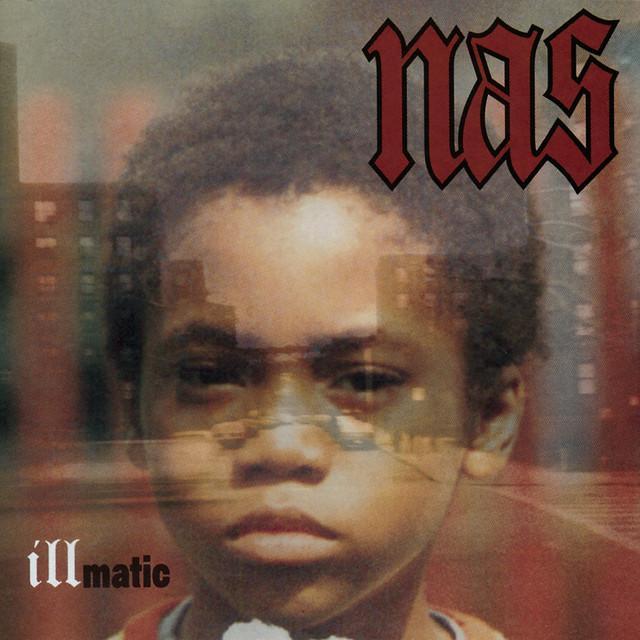
Halftime by Nas
Why This Debut Hit So Hard
The meaning of Halftime Nas starts with arrival. This song is less a story than a statement: Nas presents themself as a young rapper already convinced of their greatness, rooted in Queensbridge, and ready to take over rap.
"Halftime" - Nas
(Right, right, right, right)
Check me out y'all
Loading lyrics...
Unable to load lyrics
We're unable to display the lyrics at this time. Please try again later.
Released on October 13, 1992, as Nas’s debut single, “Halftime” first appeared on the Zebrahead soundtrack and later became the lead single for Illmatic (Wikipedia). That timeline matters. They were not already a star looking back on hunger. They were still introducing themself, and the record sounds like a warning shot.
At its core, the song is about skill, survival, neighborhood identity, and momentum. Nas frames rap as both competition and escape. They move between bragging, local detail, memory, and threat, showing that lyrical mastery comes from lived experience, not just performance.

Watch the official Halftime
music video
What “Halftime” Really Means
The hook gives the song its main idea. When Nas repeats it’s halftime
, they are not saying the game is over. They are saying the contest is only midway through, and they are already dominating.
Interpretation: “Halftime” works like a sports metaphor for a career at the turning point. Nas sounds as if they have spent years preparing in private, and now the public is finally seeing the result. The hook turns confidence into prophecy.
That idea fits the verses. They describe themself as someone who has already sharpened their craft, survived pressure, and stepped into the spotlight ready to control the mic. A phrase like you never get the mic back
is not just battle-rap talk. It suggests total command once they begin.
Queensbridge, Reputation, and Real Life
One reason the song still lands is how tightly it connects personal style to place. Nas references Queensbridge directly and treats neighborhood identity as a source of power. When they mention 40 side is the place
, they are grounding their authority in where they come from.
This is not abstract toughness. The lyrics mix pride with danger, police pressure, street economy, and grief. They salute friends, mention public figures, and describe a world where talent grows beside risk. That balance is key to the meaning of Halftime Nas: excellence is born in a hard environment, not separate from it.
Near the end, the tribute to Ill Will adds emotional weight. According to documented background on the song, Nas gives a shout-out to Willie “Ill Will” Graham, a childhood friend who had been killed in 1992 (Wikipedia). That brief moment widens the song. Beneath the bravado is loss.
The Voice They Build in the Verses
Bragging as self-definition
A lot of “Halftime” is battle language, but it is not empty boasting. Nas uses hyperbole, punch lines, and quick references to prove mental agility. When they say King poetic
, they are claiming both lyrical skill and artistic status.
That matters because the song keeps arguing that rap excellence is intellectual. Nas contrasts street knowledge, pop-culture memory, and verbal control. Even when the lines are aggressive, the deeper point is that they can outthink and outwrite rivals.
Memory and growth
The verses also look backward. Nas recalls being a young MC who was once too nervous to grab the mic in the park. That detail is important because it humanizes the swagger. They were not born fully formed; they developed through fear, practice, and local competition.
Back in '83, I was an MCtoo scared to grab the mic
This short passage shows the song’s inner logic. The artist now sounds fearless because they once were not. The confidence has a history.
How the Beat Strengthens the Meaning
“Halftime” hits because the production feels urgent and celebratory at the same time. The track was produced by Large Professor, with a beat built from samples including Average White Band’s “Schoolboy Crush,” Gary Byrd’s “Soul Traveling,” and the musical Hair’s “Dead End” (Wikipedia).
The result is an up-tempo groove driven by hard drums, bright horns, and a bassline that keeps pushing forward. That sound matches Nas’s performance perfectly. The horns feel like an announcement, almost like entering an arena. The drums give the verses a punchy, athletic pace.
Interpretation: The music makes “halftime” feel less like rest and more like reset. It sounds like the moment a player returns to the floor stronger than before. Nas rides that energy with a voice that is sharp, youthful, and relentless.
There is also an important bit of history behind the beat. Busta Rhymes later recalled that Large Professor had originally played him the instrumental, but he did not use it; once he heard Nas on it, he said he realized he had missed a great beat (Wikipedia). That story supports what listeners hear: Nas did not just rap over the track; they completed it.
Why “Halftime” Matters in Nas’s Career
“Halftime” is often heard as the opening chapter of Illmatic. It was the first song created for the album, even though it arrived about a year and a half before the LP itself (Wikipedia). That gap gave the single a mythic role. It introduced Nas as a major voice before the classic album confirmed it.
The song also helped create a lane for them. Vibe later argued that it created a niche that only Illmatic could fill, a brief but telling critical judgment noted in the song’s documented reception (Wikipedia). In simple terms, listeners heard a teenage rapper with old-soul detail, street realism, and elite technique all at once.
Final Take on the Meaning of Halftime Nas
The meaning of Halftime Nas is about emergence under pressure. It captures a young artist proving that lyrical mastery, neighborhood truth, and personal ambition can live in the same record.
More than a debut single, “Halftime” sounds like a self-portrait drawn at high speed. It says Nas is already here, but also that their biggest work is still ahead. That tension is why the song still feels electric.
Disclaimer: This interpretation is based on the lyrics, recording context, and documented history of the song. Meaning can vary from listener to listener.







