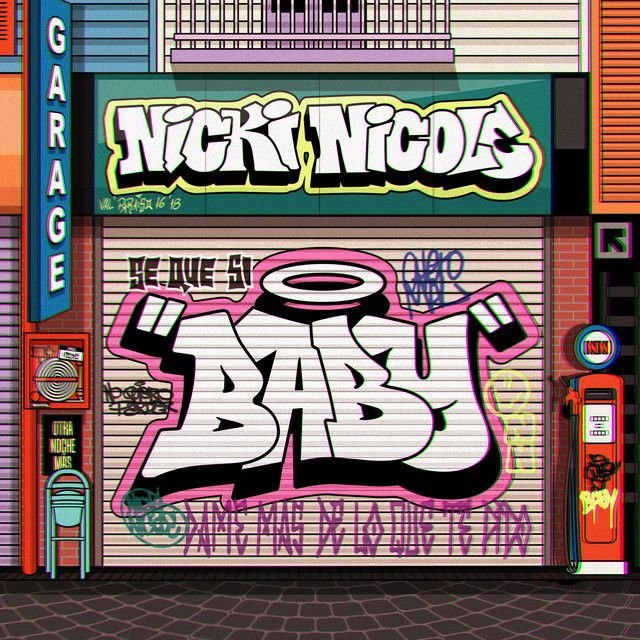
Baby by Nicki Nicole
The meaning of Baby Nicki Nicole centers on desire mixed with doubt. It is a song about wanting someone intensely, sensing that they want the same, and still feeling shut out by mixed signals. That tension gives the track its pull: it sounds seductive, but underneath it is frustrated and a little sad.
"Baby" - Nicki Nicole
Yeah, yeah (no, no, no, no)
No podía perderte de vista
Loading lyrics...
Unable to load lyrics
We're unable to display the lyrics at this time. Please try again later.
Nicki Nicole, the Argentine singer and rapper from Rosario, built her career by moving between Latin hip-hop, reggaeton, and R&B textures, from early breakout songs to her later albums and major award recognition, as noted in this career overview. “Baby” fits that lane well. It uses a smooth, urban groove to tell a story that is emotionally messy rather than simple.
The Real Heart of the Song
At its core, the song describes a relationship that feels close but never secure. The speaker is drawn in, honest about attraction, and tired of emotional uncertainty. Early lines suggest outside voices are judging the match, while the speaker keeps following their own feelings anyway.
That is why phrases like perdiendo mi tiempo
matter. The idea is not that the other person means nothing. It is the opposite. The connection matters so much that the uncertainty starts to feel expensive. Time, attention, and hope are all being spent without a clear return.
Interpretation: The song is less about romance in a dreamy sense and more about emotional imbalance. One person is ready to speak plainly; the other keeps something hidden.
Watch the official Baby
music video
A Push-Pull Romance in Motion
The track works because it keeps two emotions alive at once:
- strong physical attraction
- fear that the relationship will not last
- irritation at secrecy
- refusal to fully let go
The chorus sharpens that conflict. When the speaker asks for more and refers to what the other person has escondido
, they are not only asking for passion. They seem to want honesty, openness, and commitment too. The hidden thing may be affection, vulnerability, or a clear choice.
Then comes the image of being hit hard by attraction: pierdo por knockout
. This turns romance into a fight metaphor. Love is not calm here. It lands like a blow. That detail helps explain why the singer sounds bold one moment and powerless the next.
Who Is Speaking, and To Whom?
The song uses a direct address to a love interest, which makes everything feel immediate. The speaker is not reflecting from a safe distance. They are in the middle of the situation, trying to persuade, confess, and protect themselves at the same time.
A key line of thought is that they cannot control the outcome. They can admit desire, but they cannot decide whether this person stays or leaves. That feeling gives the song its emotional realism. Wanting somebody does not guarantee access to them.
No quiero perderdice the song at one key moment, underscoring the fear of loss beneath all the flirtation.
That brief passage matters because it breaks the cool surface. For a moment, the song stops performing confidence and admits the stakes.
What the Night Imagery Adds
“Baby” leans hard on nighttime language and atmosphere. The repeated sense of another night spent apart suggests a cycle: desire rises, promises hover, but closeness never fully arrives. Night becomes the hour of memory, fantasy, and unfinished conversations.
When the song says the speaker will still be there when night falls, it frames them as emotionally persistent. They may be pushed away or delayed, but they remain present in the other person’s mind. The repeated promise of being there makes the attachment feel almost haunting.
Interpretation: Night in this song symbolizes emotional uncertainty. Daylight would bring clarity. Darkness keeps longing alive.
How the Sound Carries the Meaning
Production is a big part of the meaning of Baby Nicki Nicole. The beat is sleek and minimal, with a soft reggaeton/Latin R&B pulse that leaves room for breathy delivery and repeated hook lines. Instead of sounding explosive, it feels suspended, as if the song itself is waiting for an answer.
That matters because the arrangement mirrors the lyrics. A heavy, aggressive beat would make the song sound fully possessive or triumphant. This one does not. Its smoother texture lets vulnerability stay in the foreground even when the words are seductive.
Nicki Nicole’s vocal approach also helps. They shift between intimate singing and rhythmic phrasing, which suits a story where desire and frustration keep overlapping. The performance never sounds emotionally flat. It sounds like someone trying to stay composed while attraction keeps breaking through.
Artist Context Makes the Song Clearer
By the time songs like “Baby” appeared around the Parte de Mí era, Nicki Nicole had already become one of Argentina’s most visible young urban artists, crossing rap, pop, and R&B spaces and even earning attention in awards circuits; “Baby” was also noted among 2022 Premios Quiero nominees in available coverage. That context matters because this song shows a key strength in their catalog: emotional directness without losing mainstream appeal.
Rather than building a grand concept, “Baby” focuses on a familiar modern situation: chemistry without certainty. That makes it easy to connect with, especially for listeners who know what it feels like to get just enough affection to stay attached.
Final Meaning: Desire Without Security
In the end, the meaning of Baby Nicki Nicole is about being caught between confidence and vulnerability. The speaker asks clearly for more, but the deeper request is not only physical. It is for reciprocity.
The song understands a hard truth: sometimes the strongest attraction happens where the least clarity exists. That is why the track feels both warm and uneasy. It invites closeness while warning that this promise may fade, like a love that cannot survive the sun.
That mix of seduction, impatience, and fear is what gives “Baby” its staying power.
Disclaimer: This interpretation is based on the lyrics, performance, and public artist context. As with most songs, listeners may hear different meanings.







