How Nightwish Turns Alpenglow Into Hope
The meaning of Alpenglow Nightwish starts with a simple but powerful idea: human life is temporary, but beauty, memory, and art can make that life feel lasting. On the surface, the song sounds triumphant. Underneath, it is also about endings, mortality, and the wish to leave behind something bright.
"Alpenglow" - Nightwish
Giving birth to a child of earth and verse
Together we slay another fright
Loading lyrics...
Unable to load lyrics
We're unable to display the lyrics at this time. Please try again later.
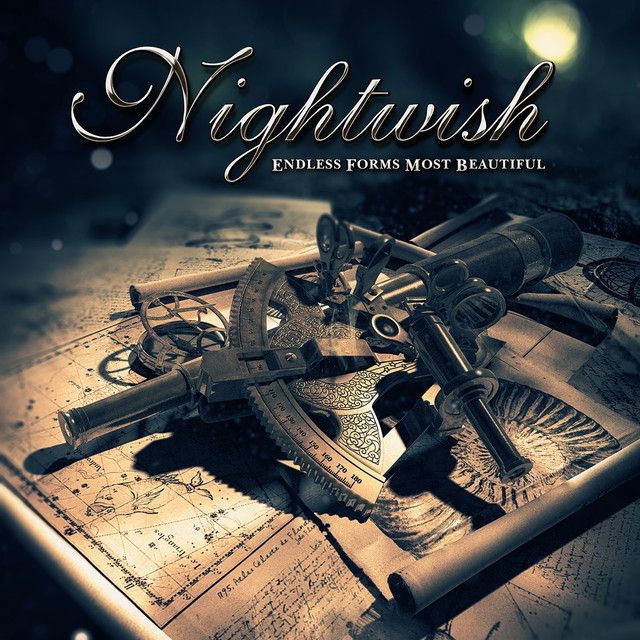
“Alpenglow” appeared on Endless Forms Most Beautiful, Nightwish’s 2015 album, written by Tuomas Holopainen and released during the band’s first studio era with Floor Jansen as lead singer. That album is widely tied to themes of nature, evolution, and humanity’s place in a vast world, as the band’s official materials and album coverage noted at the time. In that context, this song feels like a humanist anthem: small people facing a huge universe, yet still singing.
A Sunset Song About Leaving a Mark
The title points to a real natural event: the rosy light that appears on mountains at sunrise or sunset. That matters because the song uses alpenglow as a symbol for a final glow before darkness. Rather than fearing that darkness, the song treats it as part of a larger cycle.
The opening frames music itself as a life-giving force. When the lyrics suggest a song giving birth to a child “of earth and verse,” they connect art to the natural world. From the start, Nightwish blends poetry, geology, and human existence into one image.
Interpretation: the song is not just about one relationship or one journey. It is about a whole species trying to make meaning through stories, love, and music.
Watch the official Alpenglow
music video
The Chorus Turns Memory Into a Monument
The emotional center is the repeated claim We were here
. In plain terms, the chorus says that people lived, explored, mourned, struggled, built something, and then accepted that the performance of life must end.
That is why lines like endless prairie
and endless story
matter. They widen the scale. Human lives are brief, but experience feels huge while it is happening. The phrase Walden of our own
adds another layer, likely echoing Henry David Thoreau’s idea of simple living and deep reflection in nature. The song imagines people trying to build a meaningful life, even if it cannot last forever.
Then comes the final turn: becoming music and joining the alpenglow. That image lifts death or closure into something less frightening. The self does not exactly vanish; it changes form and enters beauty.
Who Are “They” Singing To?
One of the song’s most moving features is that it shifts between the collective and the intimate. The chorus speaks as a group, but the verses also address a specific “you.” That person is described through guiding, sheltering images, including my path, my home, my star
.
There are two strong ways to read that “you”:
- Interpretation: a loved one. The song can be heard as two people facing life and death together.
- Interpretation: art, nature, or inspiration itself. The “you” may be the force that guides the speaker toward meaning.
Both readings work because Nightwish often writes on two levels at once: personal emotion and cosmic wonder.
Darkness Is Present, But It Never Wins
The verses do not ignore pain. They mention fear, old ghosts, grief, and “darkest places.” The song’s optimism means more because it does not pretend suffering is unreal.
A brief multi-line passage captures that tension:
Grieving the saddened faces
Conquering the darkest places
These lines present life as both mourning and endurance. People carry sorrow, but they keep moving. The song’s message is not naive happiness. It is resilience.
That is also why the phrase finish the show
lands so strongly. Life is pictured as a performance, but not in a fake sense. Instead, it suggests that being alive means taking part in something larger, doing one’s part, and then stepping away when the time comes.
How the Sound Supports the Meaning
Musically, “Alpenglow” is classic Nightwish: symphonic metal with a big melodic lift. The arrangement pairs heavy guitars and drums with orchestral sweep, making the song feel both grounded and expansive. That contrast mirrors the lyric theme: fragile human lives set against immense nature and time.
Floor Jansen’s vocal delivery is central to the effect. They sing with clarity rather than chaos, which helps the song feel affirming even when it deals with death and loss. The chorus rises instead of collapsing, so the listener experiences transcendence rather than despair.
The production also matters. The bright, open mix gives the chorus a horizon-like quality, almost as if the music itself is trying to paint mountain light. In that sense, the sonic design reinforces the title image.
Why the Nature Images Matter So Much
Nightwish often uses nature not as decoration but as philosophy. In “Alpenglow,” snow, valleys, prairie, and light all suggest that human existence belongs inside the natural world, not outside it.
The snowy final images are especially striking. They suggest rest, silence, and burial, but also peace. The valley the speakers built will be covered over. Yet the song does not treat that as meaningless. It treats it as completion.
Interpretation: this is the heart of the meaning of Alpenglow Nightwish. The song says that mortality becomes bearable when life has contained love, courage, and song.
Why Fans Connect With It
Fans often respond to “Alpenglow” because it sounds huge without losing emotional warmth. It works as a power anthem, but it also rewards close reading. The hook is easy to feel, while the lyrics invite bigger questions about legacy, death, and human dignity.
That balance is one of Nightwish’s strengths. They make philosophical songs feel personal. Here, they turn a fleeting natural glow into a symbol of what people hope their lives can become: brief, beautiful, and remembered.
Final Glow
In the end, “Alpenglow” is about facing the end without surrendering to emptiness. It says people suffer, build, love, and leave, but they can still become part of something luminous.
That is the lasting power of the song. It turns an ending into radiance.
Disclaimer: This interpretation is based on the song’s lyrics, musical context, and publicly known album themes. As with any piece of art, listeners may hear different meanings in it.







