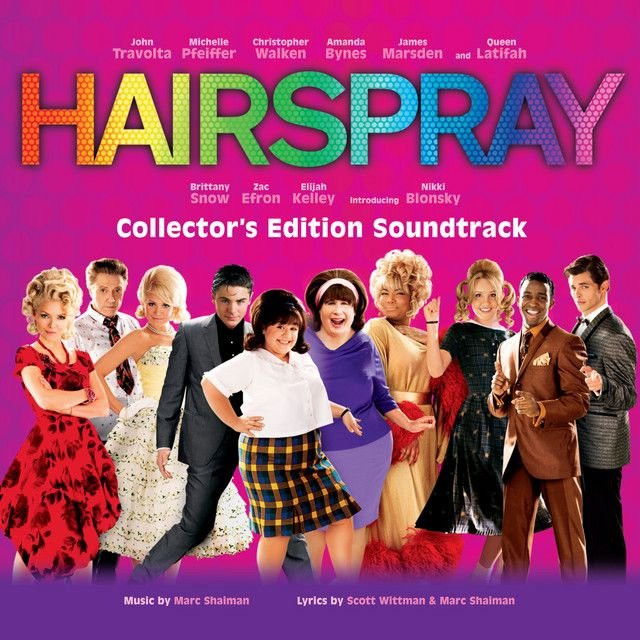
Why 'You Can't Stop the Beat' Still Moves Us
The meaning of You Can't Stop the Beat Nikki Blonsky, Zac Efron, Amanda Bynes, Elijah Kelley, John Travolta, Queen Latifah comes down to one big idea: change is coming, and no fearful person can hold it back forever. As the finale of Hairspray, the song turns a dance anthem into a statement about progress, inclusion, and self-belief.
"You Can't Stop the Beat" - Nikki Blonsky, Zac Efron, Amanda Bynes, Elijah Kelley, John Travolta, Queen Latifah
As it races down the hill
You can try to stop the seasons, girl
Loading lyrics...
Unable to load lyrics
We're unable to display the lyrics at this time. Please try again later.
In the 2007 film, performed by Nikki Blonsky and the ensemble cast, the number arrives after conflicts over race, beauty standards, and control. According to New Line Cinema production materials and film credits listed at IMDb, the movie adapts the Broadway musical, with songs by Marc Shaiman and Scott Wittman. That context matters: this is not just a fun closer. It is the story’s moral wrapped in brass, drums, and movement.
A Finale That Turns Dance Into History
At the most basic level, the song says that life moves forward like nature. The lyric compares resistance to trying to stop an avalanche or river. In plain terms, the characters are saying that progress is bigger than any one person’s prejudice.
That is why the hook you can't stop the beat
works so well. They are not only talking about music. They are talking about time, culture, and the push toward a fairer world.
Interpretation: In Hairspray, the “beat” stands for social momentum. Once people have seen a better future, especially one built on integration and equal dignity, it becomes much harder to force them back into silence.
Watch the official You Can't Stop the Beat
music video
Tracy’s Joy Is Also a Political Statement
The song is deeply tied to Tracy Turnblad’s character. Earlier in the story, she is judged for her size, her style, and her refusal to fit a narrow image of who gets to be visible. When the finale celebrates happiness and self-acceptance, it gives her victory a wider meaning.
One key line centers on loving oneself, summed up in I like the way I am
. That phrase is simple, but in context it is defiant. They frame body confidence not as a private feeling, but as a public refusal to be shamed.
This is why the humor in the song matters too. Jokes about appetite and attitude keep the message from feeling preachy. Instead, the number says that self-respect can be loud, funny, and impossible to police.
Race, Integration, and the Song’s Boldest Claim
The clearest social message comes when the lyric directly references the NAACP. That moment ties the finale to the civil rights fight at the center of Hairspray. The story is set in 1962 Baltimore, and the plot revolves around ending segregation on a local TV dance show, a setting grounded in the era’s racial tensions, as noted by Britannica’s overview of the civil rights movement.
So when the song says tomorrow is a brand new day
, it is not empty optimism. It is arguing that the future does not naturally belong to segregationists.
Yesterday is history
And it's never comin' back
That short passage captures the song’s strongest idea: reactionary power can delay change, but it cannot make the clock run backward.
Love, Youth, and Collective Energy
The number also works on a more personal level. Alongside politics, it celebrates romance, teenage freedom, and the joy of being in motion. Phrases like my heart's keepin' time
connect emotion to rhythm, making love feel synchronized with history itself.
That matters because Hairspray has always balanced message and entertainment. The song argues that pleasure is part of liberation. Dancing together becomes proof of a shared future.
Interpretation: The finale suggests that joy is not separate from activism. It can be evidence that barriers are already cracking.
How the Sound Carries the Message
Musically, the song is built like a rush of momentum. Marc Shaiman’s writing draws on early 1960s pop, Broadway, and rhythm-and-blues energy, all fused into a fast, bright finale style associated with Hairspray on stage and screen, documented by Playbill’s coverage of the musical.
The tempo barely lets up. Drums push forward, brass punches through the mix, and the layered vocals create the feeling of a whole community joining at once. Instead of one fragile solo voice, they hear a crowd becoming impossible to ignore.
That ensemble design is essential to the meaning. If the message is that change cannot be stopped, then the arrangement has to sound bigger than any single obstacle. It does.
Why the Song Endures
Part of the song’s lasting appeal is that it speaks to several struggles at once:
- social progress against prejudice
- body confidence against shame
- young love against control
- hope against nostalgia for an unfair past
Because of that, different listeners hear different victories inside it. Some hear a civil rights anthem. Others hear a self-love anthem. Many hear both.
That flexibility helps explain why the finale remains so popular with audiences and school productions. It delivers its message clearly without losing the fun.
The Real Meaning in One Line
If they had to sum up the song in one sentence, it would be this: history has a rhythm, and people who dance with it often help create a better world.
That is the heart of the meaning of You Can't Stop the Beat Nikki Blonsky, Zac Efron, Amanda Bynes, Elijah Kelley, John Travolta, Queen Latifah. It is a celebration of change that feels physical, emotional, and political all at once.
Disclaimer: This interpretation is based on the film, the credited songwriters, and the song’s lyrical themes. As with any art, listeners may hear other meanings too.







