Why Nirvana's Darkest Cover Still Hurts
The meaning of Where Did You Sleep Last Night? Nirvana starts with a simple question and ends somewhere much darker. Their famous MTV Unplugged performance did not invent the song, but it gave an old American folk ballad a raw, unforgettable shape.
"Where Did You Sleep Last Night?" - Nirvana
Tell me where did you sleep last night?
In the pines, in the pines
Loading lyrics...
Unable to load lyrics
We're unable to display the lyrics at this time. Please try again later.
Known for decades as both In the Pines and Where Did You Sleep Last Night?, the song is a traditional work with roots reaching back to at least the 1870s in the Southern Appalachian region, with many different versions collected over time (Wikipedia). That long history matters because Nirvana were not telling one fixed story. They were stepping into a song built from fragments of betrayal, coldness, violence, and grief.
A Folk Song About More Than One Fear
At the most direct level, the song sounds like a lover confronting another person after a night away. The repeated demand, paraphrased through the phrase where did you sleep last night
, creates suspicion right away. It sounds personal, even domestic.
But the ballad quickly becomes bigger than a lovers' argument. The setting of in the pines
is not just a location. It feels cut off from comfort and daylight, especially when the song adds the sun don't ever shine
. That image pushes the story into emotional darkness.
Interpretation: many listeners hear two stories happening at once:
- a scene of jealousy and possible infidelity
- a folk-horror tale about death, disappearance, and dread
That overlap is part of why the song lasts. It never explains everything.

Watch the official Where Did You Sleep Last Night?
music video
The Story Turns From Argument to Nightmare
One reason the song feels so unsettling is the way its verses jump. First there is the accusing voice. Then there is the answer about leaving with the cold wind blows
. Then, suddenly, there is the shocking image of a man whose head is found while his body is missing.
This turn is common in old folk songs, which often place love and death side by side. In many versions of In the Pines, scholars and collectors have noted recurring themes of sexuality, loneliness, trains, and violent loss (Wikipedia). Nirvana’s version keeps that tension instead of smoothing it out.
Interpretation: the broken narrative may suggest that betrayal and death are emotionally linked. The singer is not just asking where someone spent the night. They are staring into a world where trust has already collapsed.
Why the Chorus Feels So Cold
The hook is memorable because it keeps returning to physical discomfort. The phrase shiver the whole night through
does more than describe temperature. It gives the song a body-level feeling of fear.
That matters because the lyrics never fully state what happened. Instead, they build mood through place and sensation: darkness, wind, night, pines, shivering. Even when the plot is unclear, the emotional state is not. The song feels abandoned.
In the pines, in the pines
Where the sun don't ever shine
Those lines are the song’s emotional center. They turn the pines into a symbol of isolation. Whether the character is hiding, wandering, grieving, or already spiritually lost, the pines feel like a place beyond safety.
Why Nirvana’s Version Hits So Hard
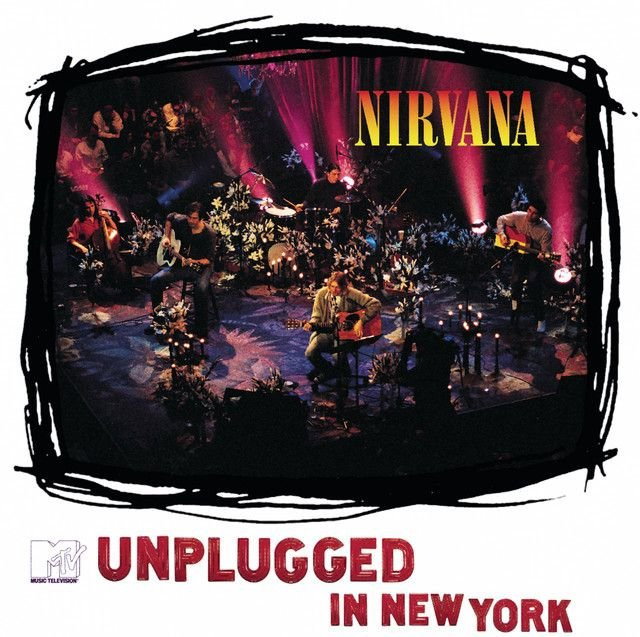
Nirvana recorded the performance live for MTV Unplugged in New York on November 18, 1993, and it was released on the 1994 album of the same name (Wikipedia). Producers on the Unplugged recording are commonly listed as Alex Coletti, Scott Litt, and Nirvana (Wikipedia).
The arrangement is crucial to the song’s meaning. There is no wall of distortion to hide behind. Instead, the performance uses acoustic guitar, bass, restrained accompaniment, and a slow build in intensity. That sparseness makes the song feel exposed.
Cobain’s vocal is the real key. They begin in a nearly controlled, haunted tone and slowly tighten the emotional pressure. By the final lines, the performance sounds like someone trying to hold pain together and then failing in public. Neil Young famously described that last vocal burst as unearthly
, and producer Alex Coletti recalled that Cobain refused an encore because he felt they could not top the final song (Wikipedia).
Lead Belly, Tradition, and Cobain’s Choice
Although the user context names Huddie Ledbetter, better known as Lead Belly, as the writer, the more accurate credit is that Lead Belly popularized a major version rather than authoring the traditional song itself (Wikipedia). That distinction is important to the meaning of Where Did You Sleep Last Night? Nirvana because Cobain was performing both a tribute and an interpretation.
Research on the song notes that Cobain strongly favored the Lead Belly form and even discussed the title in those terms (Wikipedia). That helps explain why Nirvana’s version feels less like alternative rock covering folk music and more like one haunted tradition speaking through another.
A Final Reading of the Song’s Meaning
So what is the song really about? The clearest answer is that it is about what happens when love becomes shadowed by secrecy and mortality. The personal question opens a door into something older and scarier.
Interpretation: in Nirvana’s hands, the song becomes a confrontation with emotional truth. The missing body, the dark woods, and the repeated accusation all point to the same idea: some nights change a relationship forever, and some losses can never be neatly explained.
That is why the performance still feels so immediate. It is not just sad. It is primal.
Disclaimer: This interpretation mixes documented history about the song with informed reading of its lyrics and performance. Because this is a traditional folk ballad with many variants, meanings can reasonably differ.









