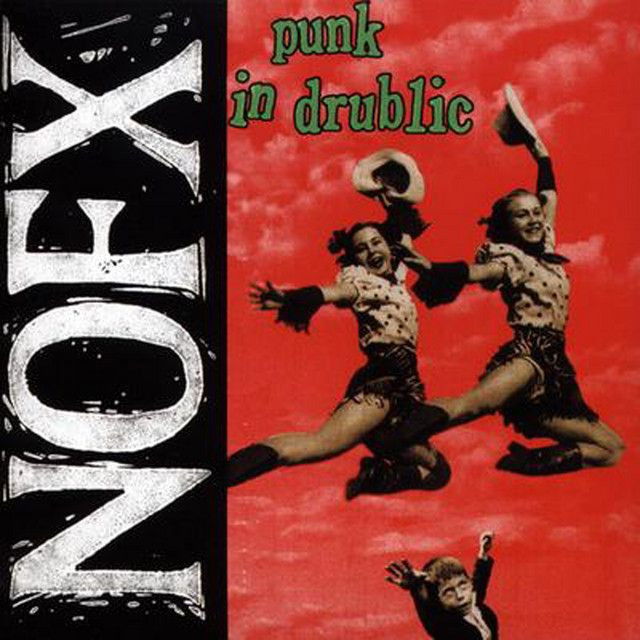
Why NOFX Rejected the Label in ‘Don’t Call Me White’
The meaning of Don't Call Me White NOFX starts with a contradiction: the title sounds simple, but the song is not a proud defense of whiteness. Instead, it is a fast, angry refusal to be defined by a label the speaker thinks comes loaded with judgment, stereotype, and social expectations.
"Don't Call Me White" - NOFX
Don't call me white, don't call me white
The connotations wearing my nerves thin
Loading lyrics...
Unable to load lyrics
We're unable to display the lyrics at this time. Please try again later.
Released in 1994 on Punk in Drublic, and also issued as a 7-inch single on Epitaph, the track became one of NOFX’s better-known political and cultural songs. According to available release information, it was written by Fat Mike and produced by Fat Mike and Ryan Greene. In a 1994 interview, Fat Mike said he was tired of the "correct" terms people were supposed to use, which gives useful context for how the song approaches identity and language.
More Than Skin Color, Less Than a Manifesto
At its core, the song argues that a racial label can become a social script. When the narrator repeats Don't call me white
, they are not denying their appearance. They are rejecting the meanings other people attach to that word.
The next key idea appears when the song wonders if semantics generating the mess
might be part of the problem. That line points to language itself. The speaker believes words do not stay neutral; they collect history, blame, and assumptions.
This is why the song feels defensive from the start. It is not calmly exploring race in an academic way. It is showing how quickly identity talk can become personal, hostile, and emotionally charged.

Watch the official Don't Call Me White
music video
The Song’s Central Frustration
One of the most important lines in paraphrase is that the speaker was born into their identity, not chosen into it. When the lyric says I was born
, the point is simple: they do not want to be held morally responsible for a category they did not create.
That leads to the song’s sharpest complaint. The narrator says they can take blame for their actions, but not for what they are. This is the emotional center of the track. They accept personal responsibility, yet reject inherited judgment.
Interpretation: This is where the song becomes more complicated. It can sound like a protest against broad social criticism aimed at white people, but it also seems to resist any system that flattens a person into a type. That broader reading makes the song less about race alone and more about the violence of labels.
Conformity Is the Real Villain
The meaning of Don't Call Me White NOFX also depends on how the song uses “white” as a symbol. At one point, the word seems to represent not just skin color but cultural blandness, obedience, and emotional deadness.
That idea comes through in images like starched and bleached
and the description of the vast majority of sheep
. The song paints “white” as sanitized, ordinary, and mentally constrained. It is the color of the buttoned collar, the cleaned mouth, the controlled mind.
So the title works on two levels:
- It rejects a racial label.
- It attacks a conformist social identity.
That second level matters a lot in punk. Punk has long defined itself against neatness, politeness, and mass behavior. In that tradition, “white” becomes shorthand for a sterile mainstream world the band distrusts.
Why the Sound Hits So Hard
Musically, the track delivers its message with classic mid-1990s NOFX force. It is short, fast, and built around a tight punk-rock drive. The guitars push forward with little room to breathe, while the drums keep the tension moving. That production style turns the lyrics into a burst of irritation rather than a careful argument.
Fat Mike’s vocal delivery helps too. They do not sound detached or theoretical. They sound annoyed, almost cornered, which fits a song about resisting a label being forced onto them.
Because the song is only about two and a half minutes long, it never settles down. That matters. The pace mirrors the topic: identity gets assigned quickly, and the speaker pushes back just as quickly.
Artist Context and 1994 Punk Culture
NOFX were key figures in 1990s American punk, and Punk in Drublic is widely seen as one of their defining albums. In that scene, songs often mixed sarcasm, social frustration, and anti-authority attitudes. “Don’t Call Me White” fits that pattern well.
Fat Mike’s reported 1994 comment that he was tired of approved terminology is important context, but it does not solve every ambiguity in the song. It shows intent, yet listeners still hear the track differently depending on their own views about race, language, and accountability.
Interpretation: Some hear the song as an argument against political correctness. Others hear a narrower complaint about being stereotyped. And some hear a punk rejection of all identity boxes, no matter who they target.
Why the Song Still Sparks Debate
The song lasts because it is provocative and unfinished. It asks whether labels describe reality or create conflict. It also blurs the line between a literal racial category and a metaphor for conformity.
That tension is why people still debate it. The song is catchy enough to shout along with, but messy enough to resist a single clean answer. In punk terms, that may be the point.
Final Take on the Meaning
The meaning of Don't Call Me White NOFX is best understood as a rejection of imposed identity. The speaker does not want to be judged by a category, especially one tied to stereotype, guilt, and social sameness.
At the same time, the song turns “white” into a symbol of ordinary, obedient culture, making its protest broader than race alone. That double meaning gives the track its bite and its controversy.
Disclaimer: This interpretation balances documented context with close reading. Like many punk songs, its meaning remains open to debate, and different listeners may reasonably hear it in different ways.









