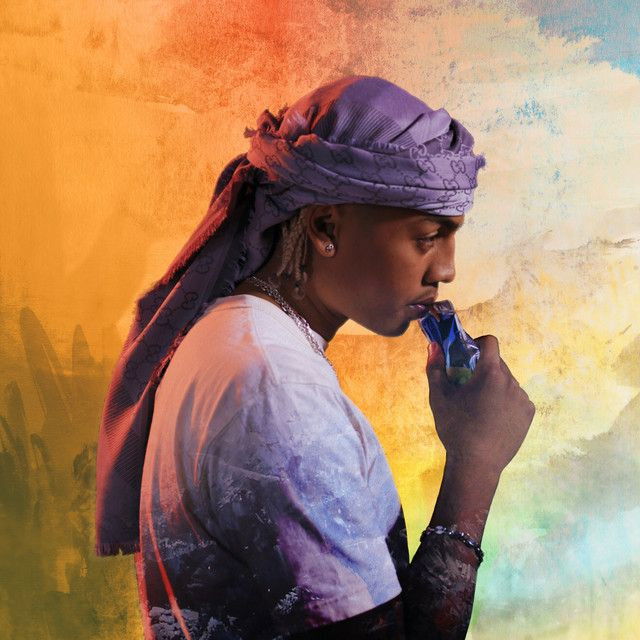
Inside the Meaning of Cabeza OBOY
OBOY’s "Cabeza" sounds like a flex at first, but its real pull comes from how pleasure, pressure, and mental noise all blur together.
"Cabeza" - OBOY
Provided by LyricFind(Dans la cabeza)
Ils ont grave le seum (ils ont grave le mort)
Posé j'bois mon Capri-Sun (j'sirote ça)Loading...Loading lyrics...
Unable to load lyrics
We're unable to display the lyrics at this time. Please try again later.
Why This Hit Still Sticks
The meaning of Cabeza OBOY is bigger than nightlife talk or fashion-name drops. At its core, the song presents a mind split between appetite and anxiety. They move through parties, money talk, drugs, sex, and envy, but the repeated focus on the head—cabeza—suggests that the real setting is internal.
That idea fits OBOY’s wider style. According to biographical summaries of his career, they are a French rapper of Malagasy origin associated with trap, cloud rap, and melodic rap phrasing, with influences often linked to A$AP Rocky and Migos. "Cabeza" appeared on the 2020 EP Mafana and became one of his defining records, reaching No. 4 in France and later earning Diamond certification, according to the research data provided.
Those facts matter because success helps explain the song’s confidence. But the lyrics also show the cost of living in constant motion.

Watch the official Cabeza
music video
A Hook About What’s Happening in Their Head
The chorus gives the song its key. When OBOY says dans ma cabeza
, they are not just using a catchy Spanish word for style. They are pointing inward. The song keeps circling the idea that there is too much happening in their mind: lust, irritation, ambition, intoxication, and distraction.
Interpretation: this makes "Cabeza" feel less like a victory lap and more like a snapshot of overstimulation. Even when they seem relaxed, the repetition suggests mental clutter rather than peace.
A second phrase sharpens that contrast: Posé j'bois mon Capri-Sun
. On the surface, that image is funny and casual. But placed next to jealousy, drugs, and status symbols, it feels almost absurd. They act laid-back while everything around them is tense.
Verses Built on Pressure and Performance
Much of the song is driven by a social battle. OBOY notices rivals who are angry or envious, summed up by Ils ont grave le seum
. In plain terms, they see other people resenting their rise. That creates a defensive mood.
From there, the lyrics move into work and survival. When they describe rolling up their sleeves, the point is clear: nothing came easy. The bragging is tied to hustle. Money is not just for luxury; it is proof they stayed ahead.
That is why material references matter. Mentions of brands like Gucci, Fendi, and YSL are not only decorative. They show how status works in this world. Clothing and jewelry become signs that they made it, even as people around them watch closely.
Interpretation: the song treats wealth as both reward and armor. They wear success to silence doubt.
Desire, Distance, and a Hard Persona
The sexual language in "Cabeza" is blunt, but it also tells listeners something about the narrator’s emotional stance. Relationships here are not tender or stable. Women are often framed through physical desire, transaction, or impatience.
A line like Elle veut l'anneau
suggests someone else wants commitment, while OBOY is not ready to slow down. That detail matters because it shows a gap between intimacy and lifestyle. They can offer access, excitement, and money—but not necessarily emotional security.
Another recurring attitude appears in the cash-first lines. The song keeps returning to direct exchange, movement, and escape. That creates a persona that is sharp, guarded, and uninterested in vulnerability.
The Real Story Arc, Step by Step
The lyrics do not tell a neat plot, but they do move in a clear emotional order:
- They notice envy from others.
- They insist they had to work for what they have.
- They enter a world of clubs, smoke, sex, and luxury.
- They keep reminding listeners that their head is crowded.
- They take the cash and leave before anything becomes stable.
That last point is crucial. Even in scenes that should feel celebratory, they rarely sound settled. One phrase, Une vie pas très saine
, says it plainly. They admit the lifestyle is unhealthy.
So the song is self-aware. It does not exactly condemn the lifestyle, but it does expose its imbalance.
How the Production Carries the Meaning
"Cabeza" works because the sound matches the theme. OBOY’s music often sits between trap drums and a cloud-like atmosphere, and this track follows that pattern. The beat feels sleek and repetitive, giving the song a trance effect.
That repetition matters. The hook lands like a thought loop. Instead of resolving tension, the production lets it spin. The listener gets pulled into the same cycle as the narrator: stimulation, ego, desire, and numbness.
Their vocal delivery also helps. OBOY often sounds half-detached, half-focused, which fits a song about being chemically altered while still watching the room. The mood is not explosive. It is floaty, suspicious, and cool on purpose.
A Bigger Reading of the Meaning of Cabeza OBOY
The strongest reading is that "Cabeza" is about mental overcrowding in a fast life. The money, women, and brands are real parts of the picture, but they are not the whole picture. The title keeps pushing listeners back to the mind.
Interpretation: the song may be showing how success can feel addictive and unstable at the same time. They are winning, but they are also trapped in a loop of consumption and reaction.
That tension helps explain why the song connected so widely. It has the surface of a hit—memorable hook, slick bounce, quotable lines—but underneath it is a portrait of someone who cannot fully switch off.
Final Take
For listeners asking about the meaning of Cabeza OBOY, the simplest answer is this: it is a song about living too fast and thinking too hard at the same time. Its world is stylish and seductive, but also restless.
That makes "Cabeza" more than a flex track. It is a cool-headed song about a mind that never really settles.
Disclaimer: This interpretation is based on the lyrics, performance, and available career context. As with any song, meaning can vary from listener to listener.








