
favorite crime by Olivia Rodrigo
The heartbreak in Olivia Rodrigo’s “favorite crime” doesn’t explode; it confesses. The song turns a breakup into a crime scene, making guilt and desire feel inseparable.
"favorite crime" - Olivia Rodrigo
I let you treat me like that
I was your willing accomplice, honey
Loading lyrics...
Unable to load lyrics
We're unable to display the lyrics at this time. Please try again later.
What This Confession Really Means
The core meaning of “favorite crime” is about complicity in a toxic relationship. The narrator knows they were a willing accomplice
, and that insight is what stings. Instead of blaming the other person outright, they admit they helped the damage happen.
For readers searching the meaning of favorite crime Olivia Rodrigo, the key is this moral knot: love drew them in, even as boundaries were crossed. They’re ashamed yet still attached, hoping to matter enough to be remembered as the other person’s favorite crime
—a twisted badge of honor that admits harm while craving significance.
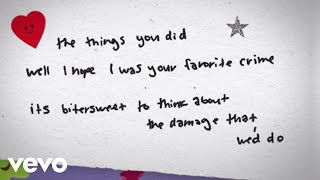
Watch the official favorite crime
music video
Who’s Speaking, and Why It Hurts
The song is sung in first person to an ex who fled the scene
. That phrase shows abandonment and the shock after it. The narrator’s honesty—owning their role as a willing accomplice
—gives the lyric its bite.
They also show how denial works. When they say they I defended you
, it reveals how loyalty can become self-betrayal. The voice is tender but clear-eyed, caught between truth and longing.
A Short Timeline of the Fallout
- Early love blinds the narrator to red flags.
- They excuse the partner’s behavior and protect them socially—again,
I defended you
. - The partner leaves—
fled the scene
—and the narrator is left with shock, shame, and memory. - Even after the break, they’d
do it all again
, which exposes the addictive loop. - Finally, they reframe the past, hoping to be the ex’s
favorite crime
while recognizing the damage.
The Chorus: Love as a Crime Scene
The hook centers on value and guilt. Calling love a favorite crime
admits the relationship felt thrilling and wrong at once. Interpretation: the chorus asks whether being unforgettable is worth being hurt. It’s desire for meaning winning over self-protection.
Symbols and Word Pictures You Might Miss
Four hands bloody
: Shared guilt. Both parties contributed to the harm; pain wasn’t a one-way street.Alibi
andfled the scene
: The partner uses the narrator’s trust to dodge blame, then disappears. It’s about manipulation and escape.- Sirens and crossed lines: Anxiety and broken boundaries. These images place the fallout in a world of rules, danger, and consequences.
- Smiling while saying “I hate you”: The performance of anger covers attachment. It’s ambivalence in one gesture.
Together, these symbols make the story feel cinematic—think small-town romance filmed like a heist, with heartache as the loot.
How the Sound Carries the Story
Musically, “favorite crime” is stripped and intimate. A close, fingerpicked acoustic guitar centers the track, while hushed background vocals bloom in the final section like a memory widening in a quiet room. Light synth coloring and a soft, airy blend keep the mood delicate rather than bombastic.
Production choices matter here. The near-whispered lead focuses the ear on words and breath, like a private confession. Subtle instrument layers and stacked harmonies deepen the sense of nostalgia, while the restraint—no heavy drums, no big drops—mirrors the narrator’s self-control as they relive the hurt.
Alternate Readings That Also Fit
- Interpretation: It’s not only about a bad partner; it’s about the narrator’s need to feel special, even through pain. The title wish—to be a
favorite crime
—reveals a hunger for significance that keeps them stuck. - Interpretation: The song studies codependency. Lines like
I defended you
and the readiness todo it all again
suggest a pattern where care equals self-erasure. The crime isn’t just what the partner did; it’s what they both allowed.
Takeaway
“favorite crime” makes confession feel like closure. By naming their role, the narrator regains power, even if they still ache. That’s why the song feels bittersweet: it finds dignity in telling the truth, not in winning the breakup.
Disclaimer: Song interpretations are subjective. This reading reflects thematic analysis and public information, not the artist’s definitive intent.








