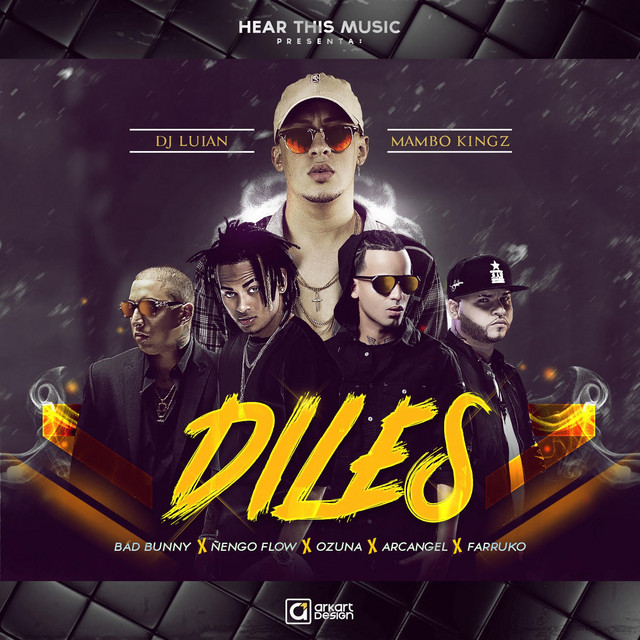
Diles by Bad Bunny, Ozuna, Farruko, Arcángel, Ñengo Flow, DJ Luian, Mambo Kingz
They don’t whisper in “Diles”—they broadcast. This early Latin trap cypher turns a secret affair into public performance, using a spare beat and rotating verses to flex status and desire. If you’re searching for the meaning of Diles Bad Bunny, Ozuna, Farruko, Arcángel, Ñengo Flow, DJ Luian, Mambo Kingz, start with the title itself: Diles
—“tell them.”
"Diles" - Bad Bunny, Ozuna, Farruko, Arcángel, Ñengo Flow, DJ Luian, Mambo Kingz
Prende otro Phillie bebé
Que ya mismo este se apaga
Loading lyrics...
Unable to load lyrics
We're unable to display the lyrics at this time. Please try again later.
Bodies, Boasts, and Secrets in Plain Sight
The core idea is simple: a late‑night hookup is happening behind someone’s back, and the narrators want the world to know. They don’t just seek pleasure; they seek validation. When they reference tus poses favoritas
, it’s less about romance and more about proof—evidence that intimacy has happened.
Interpretation: the song blurs confession and clout. The hook dares the woman to confirm it publicly, while verses stack claims of skill, stamina, and exclusivity. This is seduction staged like a victory lap.

Watch the official Diles
music video
Who’s Talking, and Why “Tell Them” Matters
Multiple first‑person narrators—Bad Bunny, Ozuna, Farruko, Arcángel, and Ñengo Flow—address a woman and, indirectly, her partner and the scene around them. The repeated command Diles
flips the balance of power. They’re not just sneaking around; they want an announcement.
That push for public acknowledgment gives the song its spark. The narrators see themselves as the real choice, demanding that she confirm it to her circle, rivals, and social feeds.
A Night in Trap Time: What Happens
- The night starts charged; they set a private meet‑up and cut off distractions with
apaga el cel'
. - They skip the hotel, signaling urgency and rule‑breaking, summed up by
no hay tiempo para perder
. - Images pile up—tinted windows, fogged glass, and the thrill of being unseen, as in
cristales tinteados
. - Each verse claims a different angle: bragging about style, stamina, and being the one she calls when she’s upset with her partner.
Interpretation: the timeline is less linear story than montage. The repetition mirrors how rumors spread—snippets retold until they harden into “facts.”
The Hook as Bold Confession
Here’s the hinge of the track—the challenge that powers every verse:
Diles, que yo me sé tus poses favoritas
Que te hablo malo y eso te excita
The hook is both explicit and strategic. It names private details to force a public narrative. Emotionally, it’s not love talk; it’s a demand for recognition.
Symbols and Street‑Level Images
The song’s props are everyday: smoke, cars, and phones. Turning the phone off signals secrecy. Tinted windows and a fogged windshield turn the city into a private room. These images—paired with the chorus—turn intimacy into social currency. The car becomes a moving confessional, where proof of chemistry is something you could, in theory, “tell them” about later.
Interpretation: the recurring car imagery hints at control and mobility. They choose the route, the time, and the speed—mirroring how the narrators try to steer the story.
How the Sound Sells the Seduction
DJ Luian and Mambo Kingz build a low‑key, late‑night trap bed: dry drums, sub‑heavy 808s, and space for vocal ad‑libs. The minimalism lets each voice cut through, from Bad Bunny’s gravelly baritone to Ozuna’s lighter melody. Call‑outs of the producers frame it like a street anthem, while the steady groove keeps the verses front and center.
Interpretation: the uncluttered mix acts like a spotlight. With fewer instruments, every boast lands harder, and the chorus’s command feels like a mic drop.
Where It Fits in Latin Trap’s Rise
Released during the mid‑2010s Latin trap surge under the Hear This Music banner, “Diles” functions as an early showcase. Bad Bunny’s deep tone, relentless internal rhymes, and visual detail preview the persona he would later scale to global pop. The posse structure also signals a scene building itself in real time—producers and artists co‑signing each other on one track.
For listeners in the United States, the song’s appeal crosses language lines: a catchy hook, cinematic images, and a beat that nods to Southern trap while staying rooted in reggaetón rhythm DNA.
Alternate Readings and the Boundary Line
- Interpretation 1: It’s pure bravado—male performers staking out sexual territory and turning gossip into free marketing.
- Interpretation 2: There’s a flicker of mutual agency. The woman is asked to “tell them,” hinting she controls the narrative—though the frame remains male‑centered.
Both readings can sit together. The tension between secrecy and spectacle is the song’s engine.
Takeaway
The meaning of Diles Bad Bunny, Ozuna, Farruko, Arcángel, Ñengo Flow, DJ Luian, Mambo Kingz lies in how it converts a private night into public myth. The chorus is a megaphone. The beat is a streetlight. And the verses are short stories about power, desire, and the urge to be seen.
Disclaimer: Song meanings are interpretive and may differ from the artists’ intent.
Sources
- https://genius.com/Dj-luian-and-mambo-kingz-diles-lyrics
- https://www.billboard.com/music/latin/bad-bunny-rise-latin-trap-8480400/
- https://www.rollingstone.com/music/music-latin/bad-bunny-profile-2020-936135/
- https://en.wikipedia.org/wiki/Bad_Bunny_discography
- https://www.thefader.com/2017/11/27/bad-bunny-interview-latin-trap







