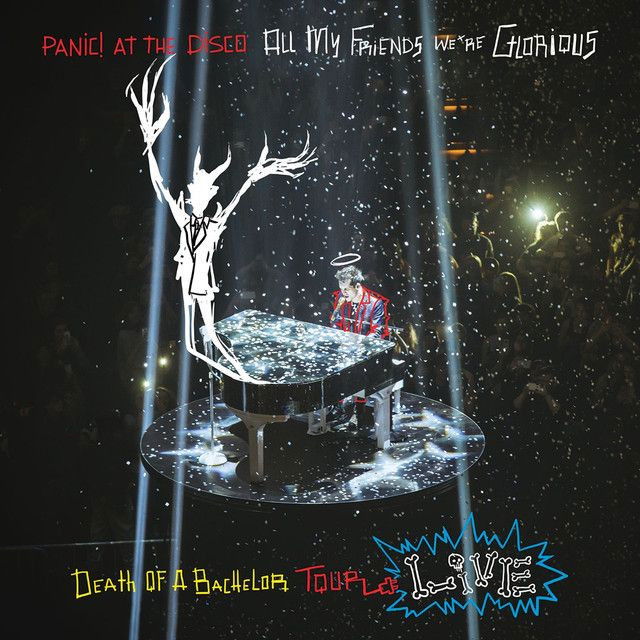
Bohemian Rhapsody by Panic! at the Disco
Panic! at the Disco’s cover keeps Queen’s opera-rock epic intact while tilting the spotlight toward raw, modern feeling. For fans searching the meaning of Bohemian Rhapsody Panic! at the Disco, this rendition reframes a classic confession as a theater-ready panic attack that becomes liberation.
"Bohemian Rhapsody" - Panic! at the Disco
Caught in a landslide, no escape from reality
Open your eyes, look up to the skies and see
Loading lyrics...
Unable to load lyrics
We're unable to display the lyrics at this time. Please try again later.
A classic reborn for a new crowd
This isn’t a rewrite—it’s a reverent recreation with Panic!’s flair. They keep the suite-like flow, soaring harmonies, and piano backbone, led by Brendon Urie’s range. The effect is less museum piece and more live-wire drama. Their version circulated widely through a hit superhero soundtrack era and became a touring highlight, helping Gen Z and millennials meet the song on their own terms.
Interpretation: Panic! translate the original’s 1970s grandeur into present-tense adrenaline. The arrangement feels tighter and brighter, but the emotional map—fear, confession, judgment, escape, acceptance—stays the same.
Watch the official Bohemian Rhapsody
music video
What story the lyrics tell—now
The narrator begins in disorientation, asking Is this the real life?
Reality feels slippery. Then comes a confession to a mother and the shockwave of consequence.
Mama, life had just begun But now I’ve gone and thrown it all away
From there, the song explodes into an operatic “trial,” complete with spiritual stakes and comic-book velocity. Voices demand and deny release—let me go
—until a guitar-driven break tears the cage open. Finally, the coda resigns: nothing really matters
. Panic!’s delivery makes this moment read less like nihilism and more like hard-won calm after a storm.
The voice behind the drama
It’s a first-person witness telling their own fall from grace. They plead with family (Mama, ooh
), argue with judges inside their head, and push back at betrayal: the rock section snarls at those who try to diminish them. When they sigh, I don’t want to die
, it sounds like a person staring down consequence and begging for one more chance. Panic!’s phrasing heightens this immediacy, turning the narrator’s crisis into a stage soliloquy.
Symbols that still sting
- The breeze and drift of
easy come, easy go
point to fatalism—the sense that life moves beyond control. - Operatic names—Scaramouche, Galileo—signal masks and judgment. Interpretation: they stage an inner courtroom where logic, pride, fear, and faith argue.
- “Bismillah” and Beelzebub pull in sacred and demonic scales. Interpretation: the narrator imagines cosmic forces debating their soul.
- Thunder and lightning amplify panic; it’s weather-as-anxiety.
These images work because Panic! play them straight, not as camp. The humor is there, but the stakes feel real.
How Panic!’s sound sells the meaning
Piano and close-mic vocals open intimate and fragile. Layered harmonies bloom like a choir, then retreat. The operatic middle hits with stacked voices that feel both playful and claustrophobic, mirroring a mind at war with itself. Modern drums and saturated guitars crash the gate in the rock segment, giving the escape a physical punch. Urie’s belt rides on top without strain, projecting both swagger and desperation.
Production-wise, the dynamics are surgical: hush, stack, blast, hush. That contour tells the story even if listeners miss the words. By the end, when the band thins and the vocal softens, the acceptance lands. After so much motion, quiet is the bravest choice.
What Panic!’s version emphasizes
Interpretation 1: Guilt and responsibility. The confession to family and the courtroom voices make the song a trial of conscience. Panic!’s crisp attack sharpens that moral edge.
Interpretation 2: Identity under pressure. The masks and choirs suggest self-splitting—who people expect vs. who someone is. Panic!’s theatrical DNA spotlights that push-pull, turning the operetta into a mirror for anyone wrestling with labels.
Neither reading cancels the other. The cover thrives on both: a private reckoning staged as public spectacle.
Why the refrain hits differently
There is no standard chorus, so the repeated ideas carry the hook. In Panic!’s hands, nothing really matters
doesn’t flatten life; it frees the narrator from shame. The line sounds like perspective after crisis—what matters is living truthfully, not winning every argument with the choir in one’s head.
Takeaway for listeners
If you’re chasing the meaning of Bohemian Rhapsody Panic! at the Disco, start with this: it’s the same timeless drama of fear, judgment, and release—performed as a cathartic, arena-sized confession. The band’s faithful arrangement and Urie’s fearless vocal make an old epic feel urgently new.
Disclaimer: Song meanings are interpretive. This article blends verified context with informed analysis; your own read may differ.








