What “Girls/Girls/Boys” Is Really Saying
The meaning of Girls/Girls/Boys Panic! at the Disco starts with a love triangle, but it does not stay there. On the surface, the song follows a narrator pulled into a complicated situation with a woman who is also drawn to women. Under that story, though, Panic! at the Disco is pushing toward a bigger point: attraction can be fluid, identity can be messy, and shame often makes things harder than love does.
"Girls/Girls/Boys" - Panic! at the Disco
Sometimes you're better off alone
But if you change your mind, you know where I am
Loading lyrics...
Unable to load lyrics
We're unable to display the lyrics at this time. Please try again later.
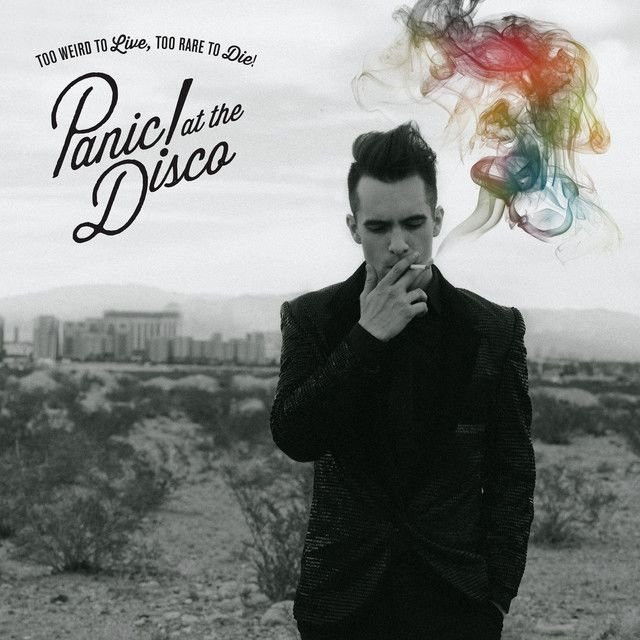
Released as a single from Too Weird to Live, Too Rare to Die! in 2013, the track became one of the band’s most discussed songs. According to available release information, it was written by Brendon Urie and Dallon Weekes and produced by Butch Walker with Panic! at the Disco. It was also a charting rock crossover and later earned major certification in the U.S. and U.K. (Wikipedia).
A Love Triangle With a Bigger Message
In the verses, the narrator sounds torn between desire and frustration. They are interested in someone who seems unavailable, socially guarded, or emotionally split. When the song opens with got a boyfriend
, it sounds like a standard jealousy setup.
But the song quickly swerves away from a simple rival story. The central tension is not really boyfriend versus narrator. It is about a woman whose attraction does not fit the neat role other people expect her to play.
That is why the hook matters so much. When the song repeats Girls love girls and boys
, it turns a personal scene into a wider statement. Then it adds love is not a choice
, which is the song’s clearest thesis: desire is not a moral failure, a trend, or a performance for others.

Watch the official Girls/Girls/Boys
music video
Who They Are Singing To
The narrator is not a neutral observer. They are deeply involved, and sometimes a little selfish. They want closeness, but they also seem aware that the woman at the center of the song is under pressure.
That pressure comes through in lines about image and secrecy. The phrase save your reputation
points to social fear. The song suggests that the woman is not only sorting out her feelings; she is also worried about how those feelings will be judged.
Interpretation: This is why the narrator sounds both seductive and defiant. They are inviting the woman toward honesty while also benefiting from her confusion. The song does not present them as a hero. It lets them be messy too.
The Chorus Reframes the Story
Without the chorus, the song could sound like a clever scandal-pop story. With the chorus, it becomes more open-hearted. The repeated claim about girls loving both girls and boys takes the focus off labels and puts it on lived experience.
That matters because the verses are full of social performance. There is pressure to hide, to choose, and to protect appearances. The chorus pushes back against all of that. Instead of asking the woman to fit one box, it accepts contradiction.
Girls love girls and boys
And love is not a choice
Those two short lines carry most of the song’s emotional weight. They summarize both the conflict and the release.
Sound, Style, and Why the Song Feels So Cool
Part of what makes the song memorable is how smooth it sounds. Research on the track’s composition notes that Dallon Weekes wrote and played the bass line, and that its style drew comparisons to Duran Duran’s John Taylor (Wikipedia). That bass part is crucial.
It gives the song a slinky, night-drive confidence. Instead of sounding heavy or tragic, the music feels sleek and attractive. That choice matters because the lyrics deal with tension, secrecy, and identity, but the production refuses to treat queer desire as gloomy or forbidden.
The new-wave and electropop textures keep everything moving. Brendon Urie’s vocal delivery also helps: they sound teasing in one moment, urgent in the next. The result is a song that feels stylish on the outside but emotionally unsettled underneath.
Artist Context Changes the Reading
Brendon Urie later said in a 2018 Paper interview that the song recalled his first threesome experience, a detail also summarized in public reference material (Wikipedia). That factual context does not cancel other interpretations, but it does sharpen the song’s perspective.
It explains why the lyrics feel so specific. This is not written like a distant social statement. It feels like someone remembering a real scene that was exciting, confusing, and revealing.
There is also the well-known term Urie once used, barsexual
, to describe the character’s fluid attraction, as noted in summaries of the song’s background (Wikipedia). Today, some listeners may find that phrasing dated or imprecise. Even so, the broader message many fans connected with remains clear: attraction can move beyond fixed categories.
Why the Song Lasted
The track lasted because listeners heard more than shock value in it. Some heard an anthem of bisexual or sexually fluid visibility. Others heard a portrait of closeted fear. Others still heard a messy memory transformed into pop.
Interpretation: The song works because it never fully cleans up that mess. It keeps desire, ego, secrecy, and empathy in the same frame. Even the line about being a villain hints that the narrator knows they are not innocent.
The video added to that discussion too. Directed by DJay Brawner, it used a stripped-down, body-focused concept that emphasized exposure and performance (Wikipedia). That visual approach matched the song’s interest in being seen, judged, and desired all at once.
The Last Word on Its Meaning
So, what is the meaning of Girls/Girls/Boys Panic! at the Disco? It is a song about wanting someone who is caught between desire and social pressure, but it grows into a wider statement about sexual fluidity and the fact that love cannot be forced into clean labels.
Its smartest move is that it never sounds like a lecture. It sounds like a pop song full of temptation, nerves, and honesty. That is why it still connects.
Disclaimer: This interpretation blends documented song history with critical reading of the lyrics and production. As with most pop songs, listeners may hear meanings that differ from the artist’s stated inspiration.









