
Why Patrick Juvet Asked, 'Where Are the Women?'
The meaning of Où sont les femmes Patrick Juvet starts with a simple question and quickly turns into something more complicated. Released in July 1977 as a single from Paris by Night, the song became a major hit and is often described as one of the first French-language disco smashes, with lyrics by Jean-Michel Jarre and music by Patrick Juvet. It reached No. 1 in Quebec, No. 2 in Switzerland, No. 5 in Wallonia, and No. 6 in France, selling more than 250,000 copies in France, according to chart and release data summarized by Wikipedia: Où sont les femmes?.
"Où sont les femmes" - Patrick Juvet
Elles fument le cigare
Font parfois un enfant
Loading lyrics...
Unable to load lyrics
We're unable to display the lyrics at this time. Please try again later.
A Disco Hit Built on Anxiety
On the surface, the chorus asks Où sont les femmes?
But the song is not truly asking where women have gone physically. It is asking where a certain fantasy of womanhood has gone.
The verses describe women who smoke, wear black jackets, cut their hair short, and chase temporary pleasures. The speaker sees these details as signs that old romantic roles are fading. In that sense, the song is less a portrait of women than a portrait of male confusion during social change.
Interpretation: The song captures a late-1970s fear that modern life had made romance colder, faster, and less sentimental. Its target is not one person. It is a whole cultural shift.
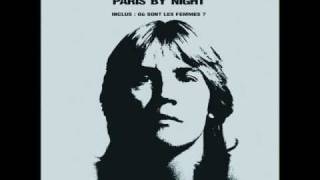
Watch the official Où sont les femmes
music video
What the Lyrics Are Really Saying
The lyric writing is full of opposites. Women are described as independent and active, but the chorus longs for women with gestes pleins de charme
and rires pleins de larmes
. That contrast matters.
The song imagines an older kind of femininity as soft, dreamy, emotional, and available for male desire. By contrast, the women in the verses seem tougher, more detached, and less interested in romance. When the song says they ne parlent plus d'amour
, it suggests that love itself feels outdated in this modern world.
That is why the repeated hook feels so obsessive. It is not just nostalgia. It is panic. The speaker does not understand the new rules anymore.
Où sont les femmes?
Avec leurs gestes pleins de charme
This short refrain sums up the song’s tension: the speaker is searching for tenderness, but they are also searching for an ideal that may never have been real.
Gender Roles at the Center of the Song
One reason the song remains interesting is that it arrived during a period of major debate over gender and liberation. Sources note that it caused controversy for perceived sexism, and Patrick Juvet reportedly received angry letters from the French Women’s Liberation Movement after its release, as summarized in the same Wikipedia entry above.
That reaction makes sense. The song does not simply miss an old kind of romance; it misses a time when women were expected to be passive, decorative, and emotionally dependent. Lines about women who once fainted after kisses or lived at the end of telegrams clearly point to a stylized, old-fashioned image.
Interpretation: The song can be heard in two ways:
- as a sincere complaint about changing gender roles
- as a knowingly exaggerated performance of that complaint
Both readings have support. The lyrics themselves sound backward-looking, but the production is sleek, urban, and very modern.
Why the Sound Changes the Meaning
The production is crucial to the meaning of Où sont les femmes Patrick Juvet. Jean-Michel Jarre, better known to many listeners for his electronic work, wrote the lyrics and produced the track. Recorded in Los Angeles at Devonshire Sound Studios and released on Barclay, the song runs on classic disco momentum: a steady beat, bright arrangement, repetition, and a hypnotic chorus.
That musical setting creates a productive contradiction. The words complain about modern women, yet the sound celebrates modern nightlife. The track does not feel dusty or sad. It feels stylish, shiny, and built for the dance floor.
So even if the narrator wants to go backward, the music keeps moving forward. That clash may be the song’s smartest feature. It turns social anxiety into pop spectacle.
Fame, Irony, and Lasting Appeal
The song’s success shows that its hook reached beyond controversy. It was catchy enough to cross borders and strong enough to become a signature title in Juvet’s catalog. It also later appeared in an English version, according to release history.
What keeps the track alive is not just its chorus. It is the way it documents a cultural moment when ideas about love, masculinity, and femininity were being rewritten in public. The song sounds glamorous, but underneath that glamour is insecurity.
That is why phrases like cheveux courts
or plaisirs provisoires
do more than describe style. They suggest a world that feels faster and less stable than the speaker wants. The women in the song become symbols of that change.
The Best Way to Read It Today
Today, the song works best when heard as both artifact and argument. Factually, it is a key disco record from 1977 and one of Patrick Juvet’s biggest hits. Artistically, it stages a conflict between liberation and longing.
Interpretation: The most useful reading is that the song reveals more about the speaker’s expectations than about women themselves. Their question, repeated again and again, sounds less like social analysis than emotional disorientation.
That is what gives the song its staying power. It is catchy, provocative, and revealing in ways it may not fully intend.
Disclaimer: This interpretation is based on the song’s lyrics, historical context, and production details. As with all art, listeners may reasonably hear different meanings.







