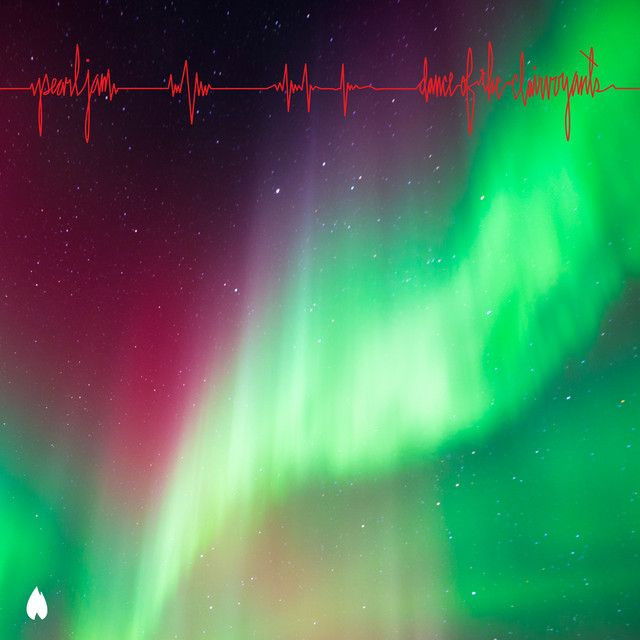
What 'Dance Of The Clairvoyants' Is Really Saying
The meaning of Dance Of The Clairvoyants Pearl Jam starts with tension: people want certainty, but the song argues that certainty is mostly an illusion. Released in January 2020 as the lead single from Gigaton, the track marked a sharp stylistic turn for Pearl Jam, leaning into a wiry, dance-rock pulse instead of their usual guitar-heavy attack. That creative shift matters because the sound and the lyrics tell the same story: the ground is moving, so they have to move with it.
"Dance Of The Clairvoyants" - Pearl Jam
What love is to our devotion
Imperceptibly big
Loading lyrics...
Unable to load lyrics
We're unable to display the lyrics at this time. Please try again later.
A Song About Uncertainty, Control, and Reinvention
At its core, the song describes a world where old assumptions do not hold. Early lines pair huge emotions with forces that are hard to manage, then warn listeners to save their predictions and let go of fixed ideas. In plain terms, the song says life is too complex for neat answers.
That idea becomes clearer in phrases like burn your assumptions
and doors open up
. Pearl Jam present meaning itself as unstable. Things can be interpreted in more than one way, and trying to force perfection only makes people miss what is real.
Interpretation: They seem to be pushing against black-and-white thinking. The song does not celebrate confusion, but it treats uncertainty as honest. It suggests that maturity comes from accepting friction instead of pretending everything can be solved cleanly.
Watch the official Dance Of The Clairvoyants
music video
Why the Chorus Feels So Claustrophobic
The key emotional center is the section about expecting perfection when the future's no more
. The wording paints a life where tomorrow feels identical to today. Time moves, but growth does not.
That image gets even stronger when the lyrics mention numbers falling off a calendar and people being stuck in boxes. Pearl Jam turn daily life into something mechanical and airless. Windows are shut, memory gets fuzzy, and routine becomes a trap.
Interpretation: This can be heard as social criticism. The song may be describing late-modern life as overmanaged, overpredicted, and emotionally numb. People are surrounded by systems and schedules, yet they feel less free, not more.
Gender, Ego, and Escape in the Dance Motif
One of the song's sharpest turns comes when it contrasts what girls and boys want. The girls want to dance away their circumstances, while the boys want to grow, fix, and fire things. The point is not that every person fits those roles. It sounds more like a critique of learned behavior.
Pearl Jam draw a line between release and control. Dancing suggests surrender, motion, and survival. The masculine urge to build, repair, or weaponize things sounds more anxious and performative.
Interpretation: The song may be mocking the way gender scripts shape responses to fear. Some people cope by moving through pain. Others cope by dominating, proving, or pretending they can master chaos.
The Clairvoyant Image Is Probably Ironic
Near the end, the narrator says they are in love with clairvoyants because they are out of this world
. That sounds admiring on the surface, but the whole song has already questioned prediction. So the clairvoyants may not be wise prophets at all.
They may stand for people who claim to know what comes next, whether they are gurus, experts, ideologues, or even our own inner voice. Pearl Jam seem fascinated by that promise while also distrusting it.
A Brief Lyric Snapshot
The song's warning against rigid certainty comes through in this short passage:
Expecting perfection
leaves a lot to ignore
when the past is the present
andthe future's no more
Paraphrased, the idea is simple: when people cling to impossible standards, they stop seeing the world in front of them.
How the Sound Carries the Message
The track matters musically because it broke expectations for the band. Reviews at the time noted its post-punk and new wave feel, with Jeff Ament's elastic bass and a tight, mechanical groove driving the song's unsettled energy. That was a notable lead-single choice for Pearl Jam during the Gigaton era.
The production supports the lyrics in three big ways:
- The bass feels restless. It keeps the song moving, as if stability is never fully available.
- The beat is danceable but tense. That mirrors the idea of trying to move free while still trapped.
- Vedder's vocal is controlled, not explosive. He sounds observant, almost diagnostic, which fits a song about reading a damaged culture.
Interpretation: The groove is not there to make the song carefree. It creates a nervous kind of motion, as if dancing is what people do when standing still feels impossible.
Artist Context Makes the Meaning Richer
Because this song launched Gigaton, it also works as a statement of renewal. Pearl Jam had spent decades associated with grunge and arena rock, yet here they opened a new album with something wiry, funky, and strange. That choice alone reinforces the song's message: survival requires adaptation.
It also arrived just before the pandemic changed daily life in the United States. That timing gave lines about stalled tomorrows and closed-off living an uncanny afterlife. Even without reducing the song to one event, many listeners heard it as a portrait of collective anxiety.
Final Reading: A Dance Inside the Unknown
So what is the meaning of Dance Of The Clairvoyants Pearl Jam? It is a song about what happens when prediction fails, routines harden, and people search for ways to cope. Some dance, some posture, some chase certainty, and some learn to live with ambiguity.
Pearl Jam do not offer a clean solution. They suggest that letting go of perfection and false control may be the first honest step. The song sounds uneasy because it is meant to. It is the sound of a band, and maybe a culture, trying to keep moving in a world they can no longer fully explain.
Disclaimer: This interpretation is based on the lyrics, the song's musical choices, and public release context. Like most Pearl Jam songs, its meaning remains open to listeners' own readings.









