
Why 'Shock the Monkey' Feels So Unsettling
The meaning of Shock The Monkey Peter Gabriel becomes clearer once the title’s weird image stops distracting from the emotion underneath. This 1982 single is often treated like a puzzle song, but Peter Gabriel explained that it is really about jealousy—specifically the way jealousy can wake up a person’s most primitive side.
"Shock The Monkey" - Peter Gabriel
Cover me through the fire
Something knocked me out' the trees
Loading lyrics...
Unable to load lyrics
We're unable to display the lyrics at this time. Please try again later.
That matters because the song does not describe romance in a soft or dreamy way. It presents love as pressure, fear, and instinct. Instead of sounding heartbroken, it sounds cornered.
The Real Idea Behind the Title
Factually, Gabriel released “Shock the Monkey” on September 10, 1982, as the lead single from his fourth self-titled album, issued in the U.S. as Security. It became his first U.S. Top 40 solo hit, reaching No. 29 on the Billboard Hot 100 and No. 1 on Mainstream Rock. The song was written by Gabriel and produced by Gabriel with David Lord.
Interpretation: The title makes the song seem literal, but Gabriel said the monkey is really a metaphor. In brief comments often cited by music writers, they described it as a song about jealousy and as a love song distorted by basic instinct.
That framing helps explain why the lyrics feel tense from the start. When the singer asks for protection with phrases like Cover me when I run
, the emotional world already feels unsafe. Love here is not comfort. It is exposure.
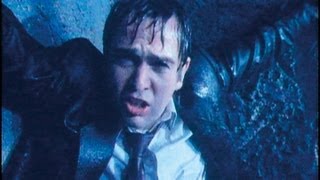
Watch the official Shock The Monkey
music video
Jealousy as an Animal Reflex
The song’s central trick is simple: it turns jealousy into a living thing inside the speaker. The repeated image of the monkey suggests an inner creature—restless, reactive, hard to control.
When Gabriel repeats Monkey, monkey, monkey
, it sounds less like description and more like obsession. The mind is looping. The speaker is no longer calmly thinking through a relationship problem; they are trapped inside it.
Interpretation: In that sense, “shock” can mean more than one thing at once:
- an emotional jolt
- a violent trigger
- a burst of panic
- a painful awakening
So when the chorus lands on Shock the monkey
, the song is not celebrating chaos. It sounds like they are watching jealousy damage the self from the inside.
How the Verses Build a Breakdown
The verses move through fear, humiliation, and distrust. The imagery is physical: being knocked down, crawling for cover, feeling the ground shake. Even without long lyric quotes, the pattern is clear. The speaker feels hunted by emotion.
A short phrase like Now I'm on my knees
shows that collapse. They are not in control, and they know it. Another key line, Don't you monkey with the monkey
, mixes warning, plea, and threat. That strange wording fits the song’s theme: jealousy scrambles language just as it scrambles thought.
There is also a social edge in the animal list—fox, rat, ape, swine. The song keeps comparing human behavior to animal behavior, as if jealousy strips away manners and leaves only instinct.
Shock, shock, shock
Watch the monkey get hurt
That short refrain is the song’s emotional center. It suggests that once jealousy is triggered, everyone involved gets damaged—especially the person feeling it most strongly.
Why the Sound Feels So Nervous
A big part of the meaning of Shock The Monkey Peter Gabriel comes from the production. The recording blends synth textures with drum-machine programming and tight, dance-like rhythm. Gabriel used tools such as the Linn LM-1, Prophet-5, and Fairlight CMI, alongside players including David Rhodes, Tony Levin, and Jerry Marotta.
The result is neither warm pop nor straight rock. It feels mechanical but alive, controlled but unstable. That contradiction suits the lyric perfectly.
Interpretation: The groove keeps moving forward like an anxious pulse. The repeated hook acts almost like intrusive thought. Gabriel’s vocal delivery—half cry, half command—makes the song sound as if jealousy is happening in real time, not being remembered later.
Critics at the time noticed that unusual force. Billboard called it “mysterious but infectious,” and later commentary has often pointed to its repeated hook and strange atmosphere as part of what made it stand out.
The Video Helped Create the Confusion
The song’s early MTV video made many people read it the wrong way. Directed by Brian Grant, it showed Gabriel in unsettling, symbolic scenes with a frightened monkey and shifting identities. Because of those visuals, some listeners assumed the song was about animal cruelty, experiments, or shock treatment.
But that reading clashes with Gabriel’s own explanation. The video amplified the song’s fear and surrealism, yet it also pulled attention away from the emotional theme.
Interpretation: The confusion actually proves how strong the mood is. Even when listeners miss the stated subject, they still feel the panic, aggression, and instability that jealousy creates.
A Love Song With Teeth
Calling “Shock the Monkey” a love song may sound odd, but that label makes sense if love is understood as attachment under threat. This is not a song about romance at its happiest. It is about what happens when love becomes possessive, scared, and almost feral.
That is why the song still lands. It does not describe jealousy as a small flaw. It treats it as a force that can hijack the body, the voice, and the imagination.
For many listeners, that is the key to the meaning of Shock The Monkey Peter Gabriel: the song captures the moment when human feeling slips into raw instinct. The “monkey” is the self reduced to nerves.
Final Take
“Shock the Monkey” endures because it turns an ugly emotion into unforgettable sound. Its lyrics are cryptic, but its feeling is direct: jealousy hurts, distorts, and exposes the most primitive part of love.
Interpretations can vary, and some listeners may still connect the song to broader ideas about violence, control, or identity. Still, Gabriel’s stated intent points most clearly to jealousy as the song’s core meaning. That context should guide, not limit, how people hear it.
Disclaimer: Song meaning is always partly interpretive. This reading separates documented artist comments and release facts from critical interpretation of the lyrics and sound.








