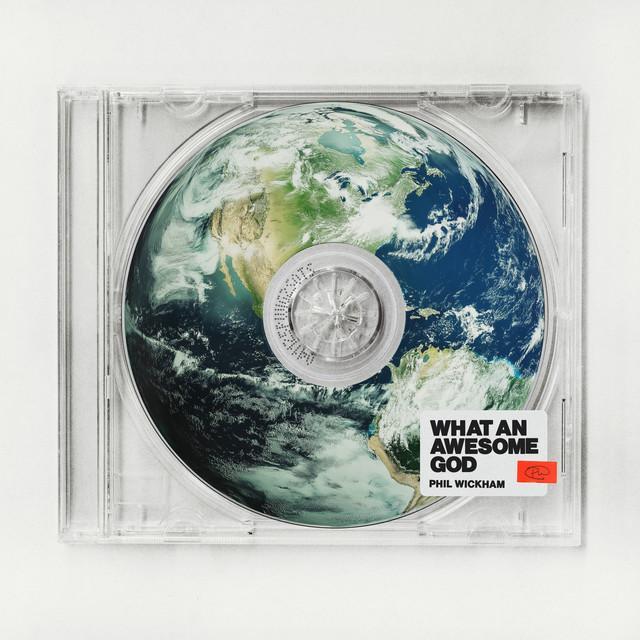
What An Awesome God by Phil Wickham
The meaning of What An Awesome God Phil Wickham comes through in one clear idea: this is a worship song that tries to hold together God’s power and God’s closeness. Rather than staying in one scene, it moves across the biggest parts of Christian belief—creation, the cross, resurrection, and the hope of Christ’s return.
"What An Awesome God" - Phil Wickham
Give Him all the praise
Hallelujah, name above all names
Loading lyrics...
Unable to load lyrics
We're unable to display the lyrics at this time. Please try again later.
Phil Wickham is known in modern worship music for writing songs that are both personal and congregational, and this track fits that pattern. The credited writers are Phil Wickham, Jonathan Smith, and Richard Mullins, a detail that matters because the chorus intentionally recalls Mullins’ well-known worship classic. That makes the song feel both familiar and newly expanded.
A Worship Song With a Wide-Angle Lens
At its core, the song is about praising God not just for one blessing, but for everything God is believed to be. The opening lines start with majesty and public praise. Images of glory, fire, healing, stars, angels, and oceans build a picture of a ruler whose authority reaches everywhere.
That is why the repeated chorus matters so much. When the song says He reigns
and names God’s wisdom, power and love
, it summarizes the whole message in a compact way. God is not presented as powerful only, or loving only, but both at once.
Interpretation: That balance is the song’s main goal. It wants worshippers to feel awe without distance. God is exalted above creation, yet still active within human pain and rescue.
From the Cosmos to Personal Rescue
One of the strongest features of the lyric is how it narrows its focus. It begins with stars, angels, demons, wind, and waves—huge images that suggest cosmic rule. Then it suddenly becomes personal: even when I ran
, God stayed near.
That shift changes the emotional center of the song. The God who names stars is also the God who does not abandon a person in failure. The lyric is not only saying God is big; it is saying God is faithful.
This middle section points directly to Jesus’ death and resurrection. The references to Friday, Sunday morning, and scars on hands and feet place the song in the story of the crucifixion and Easter. In plain terms, it argues that divine greatness is seen not just in rule, but in sacrificial love.
Why the Cross Is the Turning Point
The line about God putting death back in its place is one of the song’s sharpest ideas. It paraphrases a classic Christian claim: death is powerful, but not ultimate. Through Jesus’ death and rising, the song says death has been defeated.
A short cluster of images carries that meaning. The phrases broken for my shame
and rose up from that grave
move from guilt to victory. The lyric does not linger on suffering for its own sake. Instead, it treats suffering as the path to redemption.
Interpretation: This is where the song becomes more than a praise anthem. It turns into a testimony. The worship is not abstract admiration; it is a response to what the singer believes God has done in history and in personal salvation.
The Future Hope Behind the Final Section
In the last movement, the song looks ahead. It imagines a day with no fear, pain, sorrow, sin, or shame. Then it says the King is coming back again. That future focus gives the song a strong sense of Christian hope.
This matters because the track is not only celebrating the past. It is also preparing listeners for endurance in the present. A person can sing it while still grieving, struggling, or waiting, because the promise has not fully arrived yet.
no more fear, no more pain
no more sorrow, sin or shame
Those lines are simple, but they are effective. They express heaven not as an abstract doctrine, but as the end of everything that breaks human life.
How the Chorus Works in Worship
The chorus is built for repetition, and that is part of its meaning. In worship music, repetition is often used to move an idea from statement to conviction. Every return to Our God is an awesome God
reinforces the song’s central claim.
It also creates a communal voice. Even though one verse says even when I ran
, the larger song keeps returning to our God
. That shift from individual experience to shared declaration makes it suitable for church singing. It says personal rescue belongs inside a larger community of praise.
How the Sound Likely Carries the Message
Without overstating unsourced studio specifics, the writing strongly suggests a modern worship arrangement: a gradual build, a large chorus, and a final section designed for repeated singing. That structure mirrors the message itself.
The quieter, more reflective lines about running, shame, and scars likely invite intimacy. Then the broader refrain opens into celebration. In practical terms, the production probably helps listeners feel the move from testimony to triumph.
That is a hallmark of Wickham’s style in contemporary worship: emotional clarity, melodic lift, and language simple enough for a congregation to sing together.
The Meaning in One Sentence
The meaning of What An Awesome God Phil Wickham is that God’s greatness is shown in creation, proved in Jesus’ sacrifice and resurrection, and completed in the hope that one day sorrow will end.
For many listeners, that is why the song works. It praises God as ruler of the universe, but also as savior, comforter, and coming King. It gives worshippers something to celebrate, something to remember, and something to await.
Disclaimer: This interpretation is based on the lyrics provided and publicly known songwriting context. Meaning in worship music can vary by listener, church tradition, and personal belief.








