Why 'Dogs' by Pink Floyd Still Bites
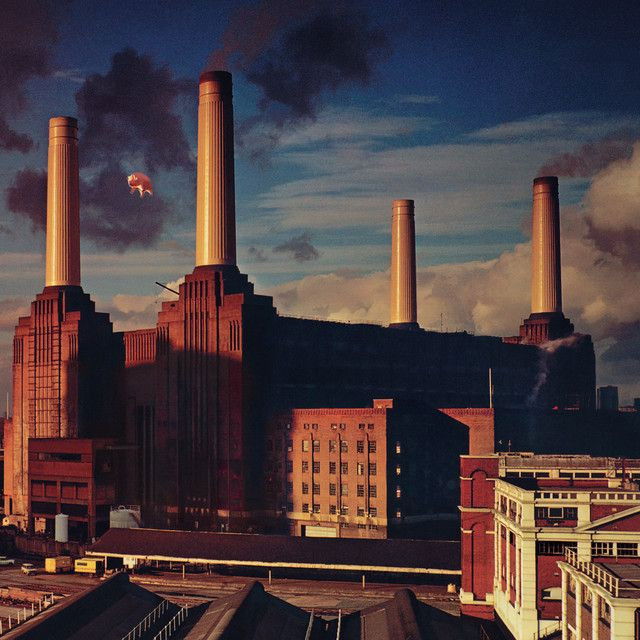
The meaning of Dogs Pink Floyd often comes down to one hard idea: success built on cruelty becomes a trap. On Animals, released in 1977, Pink Floyd turned social roles into animal symbols, and “Dogs” became their portrait of the polished predator in modern life. Factually, it is a 17-minute track from Animals, written by Roger Waters and David Gilmour, and produced by Pink Floyd. It began life as an earlier song called “You’ve Got to Be Crazy” before being reshaped for the album’s concept [Source 1][Source 2].
"Dogs" - Pink Floyd
You gotta sleep on your toes, and when you're on the street
You gotta be able to pick out the easy meat with your eyes closed
Loading lyrics...
Unable to load lyrics
We're unable to display the lyrics at this time. Please try again later.
A Predator in a Suit
At the surface, the song describes a person trained to win in business by reading weakness, hiding intent, and striking at the right moment. The opening lines present that worldview almost like instructions for survival. Short phrases like easy meat
and firm handshake
show the contrast clearly: beneath charm and manners sits a hunter.
This is why the song feels colder than a simple attack on money or work. It is about a mindset. The central figure does not just compete; they learn to lie well enough to earn trust first. In that sense, the song’s target is moral emptiness disguised as professionalism.

Watch the official Dogs
music video
The Album Context Makes the Message Sharper
Pink Floyd built Animals around an Orwell-inspired idea, comparing kinds of human behavior to animals [Source 1]. Roger Waters later described the album as a cartoon sketch of how society is organized, leaning on Animal Farm and using animals to represent human traits [Source 2].
In that framework, the “dogs” are not lovable pets. They are aggressive climbers, people who survive by instinct, fear, and dominance. Interpretation: the dog image also suggests training. These figures are dangerous, but they are also conditioned by the world that made them.
From Confidence to Collapse
One of the strongest parts of “Dogs” is the way it tracks a whole life. The first half shows the rise: confidence, polish, attack, control. Then the song turns inward. The warning that life gets harder, and harder
with age shifts the focus from outward power to private panic.
Soon the image of success falls apart. The person who once controlled others ends up isolated, afraid, and physically failing. The refrain around dragged down by the stone
suggests the weight of choices, guilt, and mortality. The “stone” can be heard as a burden they earned and can no longer escape.
Who was born in a house full of pain
Who was told what to do by the man
Who was fitted with collar and chain
That late passage changes the song’s angle. Instead of only condemning the predator, it asks what made them this way.
A Life Shaped by Training and Fear
The ending matters because it complicates the song’s moral judgment. Those repeated lines about pain, control, and a collar and chain
suggest a person formed by pressure long before they entered the corporate race. They were taught obedience, rewarded for conformity, and damaged by authority.
Interpretation: this does not excuse the character’s cruelty, but it widens the frame. “Dogs” may be saying that ruthless adults are often the product of ruthless systems. By the end, the winner does not look powerful at all. They look lonely, programmed, and broken.
How the Music Carries the Meaning
The production is a huge part of why the song hits so hard. According to widely cited album documentation, the track opens with acoustic guitar and gradually expands into electric guitar, organ, bass, and drums, creating a sense of movement from alert calculation to emotional release [Source 1]. David Gilmour sings the first half, while Waters takes over later, a vocal split that helps the song move from cool description to harsher judgment [Source 1].
The middle section is especially important. It slows into a drifting, eerie stretch with layered keyboards and processed dog sounds through a vocoder [Source 1]. That section feels suspended, almost numb, as if the character has entered a mental fog between ambition and ruin.
Gilmour’s guitar work also gives the song its human ache. Songfacts notes his use of a custom Telecaster and Hiwatt amps on the recording [Source 2]. Even without technical language, listeners can hear the contrast: the lyrics are cynical, but the guitar sounds wounded and expansive. That tension keeps the song from becoming a lecture.
Why the Meaning Still Connects
For many listeners in the United States, the meaning of Dogs Pink Floyd still feels current because the song speaks to burnout, image management, and the fear of becoming what success rewards. Its businessman figure belongs to the 1970s, but the emotional pattern is still familiar: perform confidence, hide weakness, distrust everyone, and pay later.
That is why “Dogs” lasts beyond its era. It is not only about capitalism or corporate culture, though those ideas are central. It is also about what happens when survival becomes identity.
The Lasting Takeaway
“Dogs” is about predatory ambition, but it is also about the emptiness underneath it. Pink Floyd presents a person who learns how to win by becoming less human, then discovers that the cost of that transformation is isolation.
In the end, the song judges the system and the person at once. Interpretation: that double vision is what makes it one of Pink Floyd’s most unsettling works.
Disclaimer: This interpretation blends documented context with informed reading of the lyrics and music. As with most Pink Floyd songs, some meanings remain open to debate.









