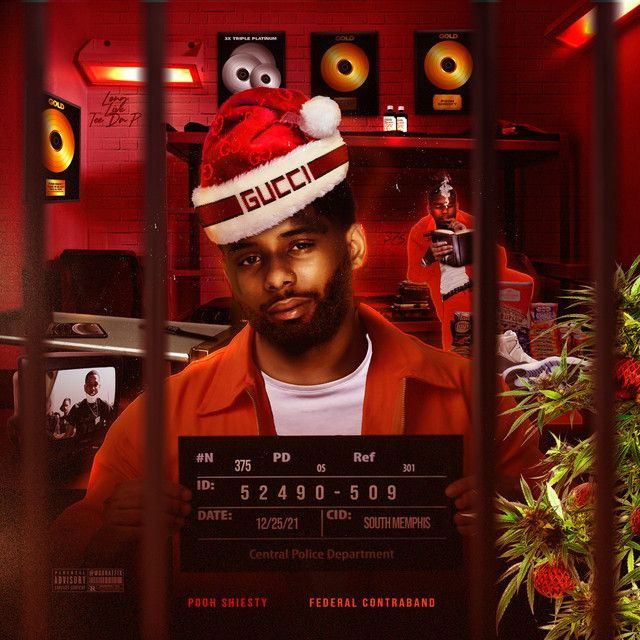
Why Pooh Shiesty’s Prison Freestyle Hits Hard
The meaning of Federal Contraband (Freestyle) Pooh Shiesty comes from a tense mix of confinement, grief, pride, and defiance.
"Federal Contraband (Freestyle)" - Pooh Shiesty
Provided by LyricFind"From the federal prison, you will not be charged for this call
This call is from the Big Blrrrd" (Once again, I'm locked in with TP, we finna make a hit)
Yeah, CEO checkin' in, what the fuck's choppin'?Loading...Loading lyrics...
Unable to load lyrics
We're unable to display the lyrics at this time. Please try again later.
A message from inside, not a normal flex
The meaning of Federal Contraband (Freestyle) Pooh Shiesty starts with its setting. The song opens like a real jail call, and that detail frames everything that follows. This is not just another victory lap. It is a prison freestyle built around distance, pressure, and the need to protect a public image while private pain leaks through.
Pooh Shiesty, born Lontrell Williams Jr., rose quickly out of Memphis with a hard-edged street-rap style and major visibility through 1017 and Atlantic, facts widely covered in artist profiles from Billboard and The FADER. In this track, they use that larger-than-life persona, but they also test it. The song asks what happens when a rapper known for dominance is physically locked down.

Watch the official Federal Contraband (Freestyle)
music video
The real subject is identity under pressure
At its core, the song is about keeping control of their name while the system controls their body. They insist they are still the same force, even if the clothes, freedom, and daily routines are gone. When they say stuck behind that wall
, the point is bigger than a location. It is a picture of separation from fame, from normal life, and from the people around them.
Interpretation: The freestyle treats prison as both punishment and revelation. It narrows their world, but it also clarifies it. They describe learning who truly loved them, who only loved the spotlight around them, and who got bolder once they were gone.
That is why the record swings between pain and arrogance. The boasting is not random. It is armor.
Loss, betrayal, and loyalty tests
One of the strongest parts of the song is how often grief breaks through the tough talk. They mention family loss, fallen friends, and emotional strain. When they say my eyes get teary
, they briefly drop the mask and let listeners hear someone trying not to fold.
This matters because the song keeps returning to loyalty. They suggest that federal time exposed weak bonds, fake support, and opportunistic behavior. In plain terms, they believe some people enjoyed seeing them sidelined.
A short stretch captures that pressure well:
Hard times, you gon' find out
who really love you
That is the emotional center of the freestyle. Even with all the threats and flexes, the song keeps circling one question: who stayed real when the circumstances changed?
A prison diary dressed as a street anthem
The track works like a diary entry, but it refuses to sound soft. They move from jail routines to industry status, from dead friends to old rivals, from missing luxury to claiming spiritual toughness. Everyday details like washing clothes in a sink make the song feel grounded. Those details contrast with memories of wealth, travel, and designer life.
Interpretation: That contrast shows how prison resets value. Expensive things lose meaning, while survival, memory, and reputation matter more. When they mention being sober and seeing things differently, the song hints at forced self-examination. They are still aggressive, but more reflective than before.
The line my mind still free
sums up the larger message. Their body may be contained, but they refuse to let confinement become identity.
Why the sound supports the lyrics
Production matters here. The beat is sparse and cold, giving their voice room to dominate. The tempo is steady rather than frantic, which makes the performance sound controlled, almost conversational at points. That calm delivery adds weight because they do not sound broken. They sound focused.
The prison-call atmosphere also does key narrative work. It creates documentary-style realism before the first real verse lands. Once that frame is in place, every line feels like a dispatch from inside rather than a studio fantasy.
There is also a freestyle feel to the structure. The song spills forward in long runs of thought, which helps sell the idea that this is part confession, part warning, part mission statement. Instead of a polished pop shape, it feels like they are talking directly to supporters, enemies, and themselves all at once.
Bravado is the defense mechanism
Pooh Shiesty has always built records around forceful presence, and this song keeps that intact. They still compare themselves to rivals, call out disloyalty, and claim a major place in Memphis rap. When they say won't be too long 'til I'm free
, it is both hope and strategy. Repeating it turns release into a mental certainty.
Interpretation: The threats and king-talk are less about simple intimidation than self-preservation. If prison is designed to reduce a person, this freestyle pushes the opposite message. They stay loud so the system cannot narrate them as finished.
That helps explain one of the song’s biggest tensions: they sound wounded, but never defeated.
The Memphis angle and the bigger picture
The song also speaks to local identity. They present themselves as tied to South Memphis and to a larger tradition of regional toughness and pride. References to Memphis, industry peers, and street credibility are not side notes. They reinforce the claim that their absence created a gap.
For listeners, that gives the freestyle two layers:
- a personal statement from incarceration
- a public argument about status and legacy
That blend is why the meaning of Federal Contraband (Freestyle) Pooh Shiesty feels larger than a jail update. It is about what remains when freedom, comfort, and momentum are interrupted.
Final read on the song
In the end, the meaning of Federal Contraband (Freestyle) Pooh Shiesty is resilience under confinement. The song shows a rapper trying to hold together grief, anger, self-respect, and future ambition in one voice. They sound isolated, but not erased.
Their message is simple: prison changed the setting, not the core self.
Disclaimer: This interpretation is based on the lyrics, performance, and public artist context. As with any song, listeners may hear different meanings.









