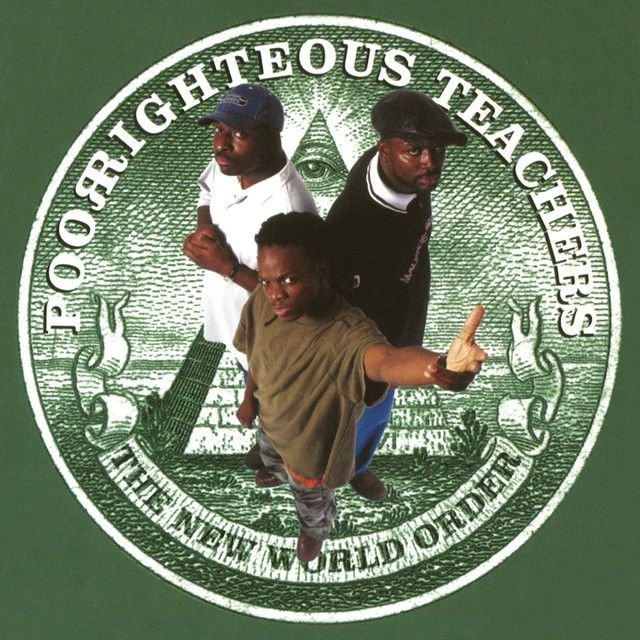
Why PRT’s ‘Gods, Earths and 85ers’ Hits Hard
The meaning of Gods, Earths and 85ers Poor Righteous Teachers, Nine starts with its worldview. This is not just a battle rap or a simple posse cut. It is a teaching record, a cultural defense, and a call to wake up.
"Gods, Earths and 85ers" - Poor Righteous Teachers ft. Nine
Wise Intelligent
Broadcasting live from the top
Loading lyrics...
Unable to load lyrics
We're unable to display the lyrics at this time. Please try again later.
Poor Righteous Teachers built much of their identity around Five Percent thought, also known as the Nation of Gods and Earths. In that tradition, “Gods” refers to Black men, “Earths” to Black women, and “85ers” to the large part of society seen as misled or uninformed. That framework comes from the Five-Percent Nation, founded in Harlem in 1964 by Clarence 13X. Knowing that context makes the song’s language far easier to follow.
A Rap Song That Works Like a Lesson
At its core, the song argues that real power begins with knowledge of self. The rappers present themselves as teachers whose job is not only to out-rap opponents, but to guide listeners toward discipline, study, and cultural pride.
That is why the hook keeps circling back to value. When they say knowledge matters more than wealth, they reject the chase for status symbols and push listeners toward inner growth. The phrase mind is shining
sums up that idea: enlightenment is worth more than jewelry, hype, or empty fame.
This also explains the title. “Poor Righteous Teachers” was already a direct nod to Five Percent teaching, where the “5 percent” are the few who know the truth and share it. In this song, they dramatize that role instead of describing it in a neutral way.
Watch the official Gods, Earths and 85ers
music video
Decoding the Song’s Key Terms
For many listeners, the biggest barrier is the vocabulary. The song assumes some familiarity with Five Percent teachings, especially Supreme Mathematics and the duty to “build” through speech and action.
Gods, Earths, and the 85
Factually, the Nation of Gods and Earths teaches that Black men are “Gods” and Black women are “Earths,” while “85 percent” refers to the masses who have been misled. The chorus asks what happened to these communities, suggesting loss, drift, and spiritual hunger.
Interpretation: when the song asks about the missing Gods and Earths, it is mourning the disappearance of community leaders and grounded values. It is not just asking where people went. It is asking why teaching, responsibility, and cultural memory seem weaker.
Supreme Mathematics in Rap Form
The verses mention ideas tied to lessons, degrees, and jewels. Those references matter because Five Percent culture often treats language as a tool for decoding reality. In that sense, the song is full of instruction hidden inside brags.
When the rapper says God degree
or calls himself all wise
, he is doing more than boasting. He is placing himself inside a system where knowledge creates duty.
Braggadocio With a Purpose
Like many great rap records, this song is competitive. It includes threats, skill talk, and verbal domination. But those elements support the larger message.
The line about a million rappers murdered
is not literal. It turns lyrical skill into proof of authority. If they can defeat weak rappers, they suggest, they can also defeat weak thinking.
That connection matters. Poor Righteous Teachers often used battle energy to separate serious consciousness from empty performance. Here, fake rappers, frauds, and careless people all belong to the same moral problem: they talk, but they do not live their words.
The Social Message Under the Boasts
The song is also deeply concerned with Black education, self-rule, and the damage of materialism. It criticizes people who chase image over substance and men who fail their families or communities.
One of the sharpest ideas in the track is that time stays the same whether measured by a cheap watch or an expensive one. That point cuts through class performance. Their message is simple: objects do not change a person’s worth.
Later, the song pushes education directly, urging teachers to keep passing truth to younger people. That fits PRT’s broader catalog and the late golden-age rap moment, where socially conscious groups tried to connect street credibility with study, discipline, and history.
Dedicated to the Gods and the Earths
civilize an 85er
These short lines capture the mission. The song is dedicated outward, not inward. It frames rap as public work.
How the Production Supports the Meaning
The sound helps sell that mission. The beat feels tough, steady, and uncluttered, giving the verses room to preach and strike at the same time. Rather than burying the message in flashy production, the track lets the voices lead.
That choice suits both artists. Poor Righteous Teachers were known for direct, idea-heavy writing, while Nine brought a gravelly, commanding presence. His voice adds force to the song’s warnings and declarations. Together, they make the record feel like a cipher, a classroom, and a street sermon all at once.
A Snapshot of Conscious Rap in the Mid-1990s
This track also reflects a moment in hip-hop when Five Percent ideas were especially visible. Artists from Brand Nubian to Wu-Tang Clan drew on that language, but Poor Righteous Teachers were among the most explicit. They did not simply borrow terms. They built songs around them.
Interpretation: that is why this record can sound intense, even confrontational, to listeners outside that tradition. It is not trying to soften its beliefs for a general audience. It speaks from inside a worldview and expects the listener to meet it halfway.
What the Song Ultimately Means
In the end, the meaning of Gods, Earths and 85ers Poor Righteous Teachers, Nine is about responsibility. The song says knowledge should produce action, culture should produce care, and rap should do more than entertain.
Its speakers cast themselves as guardians, teachers, and challengers. They want listeners to reject fake status, recover self-knowledge, and take community seriously. Even the hardest boasts serve that larger goal.
That is why the track still lands: it treats hip-hop as a place where philosophy, identity, and lyrical skill can all meet.
Disclaimer: This interpretation is based on the lyrics, artist context, and Five Percent references. As with any song, some meanings remain open to listener interpretation.








