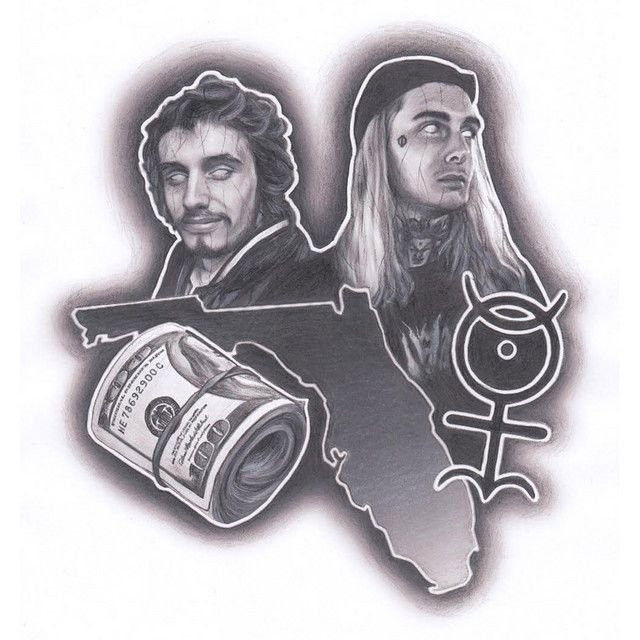
1000 Rounds by Pouya, Ghostemane
Why This Track Hits So Hard
The meaning of 1000 Rounds Pouya, Ghostemane starts with its surface: a brutal, high-pressure anthem built on threats, retaliation, and fearlessness. But under that aggression, the song also points to isolation, spiritual conflict, and the mental cost of living in constant defense mode.
"1000 Rounds" - Pouya, Ghostemane
Thousand rounds will lay you down, we got enough to go around
You fuck with me, yuh, yuh (you fuck with me)
Loading lyrics...
Unable to load lyrics
We're unable to display the lyrics at this time. Please try again later.
Pouya and Ghostemane were both key figures in the South Florida underground rap wave, a scene known for dark production, punk energy, and hard-edged imagery. Their collaboration here feels natural because both artists often mix menace with emotional damage, even when the lyrics sound like pure attack.
The Core Idea Beneath the Violence
On the most direct level, the song presents two performers making themselves sound untouchable. The repeated hook frames conflict as immediate and overwhelming, using lines like Thousand rounds
and make it a scene
to turn confrontation into spectacle.
Still, the song is not just about weapons or revenge. Interpretation: the violence works as a symbol for pressure, rage, and hypervigilance. In this reading, every threat is also a defense mechanism. They are not only trying to scare enemies; they are trying to prove they cannot be broken.
That matters because the verses add emotional context. Ghostemane and Pouya do not sound calm or secure. They sound cornered, intense, and deeply distrustful.
Ghostemane’s Verse Turns Brutality Inward
Ghostemane’s section begins with graphic attacks, but it quickly shifts into a darker internal space. He describes himself as a soft-spoken type
, then says he taps into something harsher when pushed. That contrast is key.
Instead of presenting violence as simple swagger, he links it to psychological descent. He mentions going deep into depression and chasing hidden knowledge through images tied to alchemy, Crowley, and ritual cleansing. Those references fit his broader style, which often blends rap with black metal, industrial textures, and occult symbolism.
Interpretation: in his verse, destruction is both external and spiritual. He is fighting enemies, but he is also wrestling with identity, pain, and the temptation to turn suffering into power. The line about fake divinity suggests contempt for shallow rebellion or performative darkness. He wants intensity to feel real, not trendy.
Pouya’s Verse Adds Loneliness and Distrust
Pouya pushes the song in a slightly different direction. His verse keeps the aggression, but he pairs it with emptiness. When he says I feel so alone
, the track suddenly opens up: this is not only a war song, but a paranoia song.
He describes being surrounded by people while feeling unsafe, watched, and betrayed. That image of smiling faces hiding bad intentions is central to the song’s emotional world. Success has not brought peace. It has brought more eyes, more suspicion, and more pressure to stay alert.
He also mixes pride with grime. Even when he mentions money and status, he still places himself close to the underground, still moving with the same rough energy as before. Interpretation: that tension suggests identity conflict. Fame changes his circumstances, but not his sense of danger.
How the Hook Repeats the Song’s Trap
The chorus is simple, but that simplicity is the point. The repeated phrases make the song feel circular, almost stuck. The threat never resolves. It only restates itself louder.
Bullets flylegs bucklebodies pile
That short sequence creates a nightmare loop. Rather than telling a detailed story, it paints impact in snapshots. Interpretation: the refrain acts like a panic cycle, replaying fear and retaliation until they become identity.
This is why the hook feels larger than ordinary flexing. It sounds like survival logic taken to an extreme: hurt first, trust nobody, never look weak.
Sound and Delivery Matter as Much as the Words
Production is a big part of the meaning of 1000 Rounds Pouya, Ghostemane. The beat is stripped down, heavy, and oppressive, giving both rappers room to sound forceful without rushing. The low-end weight and sparse melodic space create a sense of emptiness around the drums, which mirrors the song’s emotional coldness.
Their performances also contrast in useful ways. Ghostemane sounds possessed and tightly wound, leaning into harsh emphasis and ritual-like intensity. Pouya sounds more conversational but still dangerous, which makes his loneliness feel believable rather than theatrical.
Together, they create a world where violence is not random decoration. It is part of the mood design. The beat, flow, and repetition all reinforce the same idea: these voices live in a place where toughness is armor.
A Florida Underground Snapshot
The track also reflects the style that made both artists stand out in underground rap. Pouya came up through the South Florida scene and later released work through his own channels, while Ghostemane became known for combining rap with metal and industrial influences. Their overlap sits in a lane where raw emotion, DIY edge, and shock imagery are all part of the package.
That context helps explain why the song feels so extreme. It belongs to a scene that often values emotional truth through exaggeration. In other words, the darkness is stylized, but it is still trying to express something real.
Final Take on the Song’s Meaning
So what is the song really saying? The simplest answer is that it turns aggression into a mask for alienation, suspicion, and inner chaos. One rapper frames violence as spiritual and psychological transformation; the other frames it as the daily language of fame-era distrust.
For listeners searching for the meaning of 1000 Rounds Pouya, Ghostemane, the song works best as an atmosphere of siege. It is about what happens when survival becomes a personality, and when power is the only emotion that feels safe.
Disclaimer: This interpretation is based on the lyrics, performance style, and artist context, and other listeners may reasonably hear the song differently.









