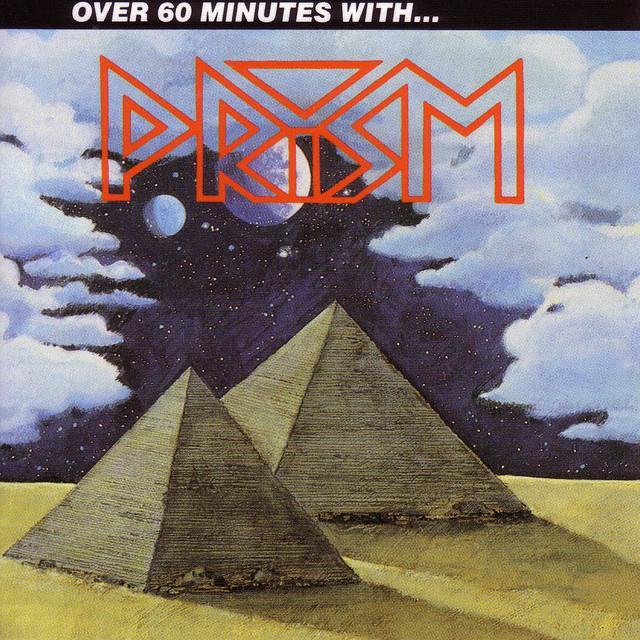
Why "Spaceship Superstar" Still Takes Off
The meaning of Spaceship Superstar Prism comes down to one clever idea: it turns the life of a touring rock band into a cosmic fantasy. On the surface, the song is goofy, shiny, and huge. Under that surface, it quietly admits that success can be thrilling and exhausting at the same time.
"Spaceship Superstar" - Prism
Do a sold-out show, then I hit the road in my starship limousine
Get so damned tired and uninspired doin' all these one night stands
Loading lyrics...
Unable to load lyrics
We're unable to display the lyrics at this time. Please try again later.
Prism released the track in 1977 as the first official single from their self-titled debut album. It was written by Jim Vallance, credited at the time under the pseudonym Rodney Higgs, and produced by Bruce Fairbairn and Vallance. It was recorded at Mushroom Studios in Vancouver and later reached No. 63 in Canada and No. 82 on the Billboard Hot 100 in the U.S., according to available chart summaries and release notes.[1][2]
A Rocket-Ship Joke With a Real Point
At first listen, the song feels like pure fun. The narrator boasts about traveling from world to world, playing packed shows, and living like a galactic celebrity. Phrases like different galaxy
and starship limousine
create a cartoon version of rock-star excess.
But the verses add an important twist. They admit the performer is worn down and bored by the endless cycle of shows and travel. When the song mentions being tired and uninspired
, it cuts through the fantasy. That line suggests the space adventure is not just a joke; it is also a mask for burnout.
Interpretation: The song works as a satire of fame. It celebrates superstardom while also showing how ridiculous and lonely it can become.
Watch the official Spaceship Superstar
music video
The Chorus Sells the Dream
The chorus is where the song becomes unforgettable. The singer declares, I'm a Spaceship Superstar
, then stacks on absurd details like a solar-powered laser beam guitar
. Those images are playful, but they also show how fame depends on image, scale, and spectacle.
In simple terms, the chorus sounds like a victory lap. Yet because the verses already revealed fatigue, the bragging starts to feel slightly overdone on purpose. The bigger the claims get, the more they hint that the character may be trying to convince themselves as much as anyone else.
That tension is a big part of the meaning of Spaceship Superstar Prism. The song loves rock-star mythology, but it also laughs at it.
Sci-Fi Imagery, Real-Life Touring
The song’s outer-space settings are easy to enjoy as fantasy. Mercury, Mars, the moon, and Venus become stops on a never-ending concert route. The fans rush in from every direction, and every venue is sold out.
Still, the structure mirrors ordinary touring life. Night after night, the artist travels, performs, leaves, and repeats. Space simply makes that pattern seem larger and stranger. By replacing cities with planets, the song shows how disconnected life on the road can feel.
A brief lyric snapshot
At the top of all the charts on Mars
That short line captures the song’s central joke. Even success at the highest level sounds a little absurd when it is moved to another planet. The song uses exaggeration to ask whether fame is ever as glamorous as it appears.
Where the Idea Came From
There is useful context behind the song’s style. According to the song’s documented history, Vallance began writing it around 1975 and finished it in 1977. He later said the lyrics were influenced by Star Wars, while the music drew from sources including Kraftwerk’s "Autobahn," the Who’s Who’s Next, and the Edgar Winter Group’s "Free Ride."[1]
That blend matters. Star Wars helps explain the playful cosmic setting, while the musical references explain why the track feels both futuristic and built for big-rock radio. This was not random novelty. It was a carefully designed pop-rock song using a new cultural language: space-age cool.
How the Sound Carries the Meaning
Musically, "Spaceship Superstar" supports its theme with arena-sized confidence. The guitars are bright and forceful, the rhythm pushes forward, and the keyboards add a glossy sci-fi color. Reported session details also note the use of ARP Odyssey synthesizer and Roland electric piano, which help give the track its futuristic edge.[1]
That production choice is important. If the song had sounded stripped down or serious, the joke might not have landed. Instead, the arrangement feels huge, theatrical, and slightly exaggerated. It places the listener inside the fantasy.
Interpretation: The sound does two jobs at once:
- It makes the narrator seem larger than life.
- It hints that the whole performance is a costume.
- It turns burnout into something exciting enough to sing along with.
Why the Song Lasted
Even though it was a modest chart hit in 1977, the song stuck around because its concept is simple and memorable. It also fits Prism’s place in late-1970s rock, where polished hooks and big production met pop culture spectacle.
Its afterlife proves that. The track later received a Certificate of Honour from PROCAN, and in 2011 it was reportedly used as a wake-up song for the crew of Space Shuttle Discovery.[1] That real-world link to space gives the song an extra layer of charm.
Final Meaning: Escape, Ego, and Exhaustion
In the end, the meaning of Spaceship Superstar Prism is not just that being famous is fun. It is that fame can feel surreal. The song turns rock success into a space opera, then slips in signs that the hero is worn out beneath the costume.
That mix is why the song still works. It is catchy enough to enjoy at face value and smart enough to suggest a second meaning underneath the chrome.
Disclaimer: This interpretation separates documented facts from critical reading. Songs can support more than one meaning, and listeners may hear "Spaceship Superstar" differently.







