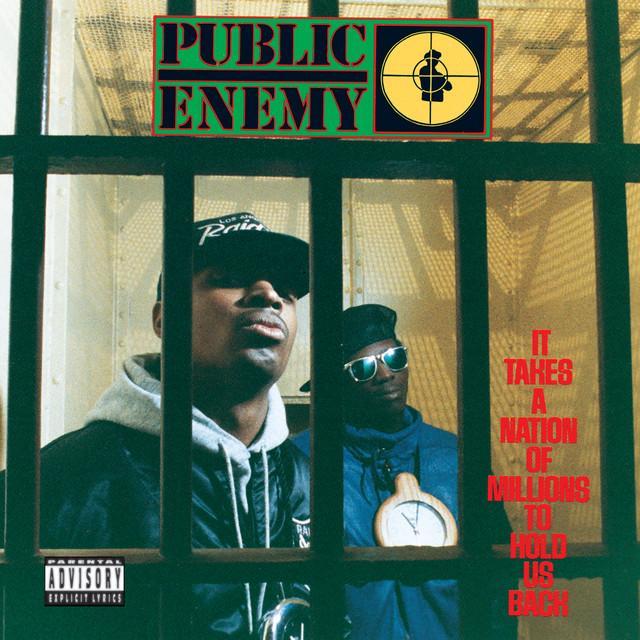
Why Public Enemy’s Black Steel Still Hits
The meaning of Black Steel In The Hour Of Chaos Public Enemy starts with a refusal and ends in open revolt. On the surface, the song tells a tense story: a Black man rejects military service, is imprisoned, grabs a guard’s weapon, and escapes during a riot. But Public Enemy uses that plot to say something larger about power, racism, state control, and what happens when a person feels locked out of citizenship itself.
"Black Steel In The Hour Of Chaos" - Public Enemy
The other day
I opened and read it
Loading lyrics...
Unable to load lyrics
We're unable to display the lyrics at this time. Please try again later.
Released on It Takes a Nation of Millions to Hold Us Back in 1988 and issued as a single in 1989, the track is one of Public Enemy’s most cinematic songs. It is widely described as the story of a conscientious objector who escapes prison, and it was built around a striking Isaac Hayes sample from Hyperbolicsyllabicsesquedalymistic
(Wikipedia).
A Prison Break Story With a Political Core
At the center of the song is a narrator who gets drafted and rejects the idea immediately. That opening is not just anti-war for shock value. Public Enemy frames the refusal as a moral response to a country that demands loyalty from someone it has already mistreated.
When the voice says they wanted me for their army
, the point is clear: the state wants service first, justice later. Soon after, the narrator lands in prison, and the song turns into a nightmare of confinement, pressure, and survival.
Interpretation: the prison is both literal and symbolic. It is a real setting in the story, but it also stands for systems that trap Black people through policing, punishment, and exclusion.
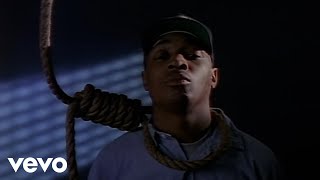
Watch the official Black Steel In The Hour Of Chaos
music video
Why the Narrator Refuses the Draft
The song’s anger comes from a basic contradiction. The narrator does not believe the nation has treated him like a full citizen, so he refuses to fight for it. That is why one of the key lines is I could never be a veteran
. Public Enemy is not debating patriotism in the abstract. They are asking what patriotism means when a country’s promises are unevenly shared.
That tension links the song to a long history of Black criticism of U.S. institutions, especially when those institutions ask for sacrifice while delivering inequality. The draft letter becomes the spark, but the deeper issue is legitimacy: who gets protected by the system, and who gets punished by it?
How the Lyrics Build a System, Not Just a Scene
As the verses move forward, the song gets more specific about prison life. The narrator describes overcrowding and dehumanization, comparing the experience to slavery. He also calls the system a form of slavery
, which makes the song’s politics impossible to miss.
This is one reason the track still feels so heavy. It does not present prison as a place of correction. It presents it as an extension of racial control.
Cold sweatin' as I dwell in my cell
They got me sittin' in the state pen
That brief moment shows both fear and routine. The narrator is panicked, but the system around him is calm and organized. Public Enemy makes the cell feel personal and political at the same time.
The Meaning of “Black Steel”
The title phrase matters because it fuses race, force, and resistance. On one level, “steel” is the gun the narrator seizes. On another, it suggests toughness, will, and a hard response to oppression.
When the narrator says goin' for the steel
, it is the point where frustration turns into action. The song is not subtle about how dangerous that turn is. It shows revolt as desperate, chaotic, and costly.
Interpretation: “Black steel” can also be read as a metaphor for militant self-defense. The title does not celebrate violence as simple victory. Instead, it shows what can happen when a person believes every peaceful option has already been closed.
Sound That Feels Like Pressure Closing In
Part of the song’s power comes from its production. Public Enemy and The Bomb Squad gave it a slower, more melodic feel than some of the group’s most explosive tracks, while still keeping the tension high (Wikipedia). The famous Isaac Hayes piano loop sounds eerie, nervous, and unresolved.
That matters because the beat never feels comfortable. It circles like a trapped thought. Samples from Stevie Wonder’s Living for the City
and The Escorts’ Little Green Apples
add to the layered texture noted by reference sources (Wikipedia).
Chuck D’s delivery is just as important. They do not hear a casual rap performance. They hear command, urgency, and moral outrage. Flavor Flav’s voice appearing between verses, reportedly created by calling into the studio from another room, adds a distant, almost surveillance-like effect (Wikipedia).
Why the Song Still Matters
The song lasts because its questions have not gone away. It asks what happens when institutions demand obedience from people who experience those same institutions as hostile. It also forces listeners to sit inside a mind pushed from refusal to rebellion.
Critics and musicians have long responded to that intensity. Mojo quoted Joan as Police Woman calling the track political, raw, and extremely intelligent
(Wikipedia). That mix of intellect and anger is exactly why the song endures.
Final Take on Its Deeper Message
So, what is the meaning of Black Steel In The Hour Of Chaos Public Enemy? It is a story about a prison escape, but more than that, it is a protest against systems that criminalize dissent and deny belonging. Public Enemy turns one man’s crisis into a wider statement about race, power, and the price of resistance.
The song does not ask to be taken as a simple blueprint. It asks to be heard as a warning, a narrative, and a challenge. Interpretation: its real subject is not only escape from prison, but escape from a social order the narrator sees as built against him.
Disclaimer: This interpretation is based on the song’s lyrics, historical context, and documented production background. Like all art, it can support more than one reading.







