
Why 'Ghost' Means Heartbreak Here
The meaning of There's A Ghost In My House R. Dean Taylor starts with a clever trick: the song sounds spooky, but it is really about grief after a breakup. There is no horror story here. The “ghost” is memory, longing, and the feeling that love still lives in the rooms of daily life.
"There's A Ghost In My House" - R. Dean Taylor
The ghost of your memories
The ghost of the love you took from me
Loading lyrics...
Unable to load lyrics
We're unable to display the lyrics at this time. Please try again later.
R. Dean Taylor recorded the song in the Motown system, and its emotional idea is simple enough for anyone to feel. A past relationship is over, yet the singer cannot make that fact stick inside their heart. They know the person is gone. They still feel them everywhere.
A Haunting That Is Not Supernatural
At its core, the song turns heartbreak into a haunting image. The singer says there is a ghost in my house
, but then explains that this ghost is really the old relationship. The memory of the lost partner fills the home, the mind, and even the body.
That is why the song works so well. Instead of saying “I miss you” in a plain way, it makes absence feel physical. A hallway, a chair, a cup of coffee, and a staircase all become reminders. The home becomes a stage where memory keeps replaying itself.
Interpretation: The “house” is both a real place and the singer’s inner world. The breakup has left an emotional vacancy, and memory rushes in to occupy it.
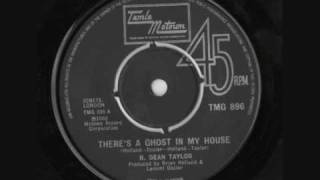
Watch the official There's A Ghost In My House
music video
How the Verses Build the Song's Pain
The opening lines quickly define the loss. The singer calls it the ghost of your memories
and the ghost of the love
that was taken away. In plain terms, they are saying that love may be over, but its emotional trace remains.
The next idea deepens the wound: time has passed, and the ex has found someone new, yet healing has not happened. This is not fresh shock anymore. It is lingering attachment. The song captures that frustrating stage when the mind understands the breakup before the heart does.
A later section makes the haunting more vivid. Everyday sensations seem to bring the absent person back. The singer hears footsteps on the stairs
even when no one is there. They imagine touch, voice, and face in ordinary objects.
In my mind I know you're goneBut my heart keeps holding on
That short moment is the emotional key to the whole song. It states the split between reason and feeling. They know the truth, but they cannot live by it yet.
The Chorus Turns Sorrow Into Motion
One reason the song stands out is that its chorus is catchy, fast, and almost joyful in sound. The repeated image of the ghost keeps the pain in focus, but the rhythm pushes forward. That contrast matters.
On paper, these lyrics describe obsession and loneliness. In performance, though, the beat gives the song energy. It does not wallow. It moves. That is a classic Motown strength: pain delivered through a groove strong enough to dance to.
Interpretation: The chorus suggests that heartbreak can become repetitive, almost mechanical. The same thoughts return again and again, like a hook that will not leave the mind.
Motown Craft Gives the Metaphor Lift
Factually, the song was written by R. Dean Taylor with Holland–Dozier–Holland, Motown’s famous hitmaking team, and it was produced by Brian Holland and Lamont Dozier, as summarized by Songfacts and Wikipedia. That pedigree helps explain why the record feels so sharp and immediate.
The arrangement carries the meaning as much as the words do:
- brisk tempo keeps the sadness from turning heavy
- driving drums create urgency
- bright brass and rhythm guitar add punch
- repeated backing responses echo the singer’s trapped thoughts
Taylor’s vocal also matters. They do not sound distant or abstract. They sound like someone trying to stay composed while admitting they are still stuck. That balance keeps the song relatable instead of melodramatic.
Why the Song Connected Later in the UK
The song was recorded in 1966 and released in 1967, but it did not become a major hit in the United States. Its larger chart story came later in Britain, where Northern Soul DJs and dancers embraced it. After a UK reissue, it reached No. 3 on the UK Singles Chart in 1974.
That history tells readers something important about its meaning. Northern Soul culture loved records with emotional urgency and a beat built for movement. “There’s A Ghost in My House” fits that taste perfectly: lonely subject, fast pulse, unforgettable hook.
In a brief 1974 comment quoted by Songfacts from Melody Maker, Taylor said he was “staggered but delighted” by the song’s British success. That delayed reception shows how a song can find its real audience years later.
The Best Way to Read the Title
The title invites a literal reading, but the song keeps rejecting that. This is not a tale about fear of spirits. It is about being unable to clear someone out of emotional space. The most telling phrase may be inside
, because the haunting is not only in the building. It is within the singer.
That is the lasting power of the track. It takes a familiar breakup feeling and gives it a memorable image. People often say an ex still “haunts” them. This song builds an entire world out of that phrase.
Why the Meaning Still Lands Today
The meaning of There's A Ghost In My House R. Dean Taylor remains strong because it captures a common emotional contradiction: people can be absent but still feel present. The song turns that contradiction into a pop structure that is easy to sing, dance to, and remember.
Its genius is not complexity. It is clarity. Love is over, memory is not, and the heart keeps making the past feel alive.
Disclaimer: This interpretation separates documented facts from critical reading. Meanings in songs can vary by listener, even when the core theme seems clear.








