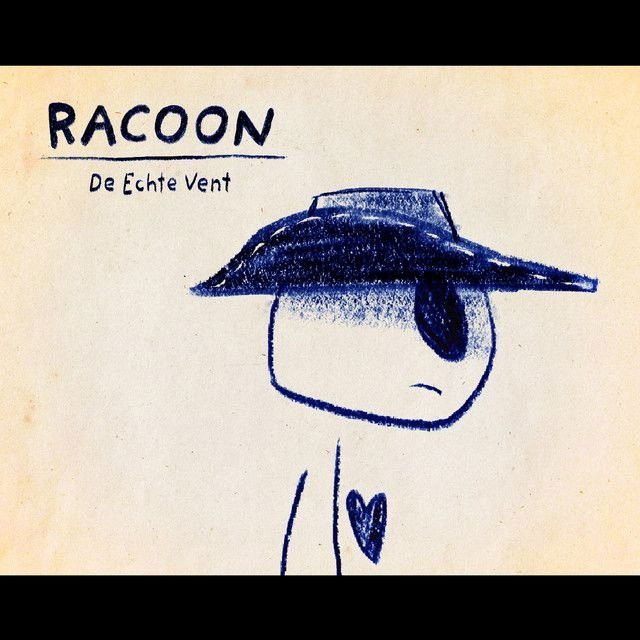
Why 'De Echte Vent' Flips Tough-Guy Culture
The meaning of De Echte Vent Racoon starts with a simple question: what makes someone a “real man”? Racoon’s answer is not strength, swagger, or status. It is moral courage.
"De Echte Vent" - Racoon
Is niks meer om op te vertrouwen
Wanneer alles dat jij als je leven zag
Loading lyrics...
Unable to load lyrics
We're unable to display the lyrics at this time. Please try again later.
In this Dutch-language single, the band takes aim at empty masculinity and social cowardice. The song keeps showing people who talk big, protect their own interests, and laugh from the sidelines. Against that, Racoon offers a harder standard: the person who stands up for someone else, even a stranger.
A Protest Song Hiding Inside a Pop-Rock Hook
Racoon are a Dutch pop-rock band formed in 1997, led by Bart van der Weide with Dennis Huige, Maarten van Damme, and Paul Bukkens. After years of success in English, they moved deeper into Dutch material, especially around the 2021 album Spijt is iets voor later, their first full Dutch-language album, which reached No. 1 in the Netherlands. Within that era, De echte vent
became a notable hit too, reaching No. 12 on the Dutch Top 40 and later earning Platinum certification, according to publicly available chart summaries.
That context matters. Racoon’s Dutch songs often sound more conversational and more socially pointed than their earlier English singles. Here, the local language sharpens the attack. The lyric sounds like a direct challenge thrown into a room full of people who would rather stay safe.
Watch the official De Echte Vent
music video
What the Song Is Really About
At its core, the song is about betrayal by systems and people once trusted. The opening verses describe ideals collapsing. Things once loved, believed in, or built toward turn out to be unstable. What seemed solid becomes figurative mud.
From there, the lyric widens. It is not just about one liar or one bad boss. It is about a culture where money outweighs loyalty, friendship can be bought, and regret gets postponed until it is too late. In that world, people perform toughness but avoid real risk.
Interpretation: Racoon seem to argue that fake masculinity thrives in corrupt environments. When institutions reward silence and self-protection, “being a man” gets reduced to dominance games instead of ethics.
The Chorus Turns Masculinity Inside Out
The chorus is the song’s engine. It begins by mocking childish macho competition with Wie het verste piesen kan
, a phrase that basically points to boys measuring themselves through crude bragging. It then asks wie is een echte vent
—who is a real man?
The key twist comes in the next test. The song asks who dares voor een ander op te staan
and do it for someone die hij niet kent
. In plain English, the measure of character is not power. It is whether they defend another person, even when there is no reward and no personal connection.
Wie loopt weg, wie durft het aan
Om voor een ander op te staan
Die hij niet kent
That short passage carries the whole message. Walking away is easy. Standing up is costly. Racoon make that contrast the definition of adulthood and decency.
Verse by Verse, the Song Builds a Moral Trial
The first verse focuses on disillusionment. Trusted values no longer hold, and bystanders laugh instead of taking responsibility. This sets the tone: moral collapse often happens in public, with witnesses.
The second verse shifts toward compromise. A person spends years building a future, then realizes they have accepted something rotten for too long. The song suggests that survival can slowly turn into surrender.
The final verse introduces a charismatic deceiver, someone selling polished nonsense. The image is not of a cartoon villain but of a smooth operator with cold intentions. They lie well, treat harm like a joke, and exploit everyone around them.
Interpretation: These verses can fit many settings—office politics, public debate, friendship circles, or broader social life. The song does not lock itself to one event, which is part of why it travels so well.
How the Sound Carries the Message
Musically, the track works because it does not bury its argument under complexity. Racoon come from a pop-rock tradition, and their strength has long been clean, memorable songwriting. Here, a steady band arrangement supports a chant-like chorus, letting the repeated question land with force.
The likely effect for listeners is important. A lecture might feel heavy, but a singable hook invites participation. The band turn a moral challenge into something crowds can repeat back. That gives the song a public feeling, almost like a communal test.
Van der Weide’s vocal style also helps. They often deliver lines with a mix of weariness and insistence, which suits a song about seeing through lies while still demanding better behavior.
Why the Song Hit So Hard in Dutch
Racoon had already proven they could connect in Dutch before this period; Oceaan
was an earlier breakthrough. But their 2020–2021 Dutch-language run had special weight, shaped in part by personal loss around van der Weide’s family life and leading to major commercial success for the band.
That emotional background does not make “De Echte Vent” autobiographical in a narrow sense. It does, however, help explain why the writing feels stripped down and urgent. They sound less interested in poetic distance and more interested in saying the thing plainly.
For U.S. listeners, that directness is a big part of the appeal. Even in translation, the song’s target is easy to recognize: performative masculinity, cowardly spectators, and the pressure to keep quiet around power.
Final Take on the Meaning
The meaning of De Echte Vent Racoon is that true strength is ethical, not physical. A “real man” is not the loudest, meanest, or most dominant person. It is the one who refuses to join the laughter, refuses to protect the boss, and chooses to defend someone vulnerable.
That is what gives the song its staying power. It is not just criticizing bad men. It is asking what any decent person will do when the moment comes.
Disclaimer: This interpretation is based on the released lyrics, the song’s wording, and Racoon’s broader career context. As with any song, listeners may hear meanings beyond this reading.







