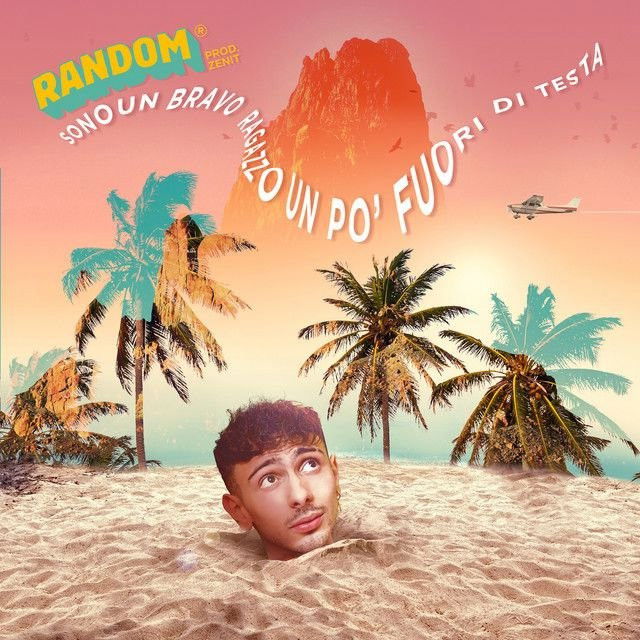
Why Random’s 'Bravo Ragazzo' Hits So Hard
The meaning of Sono un bravo ragazzo un po' fuori di testa Random comes down to a sharp contradiction: they present a speaker who is generous, blunt, and loyal, but also unstable, restless, and a little self-destructive. That tension is the song’s whole engine. It sounds like a catchy trap single, yet underneath it is a portrait of someone trying to protect their heart while living fast.
"Sono un bravo ragazzo un po' fuori di testa" - Random
Ai miei cari do il mondo, oh
Spesso non tengo niente per me
Loading lyrics...
Unable to load lyrics
We're unable to display the lyrics at this time. Please try again later.
Released on May 19, 2020, as a single from Random’s EP Montagne russe, the track became one of his breakout songs in Italy. It was produced by Zenit and later earned major chart success, reaching the Italian Top Singoli top 10 and receiving multi-platinum certification, according to the Italian Wikipedia summary of the release history and certifications.
A Self-Portrait Built on Contradictions
The song opens with a simple identity statement. The speaker calls themself a good person, then immediately adds that they are un po' fuori di testa
. In plain English, that means they are kind-hearted but not exactly calm or predictable.
That split matters because the lyrics never try to resolve it. Instead, they embrace it. They give everything to loved ones and admit they often keep little for themselves. The effect is not noble in a perfect way. It feels messy, honest, and costly.
Interpretation: the song suggests that generosity can become a form of self-erasure. They want to be real with people, but that honesty can leave them exposed.

Watch the official Sono un bravo ragazzo un po' fuori di testa
music video
Truth, Impulse, and Living Without Filters
One of the song’s clearest ideas is that the speaker lives by instinct. When they think something, they say it. When they say it, they do it. That chain of thought shows a person with almost no emotional buffer.
The phrase Emozioni in matita
is especially revealing. Literally, it points to emotions sketched in pencil. That image suggests feelings that are personal, hand-drawn, and maybe unfinished. Pencil marks can be erased, but they are still intimate. The song turns writing into proof of feeling.
At the same time, the lyrics criticize fake behavior. The speaker says they can still see lies even with eyes closed, then contrasts real experience with people who take pictures but never enjoy the moment. That is a sharp, modern complaint: image has replaced presence.
Money, Time, and the Price of Success
The strongest section may be the one about death and money. The song argues that wealth cannot buy time. That idea gives the track real weight, because it shifts from attitude to mortality.
Here, the speaker rejects the fantasy of dying rich but empty. They do not want to end up alone, buried with cash and no human connection. In a song shaped by trap music, that is an important reversal. Instead of glorifying money, it questions what money is worth.
Then comes a clever turn: while money cannot buy time, success can in some sense buy
a person over time. The lyrics suggest fame changes how they move through the world and how they protect themself. Success is not freedom; it is another force to manage.
Interpretation: this is not an anti-success song. It is a warning that success helps, but it also reshapes identity.
The Street, the Island, and the Rose
The imagery is simple but effective. The speaker imagines enjoying life on a tropical island, a classic symbol of escape and reward. But that fantasy sits next to another image: the concrete of the street that raised them. Those two places tell the story of movement from struggle to arrival.
Still, the song never becomes pure victory music. The image of the rose says why. Without sunlight, a rose cannot bloom, yet its thorns can still hurt. That means beauty and damage can exist at the same time.
Senza il soleuna rosa non fioriràle sue spinefaranno male
That short passage captures the emotional logic of the track. Even when love, care, or success are missing, pain remains active. Growth is fragile, but harm is easy.
How the Sound Supports the Meaning
Factually, the song is commonly classified as trap and runs just 2:50, with production credited to Zenit in release summaries tied to the single and EP. The beat style fits modern Italian rap: tight drums, melodic framing, and space for a chant-like hook.
That matters because the production softens the hardest lines. The chorus is catchy enough to feel communal, almost like a singalong, while the verses carry doubt and loneliness. The result is a song that can work both as a radio hit and as a confessional.
The vocal approach helps too. Random delivers the hook with directness rather than heavy ornament. That makes the song sound less like a character and more like a real self-description.
Why the Song Connected So Widely
Part of the appeal is how clearly it speaks to young listeners. It deals with social performance, loyalty, ambition, and emotional overload without sounding academic. It says a person can be caring and chaotic at once.
That mix likely helped the song break through in 2020. The title itself is memorable because it feels like a sentence someone might actually say about themself after a hard week: I am decent, but I am struggling.
Final Take
The meaning of Sono un bravo ragazzo un po' fuori di testa Random is the meaning of a divided self. They are presenting a speaker who wants love, truth, and success, yet knows each one comes with risk.
More than anything, the song lasts because it makes contradiction sound human. Interpretation: it is less about being "crazy" than about trying to stay sincere in a world that rewards performance. Meaning can vary by listener, and this reading is an interpretation rather than a confirmed statement from the artist.








